

12+ TRANSITIONAL FALL SEASONAL DECOR TRENDS
Transitional decor lets a home move between seasons without a complete redesign. Smart swaps, layered textures and versatile accents do the work for several months, so a room can feel fresh without new furniture or a new paint color.
The ten ideas below are framed as small projects. They cover textiles, lighting, entryways, color schemes and scent, and they suit both lightening a home from spring to summer and adding cosiness from autumn to winter.
The result is less time spent deciding, less money spent replacing large pieces, and a home that adapts calmly as daylight and temperature change.
If you are moving from warm months into cooler ones, these seasonal home decor ideas summer fall can help you see how small changes carry a home across the boundary without a sudden overhaul.
Jump To
- 1. 12+ TRANSITIONAL FALL SEASONAL DECOR TRENDS
- 2. 1. Layered Textiles for Instant Temperature and Style Shift
- 3. 2. Neutral Base with Seasonal Accent Switches
- 4. 3. Bring the Outside In: Greenery and Natural Elements
- 5. 4. Flexible Lighting Layers: From Daylight to Cozy Evenings
- 6. 5. Texture Mixing: Balance Between Cool and Cozy
- 7. 6. Statement Entryway Swaps for Immediate Impact
- 8. 7. Transitional Color Palettes: Flexible, Layered Hues
- 9. 8. Indoor-Outdoor Flow: Furnishings that Bridge Seasons
- 10. 9. Seasonal Scents and Soft Furnishings for Atmosphere
- 11. 10. Functional Storage and Smart Swaps for Stress-Free Rotation
- 12. Here’s the takeaway: these ten ideas give you practical, scalable ways to transition your home with style and minimal stress.
1. Layered Textiles for Instant Temperature and Style Shift

Replacing one heavy blanket with three layers adds flexibility and style. Start with a light linen throw, add a medium cotton blanket, and keep a folded wool throw ready for colder evenings. Layers can be removed as the day warms and added again during a cool spell, so the same sofa or bed works in changing weather.
Keep the palette calm and deliberate. Use neutrals with one accent tone, and mix finishes such as slubby linen, brushed cotton and boucle. Matching runners and seat cushions extend the scheme to dining areas and outdoor spaces, while the Complete Thanksgiving dining room guide offers related ideas for a dressed table that still feels relaxed.
Heavier fibres can soften echo and add visual warmth in winter, while lighter fabrics reflect light and feel airier in summer. Keep off season throws in a dedicated basket, labelled or colour coded, so rotation becomes a five minute task. Choose washable and wrinkle friendly fabrics when you shop, and upkeep stays simple.
2. Neutral Base with Seasonal Accent Switches
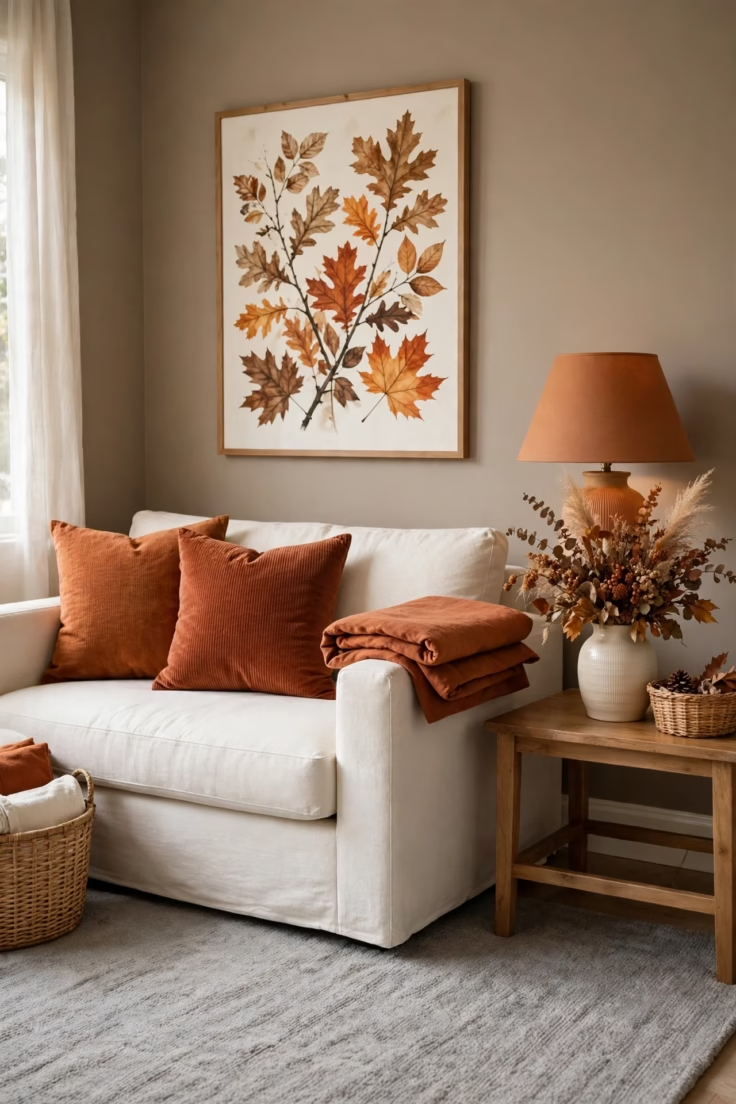
Keep walls, major furniture and large rugs in a stable neutral base, and let accents carry the seasonal mood. Warm taupe, soft grey or creamy white can sit with bold summer colours or richer autumn shades, so change comes quickly and at lower cost.
Change the visual temperature by swapping cushion covers, lampshades, vases and small artworks. Store them in a box labelled by season for fast unboxing, and focus spending on small versatile pieces instead of large items. One large seasonal artwork can transform a room more than many minor changes.
Renters and minimalists can use removable decals, peel and stick wallpaper trims or magnetic frames to alter focal points without commitment. Timeless permanent elements support resale appeal, while the Best farmhouse decor ideas show how a calm neutral base can still feel warm and personal.
3. Bring the Outside In: Greenery and Natural Elements
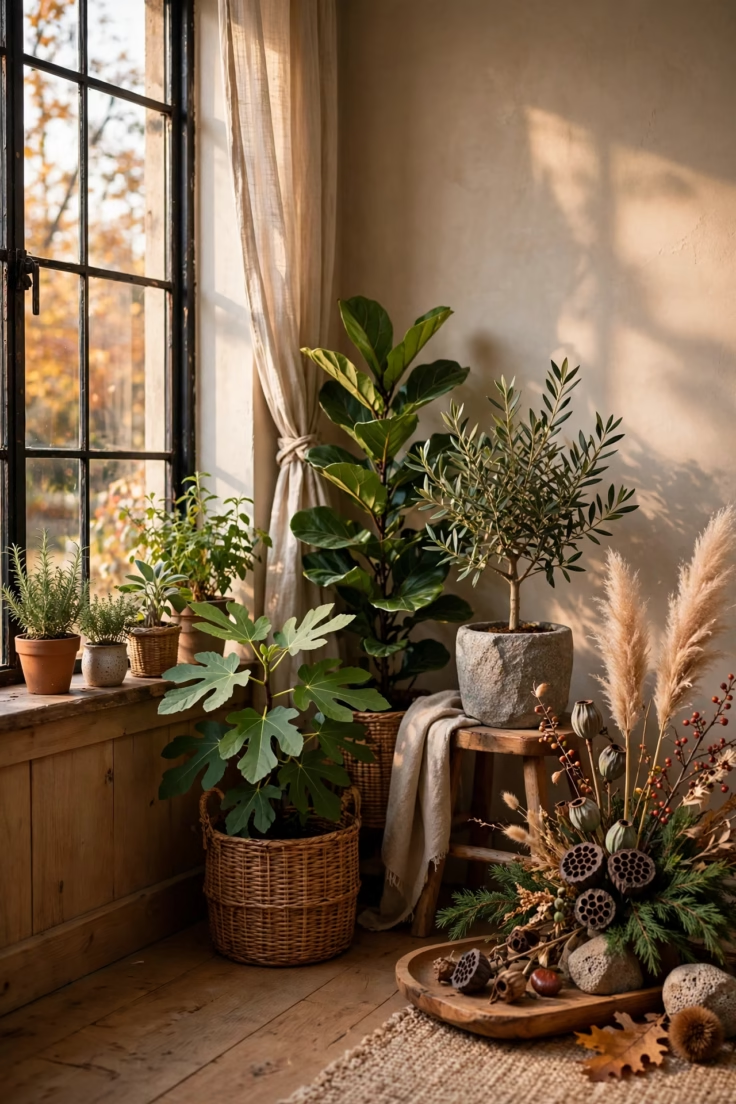
Plants and seasonal botanicals connect indoors with outdoors during transitions. Lighter foliage, fresh stems and citrus scented greenery suit spring and summer, while evergreens, dried seed pods, pampas and berry branches suit fall and winter.
Cluster plants at different heights to create a living display that can change with little effort. Move pots between brighter and shadier spots as daylight changes, and use rattan baskets, wooden trays and stone planters for organic texture. Even a small home can add a windowsill herb garden useful for both food and decoration.
Follow the season with containers, woven in summer and ceramic or hammered metal in colder months. For travel or low light, good quality faux foliage can maintain continuity and be mixed with real plants for depth. Pruning and repotting can become intentional seasonal rituals, and plants can support air quality and psychological comfort during changing weather.
4. Flexible Lighting Layers: From Daylight to Cozy Evenings
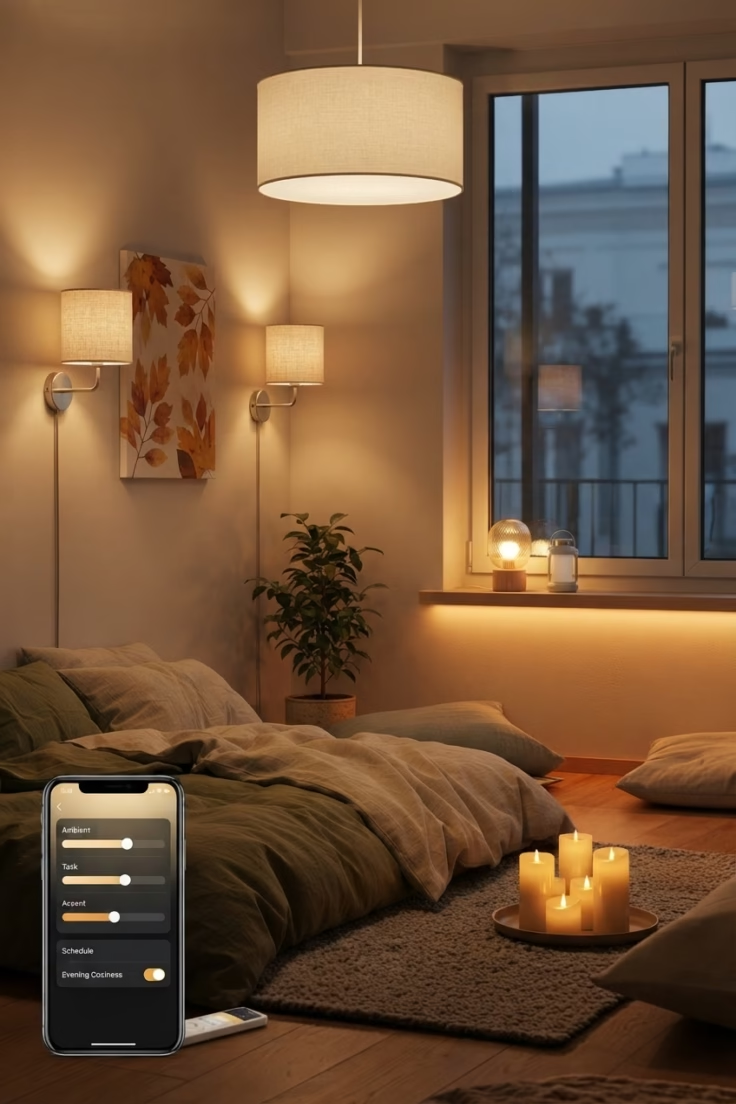
Build lighting in layers of ambient, task and accent light so brightness and warmth can be adjusted as daylight changes. In longer, brighter months, pendant or overhead fixtures and reflective, light toned shades can bounce sunlight around a room.
As days shorten, warm toned floor lamps, dimmable sconces and candlelight create intimacy. Changing bulbs between warm and cool white, and varying lumen output, alters the mood without replacing fixtures. Smart bulbs and motion sensor lamps add efficiency and convenience, including scheduling warmer evening tones to encourage relaxation.
Use LED strips under shelves or uplights behind art sparingly in summer and more deliberately in winter for cozy focal points. Outdoors, solar or string lights suit patios in transitional seasons, while frost resistant lanterns or post lights are better when temperatures drop. Lighting also changes how texture, shadow and color appear, helping the same furnishings suit different months.
5. Texture Mixing: Balance Between Cool and Cozy
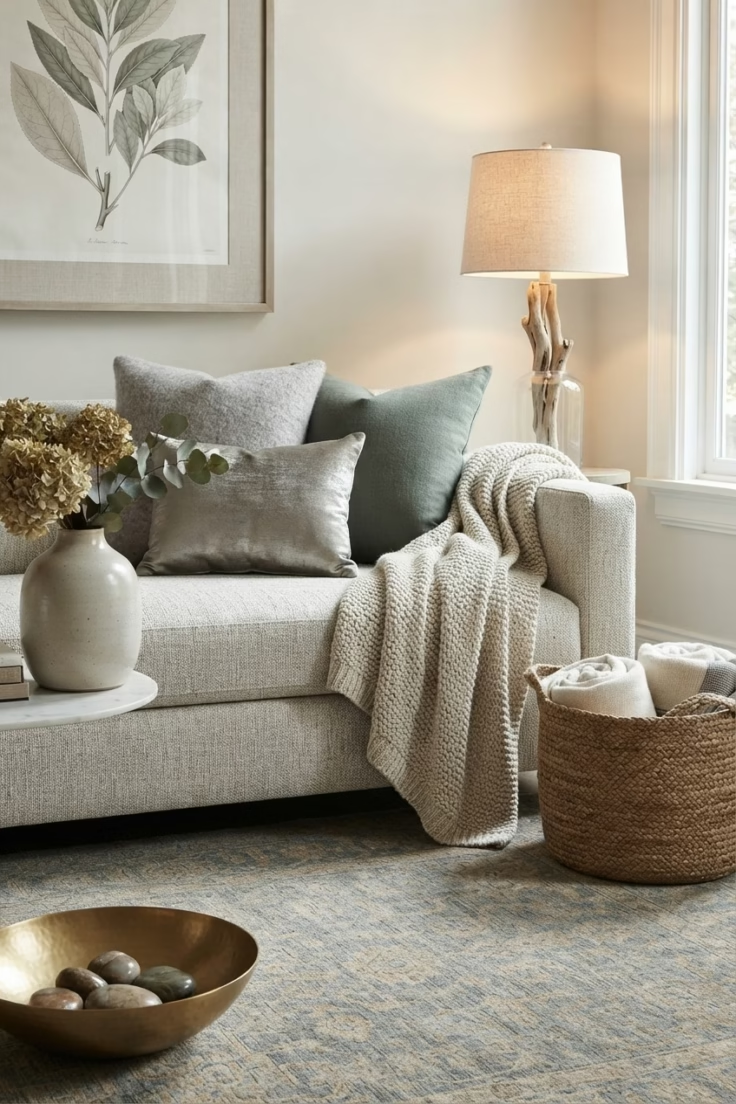
Pair cool, breathable materials with cozier tactile accents to move between seasons. Linen curtains and cotton slipcovers sit well beside felted wool cushions and knit poufs, while brushed cotton or velveteen add comfort without feeling too heavy.
Rugs anchor the shift. A light flatweave reads summery, while a plush, low pile rug suits cooler days that still need softness. Tactile contrast keeps spaces interesting, for example smooth ceramic vases with chunky knitted throws, or sleek glass lamps with natural wood bases.
Layered texture can also hide wear and make rooms feel lived in rather than staged, which helps when changes are frequent in transitional months. Rotating a few smaller items, such as pillow covers, decorative baskets or table runners, refreshes texture without much cost while keeping the home responsive to temperature and mood.
6. Statement Entryway Swaps for Immediate Impact
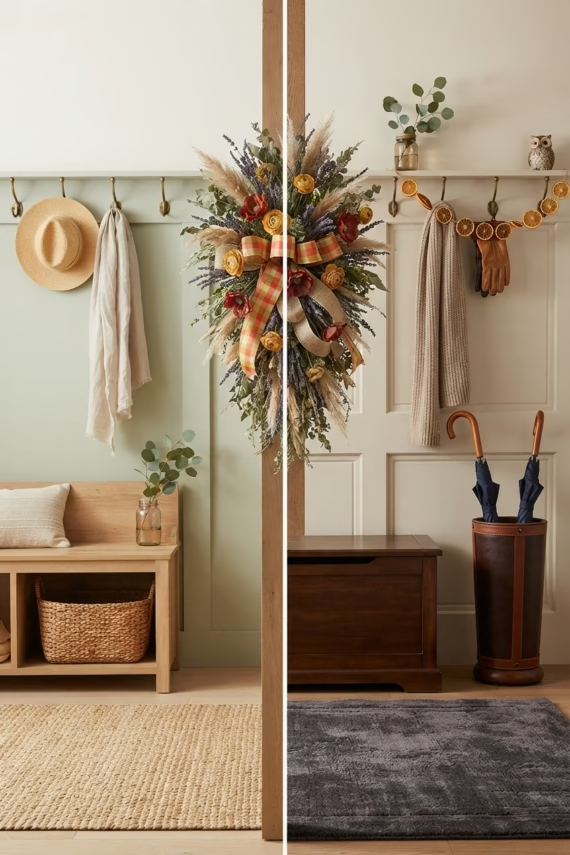
Treat the foyer as the place where seasonal change is announced first, because what visitors see there shapes their impression of the rest of the house. In warm weather, keep the area open with a lighter mat at the door, a woven bench that provides storage, and uncluttered wall hooks suited to hats and thin outerwear.
As temperatures drop, replace those pieces with a plusher, darker toned rug, a holder for umbrellas, and a container for cold weather accessories. A wreath or piece of art matched to the time of year can mark the transition at a glance, using dried blooms in autumn, eucalyptus paired with citrus in winter, and grasses in spring.
Practical changes help as well, such as a compact bench that stores mittens inside or a rail of hooks for sunhats. Choose stronger, inviting illumination on dark winter mornings and gentler bulbs that imitate daylight on overcast days.
For more ideas on moving from autumn into colder months, see these fall to winter transitional decorating ideas. A chalkboard or rotating framed prints make the arrangement feel deliberate, and the modest size of most entryways keeps cost low.
7. Transitional Color Palettes: Flexible, Layered Hues
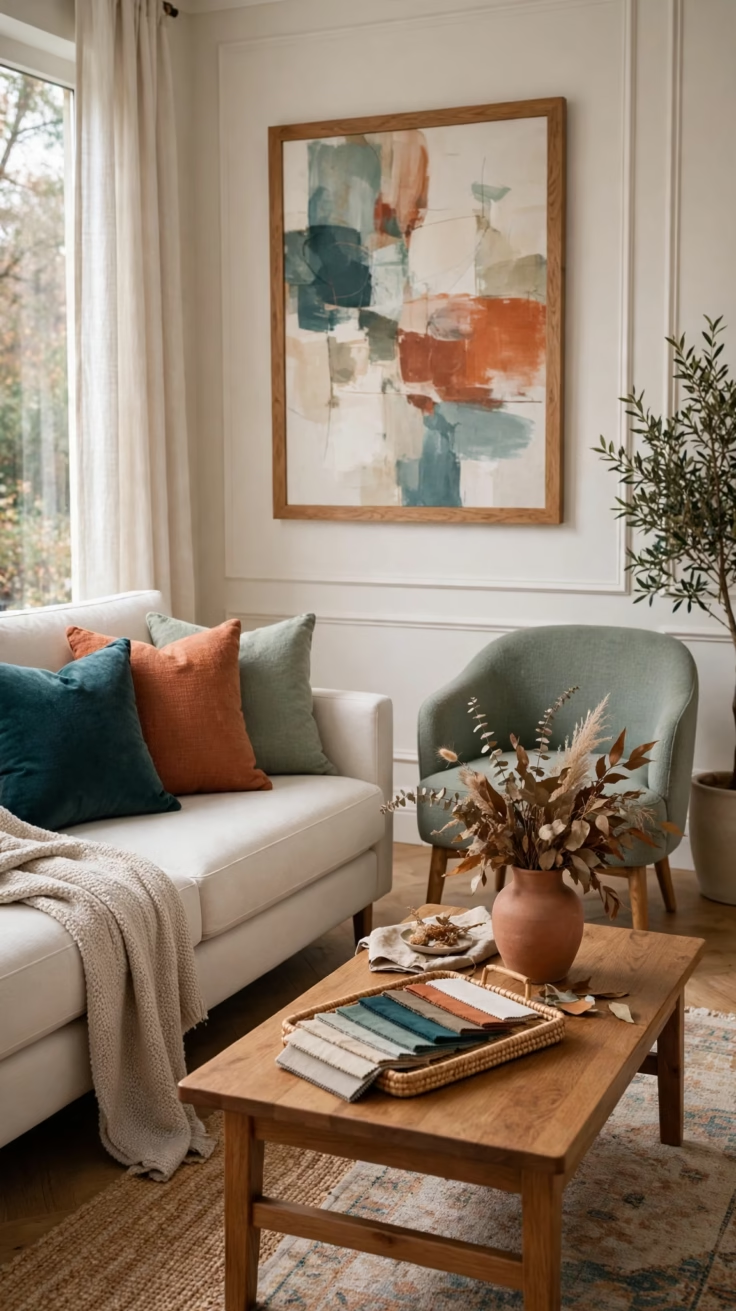
Choose palettes that bridge seasons, such as muted jewel tones, warm neutrals with cool undertones, or dusty pastels that will not clash as accents are swapped. An adaptable base of soft greige, warm white and muted sage allows seasonal highlights to be layered on top.
Use coral and lemon for spring and summer, or deep teal and terracotta for fall and winter. Apply color in measured doses through one accent wall, a set of cushions or a large artwork to pivot a room feeling without overwhelming it.
Pay attention to undertones. A gray with warm undertones can read cozy in cool months without appearing too heavy in warm weather. Carry one accent hue through two or three adjoining rooms for continuity, and preview combinations first with temporary fabric samples and peel and stick swatches.
8. Indoor-Outdoor Flow: Furnishings that Bridge Seasons
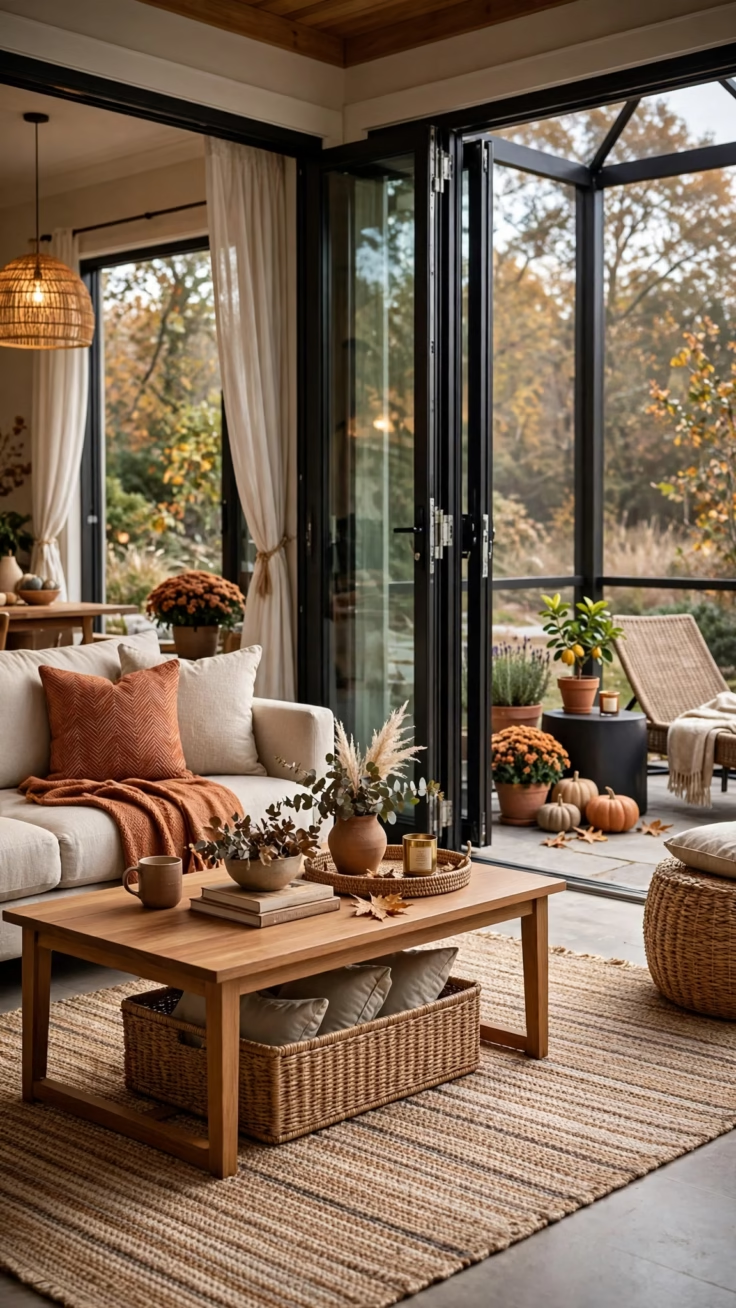
Create continuity between interior and exterior areas so seasonal changes feel smooth. Use weather resistant, durable textiles for porches and patios that coordinate with indoor cushions, and bring those pieces inside on cold nights for added warmth.
Fully opening folding or sliding doors helps, but matching plant styles or decorative motifs can also link the spaces visually. Choose versatile furniture such as storage ottomans for outdoor cushions, easily moved side tables, and rugs suitable for both indoor and outdoor use.
Keep windows and doors clear to increase daylight and fresh air, using light sheers for privacy without blocking breezes. For pests in warmer months, add screened enclosures and citronella friendly plantings. Choose teak, powder coated metals, and synthetic rattan, materials that tolerate humidity and sun while still suiting interiors.
9. Seasonal Scents and Soft Furnishings for Atmosphere
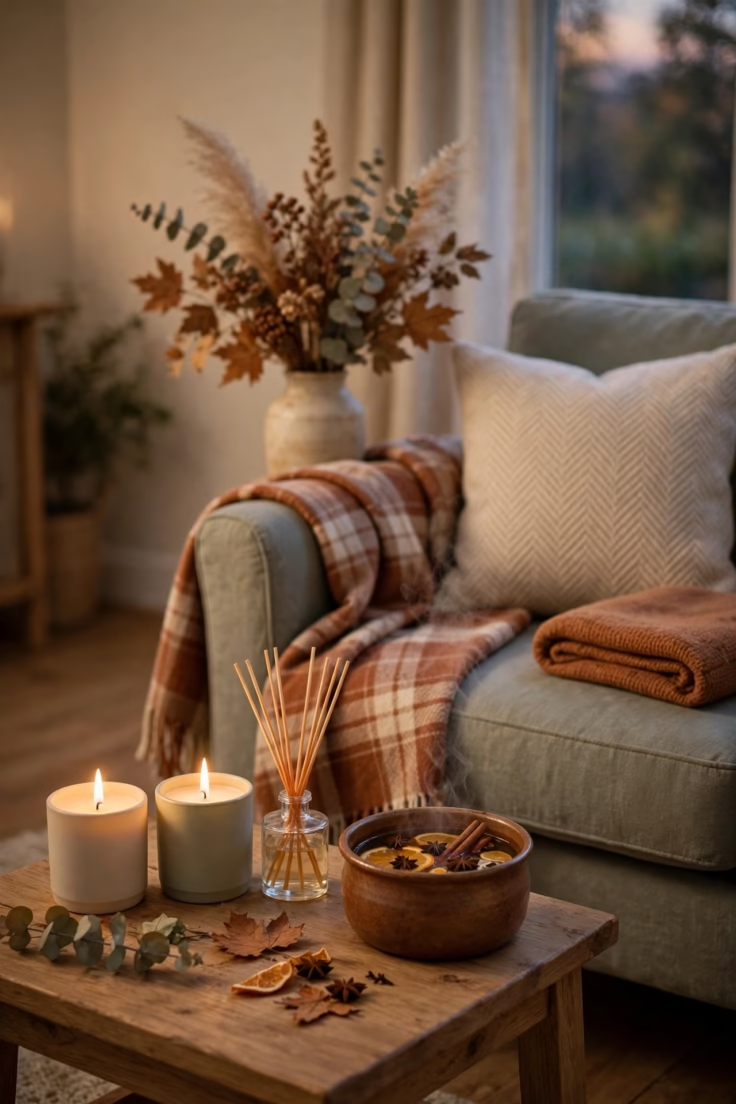
Use fragrance and small soft furnishing changes to set seasonal mood. Rotate scents, with citrus and herbaceous blends in spring and summer and cinnamon, clove, cedar, and orange peel in fall and winter, delivered through diffusers, essential oil blends, simmer pots, or unscented candles with seasonal flowers to manage intensity.
Swap bedding and window treatments as well. Choose hypoallergenic down alternatives in colder months, lighter percale duvet covers in summer, heavy blackout curtains to retain warmth in winter, and airy linens for ventilation in warmer months. Patterns can reinforce the season, including botanical prints for spring, coastal stripes for summer, and plaids and herringbone for autumn weight.
Keep fragrance subtle, since scent can trigger memory and make transitions feel ritualized and comforting. Account for guest sensitivities with scent free zones or natural, low VOC products.
10. Functional Storage and Smart Swaps for Stress-Free Rotation
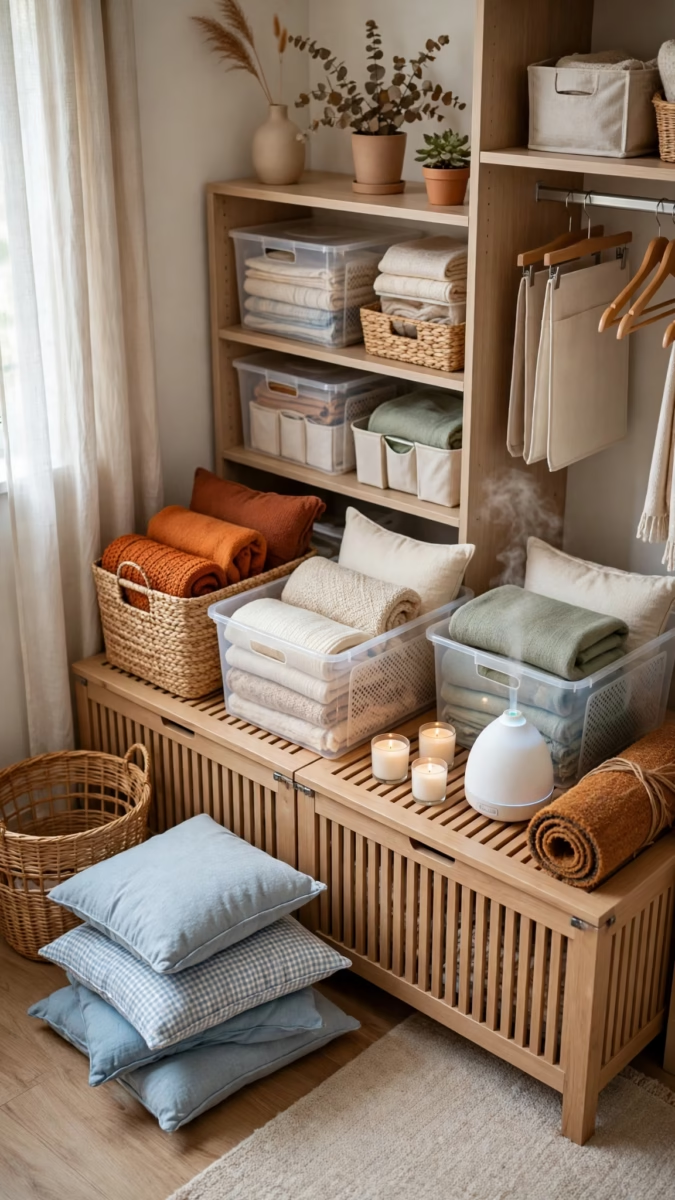
Organize storage and create a swap system so seasonal decorating is systematic rather than rushed. Store textiles and accessories in clear, labeled containers, using vacuum bags or breathable fabric bins for off season protection.
Follow a swap checklist covering pillows, throws, doormats, scents, lighting bulbs, and outdoor cushions to complete changes in a 30 to 90 minute session. Keep modular storage in the same place year round, such as under bed drawers, closet shelves, and stylish baskets, so items remain accessible.
Set up a staging area to launder or repair outgoing items before storing them. For limited urban space, use multifunctional furniture like storage benches, nesting tables, and benches that convert into guest beds. A simple digital inventory with photos and notes on storage locations can save time later.
Here’s the takeaway: these ten ideas give you practical, scalable ways to transition your home with style and minimal stress.
Transition the home intentionally by keeping a neutral base and changing accents, layering textiles and lighting, and using plants, scent, and smart storage to make updates quick and meaningful.
Treat seasonal decor as small, repeatable rituals, such as swapping cushions, adjusting lighting, and rotating greenery. This approach helps avoid overhaul fatigue and keeps the home feeling fresh every few months.
To begin, choose one room and apply two swaps, such as textiles plus lighting or accents plus scents, then observe the change in mood.


