


DINING AREA IDEAS
Small changes can do a lot here, and that is the charm of this group. A bench against the wall, a round table in a narrow room, and one strong light can each shift how the space works without changing everything else in the room.
If you are planning a bigger dining refresh for gatherings, the Complete Thanksgiving dining room guide fits naturally alongside these simple layout ideas.
- Use a banquette when floor space is short and storage for table linens would help.
- Choose a round table when a rectangular table would leave corners in the walking path.
- Let one statement light lead the room and keep the rest of the styling simple.
1. Banquette Dining Area Layout
A banquette layout is a fairly simple change, and it works well when floor space is short. Push the bench against the wall to gain the width that two chairs would take up. That one move frees room around the table while the bench stays neat against the wall.
Add a few cushions along the back as a finishing touch. Storage under the seat is useful for table linens, especially for pieces that otherwise lack a place. The finished look is tidy, practical, and easy to understand at a glance. The bench, the cushions, and the hidden storage each do a clear job.
2. Round Table Small Dining Area
Round tables are presented as a trick for small rooms, and they are described as an underappreciated solution. If the room is narrow, skip the rectangle entirely. A rectangular table brings corners into the space, while a round table removes that problem from the walking path.
Nobody bumps a corner walking past a round table, and that changes the feel of the space. The room feels easier to move through, and the table feels less heavy in a tight spot. For a small room, that simple shape choice is the whole point.
3. Statement Light Dining Zone
One good fixture does more than any other purchase in the room. Hang the fixture lower than feels normal, roughly 30 inches above the tabletop. That lower height helps the light feel connected to the table instead of lost above it.
Keep the rest of the styling simple so the light stays the star. When everything else stays calm, the fixture becomes the focal point. For more inspiration in the same spirit, see Modern cozy dining room ideas. The lesson here is restraint, with one strong piece doing the main work.
Jump To
OUTDOOR DINING AREA IDEAS
Outdoor dining here is all about shade, soft light, and a table that feels welcoming. String lights, a pergola, and a long garden table each solve a different part of the same outdoor puzzle.
4. String Light Outdoor Dining
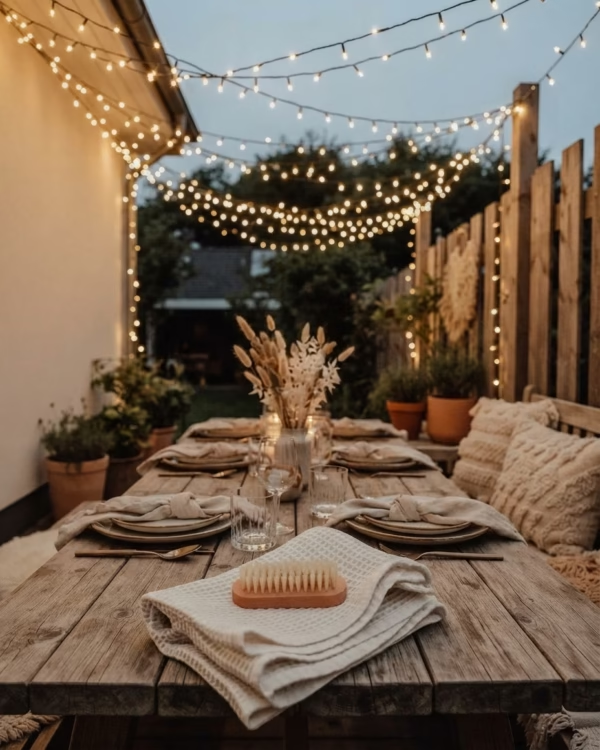
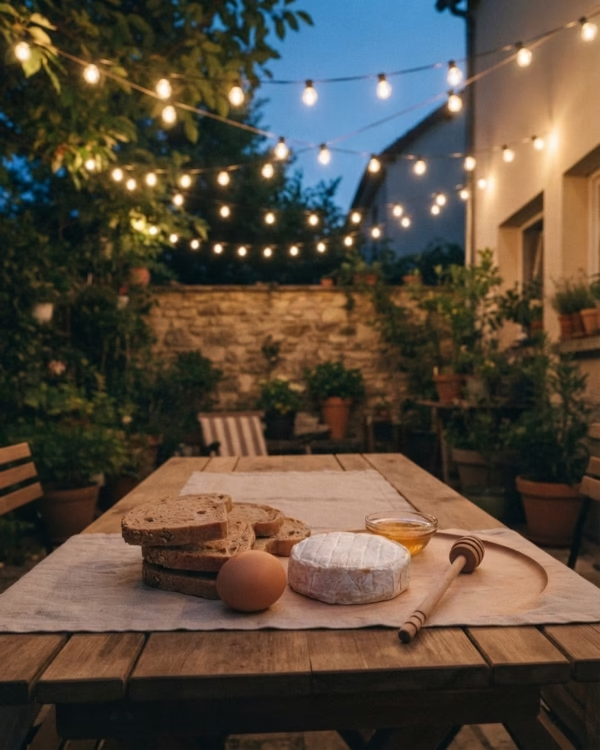
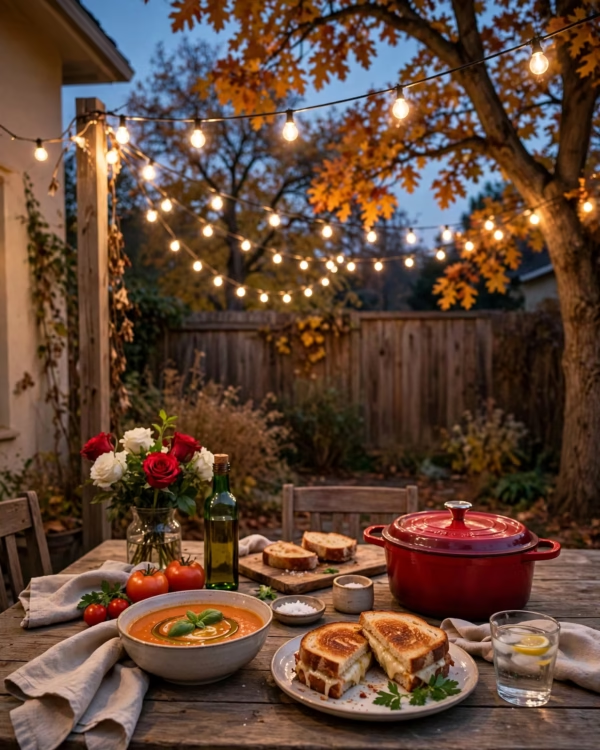
For outdoor dining, string lights are the starting point. Run string light strands from the house to a fence post or a tree so they hang above the table. Placing them above the table puts the light where the meal happens and ties the setup to the house, the fence, or the tree.
Zigzag the strands rather than going straight across for a softer look. Choose warm white bulbs rather than cool white bulbs, since warm white looks better outdoors and cool white can make a garden feel like a parking lot. That bulb choice matters. Warm white keeps the effect soft, while cool white can feel harsh in a garden setting.
5. Pergola Covered Dining Patio
A pergola covered patio provides shade that keeps the dining area usable throughout the day, not just in the evening. That shade is the main benefit. Set the table underneath, and the patio can be used across the day rather than only after the sun has dropped.
Train a climbing plant up one side to make the setup feel established. Wisteria or jasmine both work as climbing plants. One side with a climbing plant is enough to soften the structure and give the covered dining spot a settled feel.
6. Long Table Garden Dining
For a long garden table, line both sides with mismatched chairs rather than a matching set. That choice gives the table a relaxed feel, and it has a practical side too. Mismatched chairs can be picked up secondhand over time, so the set can build gradually.
Run a linen runner down the middle as a finishing touch. The runner pulls the long table together while the chairs stay varied on both sides. Simple, friendly, and easy to repeat, this setup uses contrast as its main styling move.
DINING NOOK IDEAS
Dining nooks make use of corners, windows, and tiny spots that might otherwise be wasted. The ideas below keep the table small, the seating smart, and the finish light.
7. Corner Bench Dining Nook
A corner bench makes smart use of an awkward angle in a dining nook. Build the seating into both walls so the corner stops being dead space. When the bench follows both walls, the angle becomes the seating plan instead of a gap that serves no purpose.
Keep the table small enough to slide in easily. The bench seats more people than it looks like it will, which is a lovely surprise in a small nook. Built in seating, a small table, and a corner that finally works, that is the complete formula.
8. Window Dining Nook Styling
A window nook benefits from morning light at breakfast, which changes the feel of the room. Pull the table right up to the glass instead of centering it in the room. That placement makes the light part of breakfast rather than something happening beside the table.
Hang a light curtain so the sun stays soft rather than blinding. The curtain keeps the sunlight gentle while the table stays close to the window. Push that little table right up to the window, and suddenly breakfast feels special without adding extra furniture.
9. Cafe Style Two Seat Nook
A cafe style setup needs only two chairs to feel complete. Choose a small bistro table with a slim base so it does not crowd the floor. The slim base matters in a tight corner because the floor stays open and the table feels light.
Add one plant on the sill to finish the corner. That single plant is the finishing touch, nothing more is needed. This arrangement works well for a studio or a narrow galley kitchen, where a full dining set would be far too much.
READING NOOK IDEAS FOR ADULTS
These are reading nook ideas for adults that readers are saving right now.
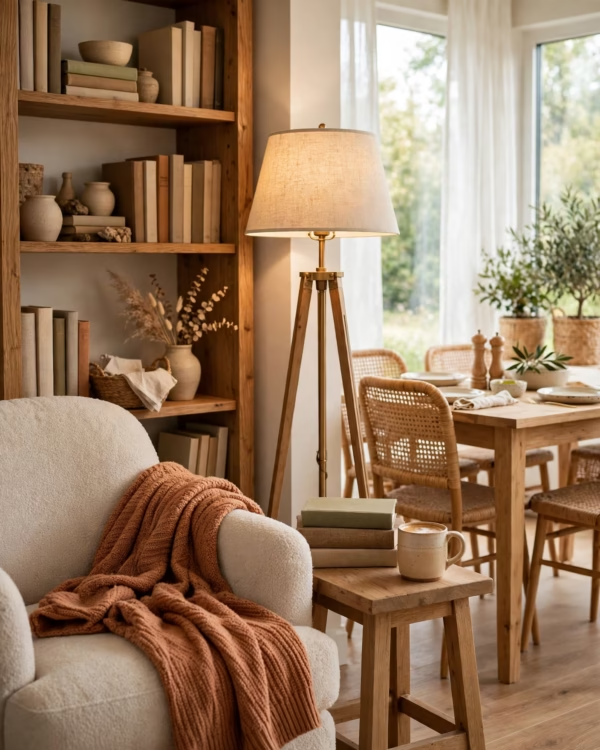
Comfort comes first in these reading nooks, with a cushion, a lamp, and a small table placed within reach.
10. Window Seat Adult Reading Nook
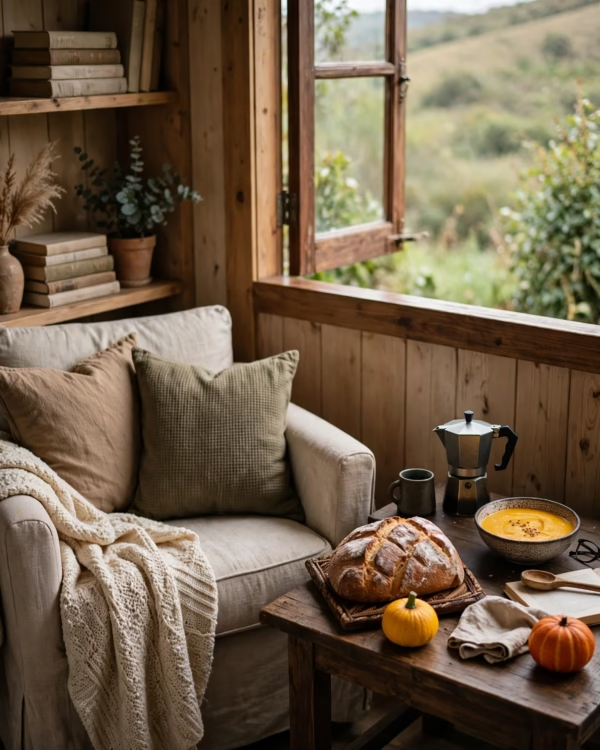
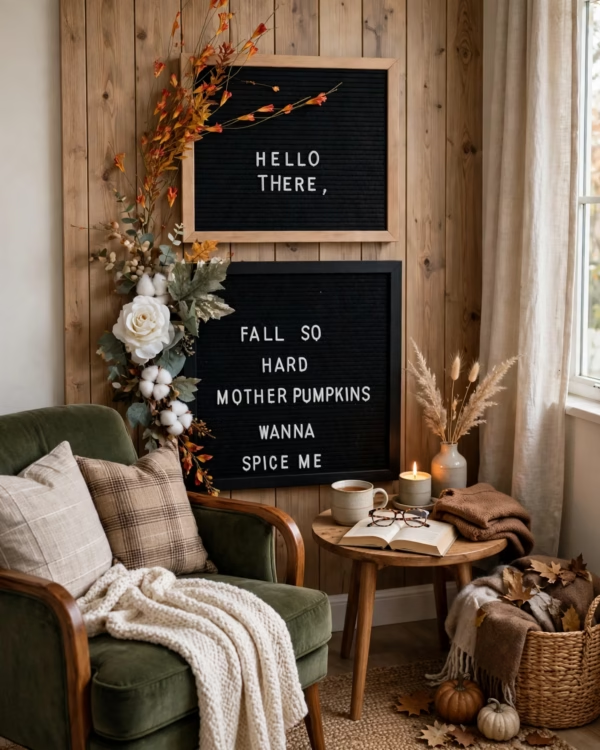
A window seat reading nook for adults prioritizes comfort over appearance. Add a firm cushion for the base plus two soft ones for your back. The firm base gives support, while the two soft cushions make the back feel comfortable for reading.
Keep a small table within arm reach for a mug. Getting up ruins the whole point, so that nearby table is part of the comfort plan. With the cushion base, the back cushions, and the mug close by, the window seat is ready to use.
11. Dark Cozy Library Nook
This dark library corner uses moody walls to give the space the feel of a private study. Paint the walls and shelves the same deep shade so everything recedes. When the walls and shelves share one deep shade, the corner feels unified and calm.
Add one warm lamp rather than a bright ceiling light. The warm lamp supports the moody feel, while a bright ceiling light would work against it. The dark library corner look is a little bold but worth the effort, especially when the paint and the lamp work together.
12. Chaise And Lamp Reading Corner
If there is no spare corner available, a chaise plus a good lamp is the whole formula for a reading corner. You do not need a separate room or a large empty area. The chaise gives the seat, and the lamp gives the light, and together they make the corner.
Angle the chaise slightly away from the room so it feels separate. A floor lamp that reaches over your shoulder beats overhead light. Position the lamp behind you so the page stays glare free. That placement keeps the light on the page without the glare that overhead light can bring.
UTILITY AREA IDEAS INDIAN
These utility ideas focus on small, hard working spaces in Indian homes, where every inch serves a purpose and a tidy finish still matters.
13. Compact Indian Utility Layout
This compact layout reflects utility area ideas used well in Indian homes, with every inch serving a purpose. Stack the machine under a slab counter to keep a folding surface. The counter above the machine keeps a useful surface available even in a compact layout.
Hang a drying rod above the machine rather than over the balcony. That keeps drying inside the work zone. The compact layout makes for a tidy little work zone, with the machine, the folding surface, and the drying rod all in one place.
14. Wash Area Tile Utility Design
A wash area does not have to look purely functional, and patterned tiles demonstrate that. Run the tiles up the wall behind the sink to catch splashes. The tiles protect the wall while also giving the wash area a more finished look.
Choose a darker grout because white grout in a wet zone is a losing battle. That grout choice is practical for a wet area, and it works with patterned tiles behind the sink. Together, the tiles and the darker grout handle splashes and daily use.
15. Balcony Utility Area Setup
This balcony setup is a practical solution for a small flat because it keeps mess out of the main rooms. Tuck the machine into the corner with a small counter beside it for buckets. The corner placement keeps the machine contained, and the small counter gives buckets a clear place.
Add a slatted screen to hide the machine from the sitting area. Clothes dry where they are washed, so washing and drying share the same spot. For a small flat, keeping the mess on the balcony and out of the main rooms is the main win.
WASHING AREA IDEAS
Washing areas here start outdoors, then move to a sink and counter zone and a tiled backsplash corner, each with one clear job to do.
| Zone | Main move | Why it helps |
|---|---|---|
| Outdoor covered area | Simple roof sheet and a floor sloped toward a drain | Use through rainy months without water pooling in corners |
| Sink and counter zone | Sink at counter height with an open shelf underneath | Less bending over hand washing and detergent within reach |
| Tiled backsplash corner | Tile at least 1 foot above the machine | Splashes never reach the paint |
16. Outdoor Covered Washing Area
These washing area ideas begin outdoors, which makes sense in a warm climate. Cover the zone with a simple roof sheet for use through rainy months. The cover keeps the area usable when the weather changes, rather than leaving it open to the rain.
Slope the floor slightly toward a drain so water never pools in the corners. That slight slope is a small detail with a clear payoff. The roof sheet above and the drain below work together to keep the outdoor washing zone practical.
17. Sink And Counter Wash Zone
A deep sink beside the machine solves many small problems. Set the sink at counter height to avoid bending over hand washing. That height makes hand washing more comfortable and keeps the sink aligned with the counter zone beside the machine.
Keep an open shelf underneath for detergent instead of a closed cupboard. Everything needed stays within reach, and the open shelf makes detergent easy to see and grab. The deep sink, the counter height, and the open shelf form one simple, hard working wash zone.
18. Tiled Backsplash Washing Corner
A plain wall behind the machine can be put to use by adding a tiled backsplash. Tile at least 1 foot above the machine so splashes never reach the paint. Extending the tile to that height protects the wall where splashes are most likely to land.
Wipe the grout with sealer once a year. A tiled backsplash is a small job that makes the corner look finished. One small job, one yearly wipe with sealer, and the washing corner looks complete while the paint stays protected.
WASHING MACHINE AREA IDEAS
The final ideas turn a hallway closet and the space above a machine into useful laundry areas, using stacking, doors, clearance, and a counter.
19. Stacked Machine Closet Area
This idea turns a hallway closet into a laundry area, making use of otherwise dead space. Stack the dryer above the washing machine with a proper bracket kit. The bracket kit matters because the dryer sits above the machine in a stacked setup.
Fit bifold doors so the stacked machines remain easy to reach. Leave a gap at the back for the vent hose. With the doors fitted and the gap left at the back, the closet works as a laundry area while everything stays easy to reach.
20. Counter Over Machine Setup
This setup places a counter over the washing machine, creating a folding surface where there was none. When laundry space runs short, that folding surface is the main gain. The counter uses the space above the machine instead of leaving it empty.
Measure the machine height twice before ordering anything, because the lid needs clearance. Run the counter across to the wall for extra depth. That extra depth supports the folding surface, while the measured height protects the clearance the lid needs.
- Measure the machine height twice before ordering.
- Check that the lid has clearance under the counter.
- Run the counter across to the wall for extra depth.
The counter over the machine provides a folding surface, and running it across to the wall gives extra depth in the setup. Before ordering, measure the machine height twice again, since clearance for the lid remains essential to how the counter fits over the machine.
With the counter extended across to the wall, the extra depth supports the folding surface, while the measured height and lid clearance keep the counter placed correctly over the washing machine.
It is a short list of checks, but each one protects the final result, a clear folding surface gained from space that was doing nothing before.
Source: streetstylis.com


