

Why You’ll Love This Vegetable Curry
A warm bowl of vegetable curry is a comforting go-to that brings bold flavors to your table without much hassle. This dish stands out as a favorite for its mix of veggies, spices, and creamy touches, making it ideal for quick family dinners. Keep reading to see why vegetable curry is such a smart choice for everyday cooking.
- Ease of preparation: Vegetable curry comes together in about 40 minutes total, with just 15 minutes of prep and 25 minutes of cooking, using straightforward steps that anyone can follow. This simplicity makes it perfect for busy parents or students who want a hearty meal without spending hours in the kitchen, turning fresh veggies and spices into a satisfying vegetable curry with minimal effort.
- Health benefits: Loaded with nutrients, vegetable curry offers a boost from ingredients like cauliflower and carrots, providing vitamins A and C for immune support and fiber for better digestion. Each serving packs around 179 calories, with 24g of carbs, 6g of fiber, and 5g of protein, making it a great option for diet-conscious folks or anyone seeking wellness through balanced, veggie-rich meals that align with a 2000-calorie diet.
- Versatility: This vegetable curry adapts easily to various needs, such as swapping ingredients for vegan or gluten-free versions, or adding proteins like shrimp or steak for a heartier twist as suggested in long-tail inspirations. It’s flexible for travelers, newlyweds, or seniors, allowing you to tweak it for different tastes while keeping the core vegetable curry essence intact.
- Distinctive flavor: What makes vegetable curry truly special is its rich blend of spices like garam masala and ginger garlic paste, creating a depth that balances creamy cashew elements with fresh veggies for a standout taste. This combination delivers a cozy, aromatic dish that’s both comforting and exciting, perfect for food enthusiasts looking for that unique flavor punch.
In the end, vegetable curry is more than just a meal it’s a reliable recipe that fits into busy lives while delivering on taste and nutrition.
Jump To
- 1. Why You’ll Love This Vegetable Curry
- 2. Essential Ingredients for Vegetable Curry
- 3. How to Prepare the Perfect Vegetable Curry: Step-by-Step Guide
- 4. Dietary Substitutions to Customize Your Vegetable Curry
- 5. Mastering Vegetable Curry: Advanced Tips and Variations
- 6. How to Store Vegetable Curry: Best Practices
- 7. FAQs: Frequently Asked Questions About Vegetable Curry
- 8. vegetable curry
Essential Ingredients for Vegetable Curry
Gathering the right ingredients is the first step to a delicious vegetable curry, ensuring a mix of textures and flavors that make the dish shine. Below is a complete list with precise measurements, helping you prepare everything with ease. Each item plays a key role in building a hearty, flavorful vegetable curry.
Main Ingredients
- 2 to 3 tablespoons oil – Serves as the base for sautéing, allowing spices and onions to release their aromas without sticking to the pan.
- 1 cup finely chopped onion – Adds a sweet, foundational flavor that builds the curry’s base and helps balance the spices.
- 1 slit or chopped green chili (optional) – Brings a mild heat that can be adjusted for spice levels, enhancing the overall zest of the vegetable curry.
- 1 tablespoon ginger garlic paste – Infuses a fresh, pungent kick that deepens the taste and adds a wellness boost from its natural properties.
- 1 cup pureed tomatoes – Provides tanginess and thickness to the sauce, making the vegetable curry more cohesive and flavorful.
- 2 to 4 tablespoons chopped coriander leaves – Offers a fresh, herbal finish that brightens the dish and adds a pop of color.
- 1 tablespoon kasuri methi – Contributes an earthy, dried fenugreek taste that elevates the authentic feel of the vegetable curry.
- 1.25 to 2 cups hot water – Helps achieve the right consistency, allowing vegetables to cook evenly and absorb flavors.
- 20 cashews or alternatives like 0.5 cup thick coconut milk or 1.5 tablespoons nut butter – Creates a creamy texture; cashews add richness, while coconut milk offers a vegan option for a smoother vegetable curry.
- 0.75 to 1 cup chopped carrot – Adds sweetness and crunch, plus vitamins for a nutritious boost in the vegetable curry mix.
- 0.75 to 1 cup chopped potato – Brings heartiness and absorbs spices well, providing energy from carbs in this vegetable curry.
- 0.5 cup chopped green beans – Contributes crispness and fiber, helping to make the dish more filling and balanced.
- 0.5 to 0.75 cup peas – Adds a sweet, fresh element and extra nutrients like vitamin C to the vegetable curry.
- 1.5 cups cauliflower florets – Offers a tender texture and supports digestion with its fiber content in the vegetable curry.
- 0.25 cup sweet corn kernels – Brings a subtle sweetness and variety, enhancing the overall vegetable mix.
- 0.75 to 1.25 teaspoons Kashmiri red chili powder – Delivers a vibrant color and mild heat, adjustable for spice preferences in the vegetable curry.
- 1 teaspoon garam masala or 1.5 tablespoons mild garam masala – Adds warm, aromatic spices that define the flavor profile of vegetable curry.
- 1 teaspoon cumin powder – Provides an earthy base note that complements other spices in the vegetable curry.
- 1 to 1.5 teaspoons coriander powder – Enhances the nutty undertones and helps tie the spices together.
- 0.125 teaspoon turmeric – Imparts a golden hue and anti-inflammatory benefits to the vegetable curry.
- 1 teaspoon salt – Seasons the dish perfectly, bringing out the natural tastes of the vegetables and spices.
- 0.5 teaspoon cumin seeds (optional) – Adds a toasty flavor when tempered, as an extra layer in vegetable curry preparation.
- 3 cardamoms (optional) – Brings a fragrant, citrusy spice that can deepen the curry’s complexity if included.
- 1 inch cinnamon (optional) – Offers a sweet, woody aroma that enhances the warmth of the vegetable curry.
- 1 bay leaf or curry leaves (optional) – Infuses subtle herbal notes for added depth in the vegetable curry.
Special Dietary Options
- Vegan: This recipe is naturally vegan if you use alternatives like 0.5 cup thick coconut milk instead of cashews, keeping the vegetable curry creamy without animal products.
- Gluten-free: It’s already gluten-free, but ensure all spices and pastes are certified gluten-free to maintain the integrity of your vegetable curry.
- Low-calorie: Reduce oil to 2 tablespoons and skip cashews for lighter options, helping to keep the vegetable curry under 179 calories per serving while retaining flavor.
How to Prepare the Perfect Vegetable Curry: Step-by-Step Guide
Creating a tasty vegetable curry is straightforward and rewarding, with steps that build layers of flavor in just 40 minutes total. This guide uses simple instructions to help you make a dish that’s both nutritious and adaptable, like adding shrimp or steak for variety. Prep time is 15 minutes, and cook time is 25 minutes, so it’s perfect for weeknights.
First Step: Gather and Prep Ingredients
Start by preparing your ingredients to set up for smooth cooking. Chop the vegetables such as 0.75 to 1 cup carrot, 0.75 to 1 cup potato, 0.5 cup green beans, 0.5 to 0.75 cup peas, 1.5 cups cauliflower, and 0.25 cup sweet corn while finely chopping 1 cup onion and preparing optional items like 1 slit green chili. For adaptations, if you’re adding proteins like shrimp or steak, have them ready; this keeps the vegetable curry flexible for meat lovers while staying true to its veggie focus. This step takes about 15 minutes and ensures everything is at hand.
Second Step: Sauté the Base
Heat 2 to 3 tablespoons oil in a pan over medium heat, then add optional whole spices like 0.5 teaspoon cumin seeds, 3 cardamoms, 1 inch cinnamon, and 1 bay leaf or curry leaves to release their flavors. Next, add the 1 cup finely chopped onion and 1 slit or chopped green chili (if using), sautéing until the onion turns golden, which takes about 5 minutes. If you’re adjusting for spiciness, use less chili or add cayenne pepper here to suit dietary preferences, making your vegetable curry milder or hotter as thích.
Third Step: Add Aromatics and Spices
Stir in 1 tablespoon ginger garlic paste and sauté for another minute until fragrant. Then, mix in the ground spices: 0.75 to 1.25 teaspoons Kashmiri red chili powder, 1 teaspoon garam masala, 1 teaspoon cumin powder, 1 to 1.5 teaspoons coriander powder, and 0.125 teaspoon turmeric, followed by 1 cup pureed tomatoes. Cook this mixture on medium heat for 5 to 7 minutes until it releases oil, creating a flavorful base. For low-carb options, you can reduce tomatoes here to thicken the vegetable curry without extra water.
Fourth Step: Incorporate Cream and Vegetables
Add the cashew cream (made from 20 cashews) or alternatives like 0.5 cup thick coconut milk, reserving some for garnish, and stir well. Then, toss in the 4.5 cups mixed vegetables and sauté for 2 to 3 minutes to coat them in the spices. Pour in 1.25 to 2 cups hot water, cover the pan, and cook on medium heat for 15 to 20 minutes until the vegetables are tender, stirring occasionally and adjusting water as needed. If substituting veggies like 1 cup diced zucchini or 2 cups sweet potato, add them here to keep the vegetable curry fresh and varied for seasonal preferences.
Fifth Step: Final Adjustments and Simmer
Once the veggies are soft, taste and adjust seasoning with up to 1 teaspoon salt and more garam masala if desired. Add 1 tablespoon crushed kasuri methi for extra depth, then simmer for another 2 to 3 minutes to thicken the sauce, incorporating spice variations like 2 tablespoons curry powder if you want a new twist. For added proteins, mix in cooked shrimp or steak at this stage to enhance the vegetable curry, ensuring it’s well-integrated for a complete meal.
Final Step: Garnish and Serve
Garnish with 2 to 4 tablespoons chopped coriander leaves and the reserved cream, then serve hot over rice for a hearty finish. This step lets the flavors shine, with each serving offering 179 calories and key nutrients like 61mg vitamin C. For more serving ideas, explore our Air Fryer Steak Bites Recipe to pair with your vegetable curry, making it a versatile option for family meals.
This guide ensures your vegetable curry is not only delicious but also easy to adapt, turning basic ingredients into a wholesome dish in no time.

Dietary Substitutions to Customize Your Vegetable Curry
Protein and Main Component Alternatives
Boosting protein in your vegetable curry can make it more filling, especially with options like adding shrimp or steak for a heartier meal. If you’re looking for plant-based swaps, try incorporating tofu or chickpeas to replace any added proteins, keeping the vegetable curry adaptable for vegetarians. These changes ensure the dish remains versatile while maintaining its core veggie focus.
Vegetable, Sauce, and Seasoning Modifications
Swap out vegetables based on what’s in season, such as using 1 cup diced zucchini or 2 cups sweet potato cubes instead of standard ones for a fresh twist. For the sauce, opt for coconut milk over cashews for a creamier vegan version, and experiment with seasonings like pav bhaji masala or cayenne pepper to adjust spice levels. This flexibility lets you tailor the vegetable curry to dietary needs, like reducing tomatoes for a drier style or adding spinach for extra greens.
Mastering Vegetable Curry: Advanced Tips and Variations
Pro Cooking Techniques
Master your vegetable curry by starting the onion base early while prepping veggies, which saves time and builds deeper flavors. Dice potatoes smaller than other vegetables to account for varying cook times, and use medium heat to prevent burning spices for even results. These methods help create a well-balanced vegetable curry that’s tender and full of taste.
Flavor Variations
Play with spices by adding options like 2 tablespoons curry powder or 0.75 teaspoon cayenne pepper to tweak the heat, or include 1 teaspoon nutmeg for a unique twist. If drawing from inspirations, incorporate secondary elements like shrimp for added protein, keeping the vegetable curry exciting and personalized to your preferences.
Presentation Tips
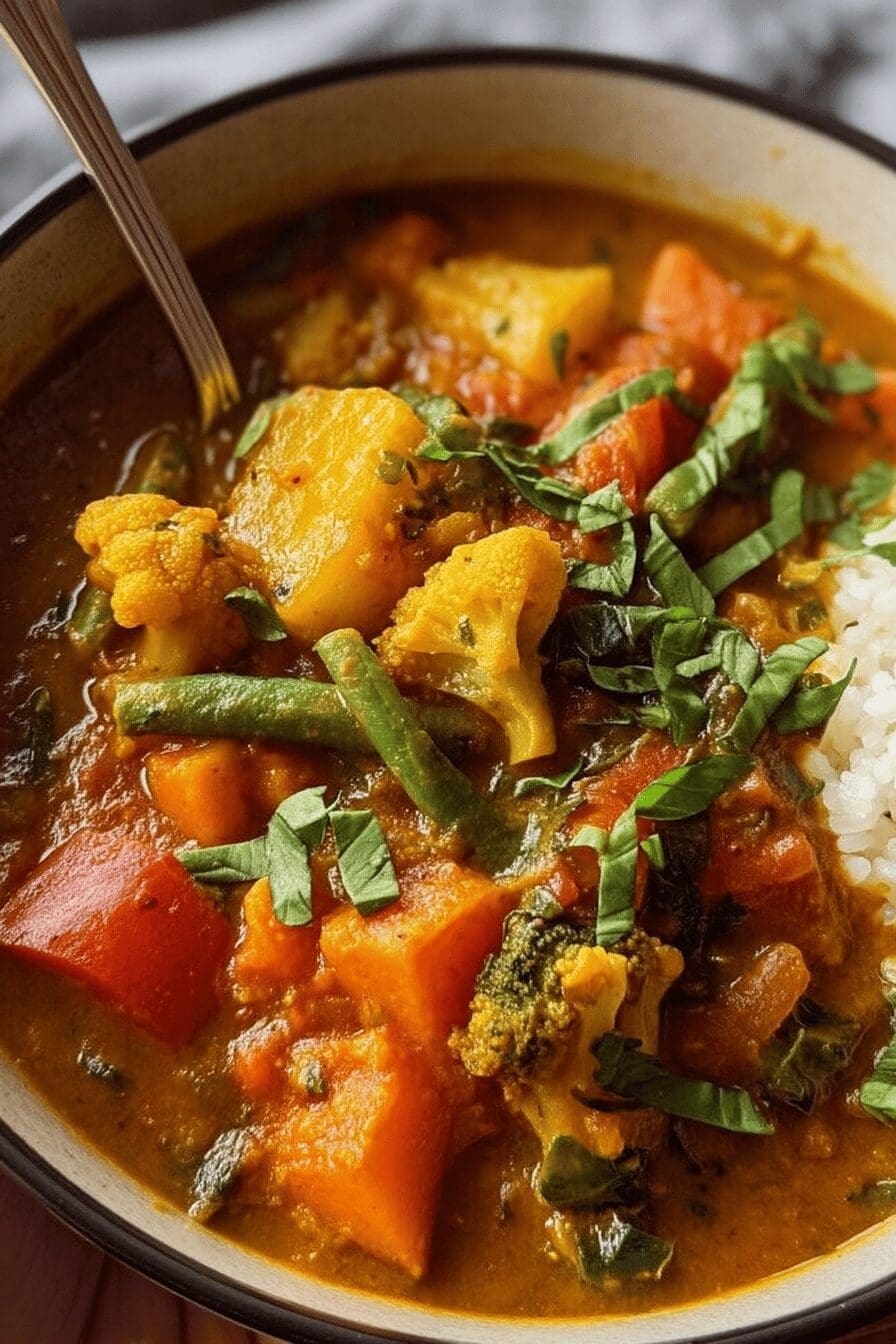
Make your vegetable curry visually appealing by garnishing with fresh coriander and a drizzle of cream, served in a colorful bowl over rice. Add a side of flatbread for scooping, turning it into a feast that’s as fun to look at as it is to eat, ideal for family gatherings.
Make-Ahead Options
Prep the curry in advance by cooking and storing it for up to 5 days in the fridge, or freeze portions for quick meals later, which is great for working professionals. For more ideas, check out our Cajun Steak Alfredo Recipe for complementary sides that pair well with vegetable curry prep.
How to Store Vegetable Curry: Best Practices
Storing vegetable curry properly keeps it fresh and ready for later, making meal prep simple. Follow these guidelines to maintain flavor and safety.
- Refrigeration: Store in an airtight container in the fridge for up to 5 days, keeping veggies crisp and spices intact for easy reheating.
- Freezing: Freeze in portions for up to 3 months using freezer-safe bags, thawing overnight in the fridge to preserve the vegetable curry’s texture.
- Reheating: Warm on the stove over low heat for 5 minutes, stirring to keep it even, which helps retain the curry’s quality and nutrients.
- Meal Prep Considerations: Batch cook and divide into containers for grab-and-go options, ideal for busy schedules while adapting for low-carb tweaks.
FAQs: Frequently Asked Questions About Vegetable Curry
Print
vegetable curry
🥦 Vegetable Curry Stir Fry is a wholesome and colorful dish packed with nutrient-rich vegetables and flavorful spices.
🍛 This recipe is versatile and easy to customize, perfect for a comforting meal served over rice with optional shrimp and steak additions.
- Total Time: 40 minutes
- Yield: 4 servings 1x
Ingredients
2 to 3 tablespoons oil serves as the base for sautéing, allowing spices and onions to release their aromas without sticking to the pan
1 cup finely chopped onion adds a sweet, foundational flavor that builds the curry’s base and helps balance the spices
1 slit or chopped green chili (optional) brings a mild heat that can be adjusted for spice levels, enhancing the overall zest of the vegetable curry
1 tablespoon ginger garlic paste infuses a fresh, pungent kick that deepens the taste and adds a wellness boost from its natural properties
1 cup pureed tomatoes provides tanginess and thickness to the sauce, making the vegetable curry more cohesive and flavorful
2 to 4 tablespoons chopped coriander leaves offers a fresh, herbal finish that brightens the dish and adds a pop of color
1 tablespoon kasuri methi contributes an earthy, dried fenugreek taste that elevates the authentic feel of the vegetable curry
1.25 to 2 cups hot water helps achieve the right consistency, allowing vegetables to cook evenly and absorb flavors
20 cashews or alternatives like 0.5 cup thick coconut milk or 1.5 tablespoons nut butter creates a creamy texture; cashews add richness, while coconut milk offers a vegan option for a smoother vegetable curry
0.75 to 1 cup chopped carrot adds sweetness and crunch, plus vitamins for a nutritious boost in the vegetable curry mix
0.75 to 1 cup chopped potato brings heartiness and absorbs spices well, providing energy from carbs in this vegetable curry
0.5 cup chopped green beans contributes crispness and fiber, helping to make the dish more filling and balanced
0.5 to 0.75 cup peas adds a sweet, fresh element and extra nutrients like vitamin C to the vegetable curry
1.5 cups cauliflower florets offers a tender texture and supports digestion with its fiber content in the vegetable curry
0.25 cup sweet corn kernels brings a subtle sweetness and variety, enhancing the overall vegetable mix
0.75 to 1.25 teaspoons Kashmiri red chili powder delivers a vibrant color and mild heat, adjustable for spice preferences in the vegetable curry
1 teaspoon garam masala or 1.5 tablespoons mild garam masala adds warm, aromatic spices that define the flavor profile of vegetable curry
1 teaspoon cumin powder provides an earthy base note that complements other spices in the vegetable curry
1 to 1.5 teaspoons coriander powder enhances the nutty undertones and helps tie the spices together
0.125 teaspoon turmeric imparts a golden hue and anti-inflammatory benefits to the vegetable curry
1 teaspoon salt seasons the dish perfectly, bringing out the natural tastes of the vegetables and spices
0.5 teaspoon cumin seeds (optional) adds a toasty flavor when tempered, as an extra layer in vegetable curry preparation
3 cardamoms (optional) brings a fragrant, citrusy spice that can deepen the curry’s complexity if included
1 inch cinnamon (optional) offers a sweet, woody aroma that enhances the warmth of the vegetable curry
1 bay leaf or curry leaves (optional) infuses subtle herbal notes for added depth in the vegetable curry
Instructions
1-First Step: Gather and Prep Ingredients
Start by preparing your ingredients to set up for smooth cooking. Chop the vegetables such as 0.75 to 1 cup carrot, 0.75 to 1 cup potato, 0.5 cup green beans, 0.5 to 0.75 cup peas, 1.5 cups cauliflower, and 0.25 cup sweet corn while finely chopping 1 cup onion and preparing optional items like 1 slit green chili. For adaptations, if you’re adding proteins like shrimp or steak, have them ready; this keeps the vegetable curry flexible for meat lovers while staying true to its veggie focus. This step takes about 15 minutes and ensures everything is at hand.
2-Second Step: Sauté the Base
Heat 2 to 3 tablespoons oil in a pan over medium heat, then add optional whole spices like 0.5 teaspoon cumin seeds, 3 cardamoms, 1 inch cinnamon, and 1 bay leaf or curry leaves to release their flavors. Next, add the 1 cup finely chopped onion and 1 slit or chopped green chili (if using), sautéing until the onion turns golden, which takes about 5 minutes. If you’re adjusting for spiciness, use less chili or add cayenne pepper here to suit dietary preferences, making your vegetable curry milder or hotter as thích.
3-Third Step: Add Aromatics and Spices
Stir in 1 tablespoon ginger garlic paste and sauté for another minute until fragrant. Then, mix in the ground spices: 0.75 to 1.25 teaspoons Kashmiri red chili powder, 1 teaspoon garam masala, 1 teaspoon cumin powder, 1 to 1.5 teaspoons coriander powder, and 0.125 teaspoon turmeric, followed by 1 cup pureed tomatoes. Cook this mixture on medium heat for 5 to 7 minutes until it releases oil, creating a flavorful base. For low-carb options, you can reduce tomatoes here to thicken the vegetable curry without extra water.
4-Fourth Step: Incorporate Cream and Vegetables
Add the cashew cream (made from 20 cashews) or alternatives like 0.5 cup thick coconut milk, reserving some for garnish, and stir well. Then, toss in the 4.5 cups mixed vegetables and sauté for 2 to 3 minutes to coat them in the spices. Pour in 1.25 to 2 cups hot water, cover the pan, and cook on medium heat for 15 to 20 minutes until the vegetables are tender, stirring occasionally and adjusting water as needed. If substituting veggies like 1 cup diced zucchini or 2 cups sweet potato, add them here to keep the vegetable curry fresh and varied for seasonal preferences.
5-Fifth Step: Final Adjustments and Simmer
Once the veggies are soft, taste and adjust seasoning with up to 1 teaspoon salt and more garam masala if desired. Add 1 tablespoon crushed kasuri methi for extra depth, then simmer for another 2 to 3 minutes to thicken the sauce, incorporating spice variations like 2 tablespoons curry powder if you want a new twist. For added proteins, mix in cooked shrimp or steak at this stage to enhance the vegetable curry, ensuring it’s well-integrated for a complete meal.
6-Final Step: Garnish and Serve
Garnish with 2 to 4 tablespoons chopped coriander leaves and the reserved cream, then serve hot over rice for a hearty finish. This step lets the flavors shine, with each serving offering 179 calories and key nutrients like 61mg vitamin C. For more serving ideas, explore our Air Fryer Steak Bites Recipe to pair with your vegetable curry, making it a versatile option for family meals.
Notes
⏲️ Start cooking the onion-tomato base while prepping vegetables to save time.
🌶️ Adjust chili powder and spices to control heat level; cayenne or curry powder can be used as alternatives.
🥔 Dice firmer vegetables smaller and softer vegetables larger for even cooking; measure vegetables by volume for consistent results.
- Prep Time: 15 minutes
- Cook Time: 25 minutes
- Category: Main Course, Curry, Stir Fry
- Method: Sautéing, Simmering
- Cuisine: Indian
- Diet: Vegetarian
Nutrition
- Serving Size: 1 cup
- Calories: 179 kcal
- Sugar: 10 g
- Sodium: 711 mg
- Fat: 8 g
- Saturated Fat: 1 g
- Unsaturated Fat: 6 g
- Trans Fat: 0 g
- Carbohydrates: 24 g
- Fiber: 6 g
- Protein: 5 g
- Cholesterol: 0 mg


This vegetable curry recipe is fantastic! I added some coconut milk for extra creaminess and it made the flavors pop even more. Thanks for sharing such an easy and delicious dinner idea! 🍛