


In This Apple Pie Spice Guide
If the jar is empty and apples are waiting, this guide keeps the fix simple. It starts with the ratio, then shows how to mix, use, and store the blend.
Make the Spice Mix
Measure the four base spices, add optional accents only if you want them, whisk until even, and jar the blend.
Use It Well
Start low in pie filling, taste after heating, and save stronger amounts for cooked apples rather than raw toppings.
Jump To
- 1. In This Apple Pie Spice Guide
- 2. Quick Answer: What Spices Are in Apple Pie Spice?
- 3. Apple Pie Spice Recipe
- 4. Why This Ratio Works
- 5. Small Batch for 1, 2 Pies
- 6. How to Adjust the Flavor
- 7. 3 Ways to Make It
- 8. How Much to Use
- 9. Substitutions When You’re Missing a Spice
- 10. Apple Pie Spice vs Pumpkin Pie Spice
- 11. Where This Blend Works Best
- 12. How to Store It So It Stays Fragrant
- 13. Common Mistakes to Avoid
- 14. FAQs
- 15. Final Thoughts
- 16. Apple Pie Spice Recipe
Quick Answer: What Spices Are in Apple Pie Spice?
Apple pie spice is a dry, unsweetened mix of warm ground spices. Cinnamon leads, nutmeg and allspice support it, and ginger adds brightness. Cardamom and cloves are optional accents.
The reliable ratio is 12 parts cinnamon, 2 parts nutmeg, 1 part allspice, and 1 part ginger. For a full pie, start with 1 1/2 to 2 teaspoons in the filling. This homemade apple pie spice recipe approach also replaces blends sold as apple pie seasoning or apple pie spice mix.
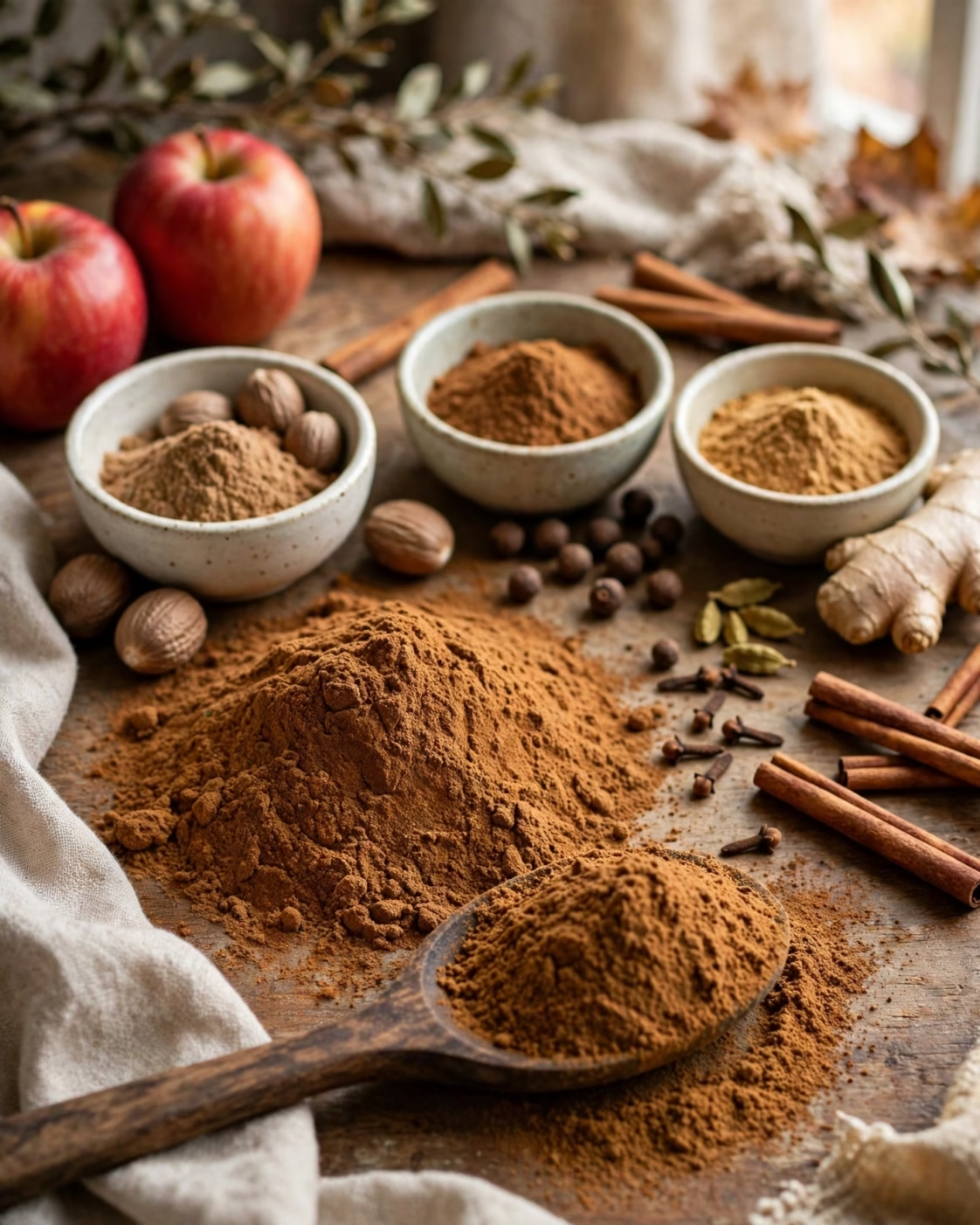
Apple Pie Spice Recipe
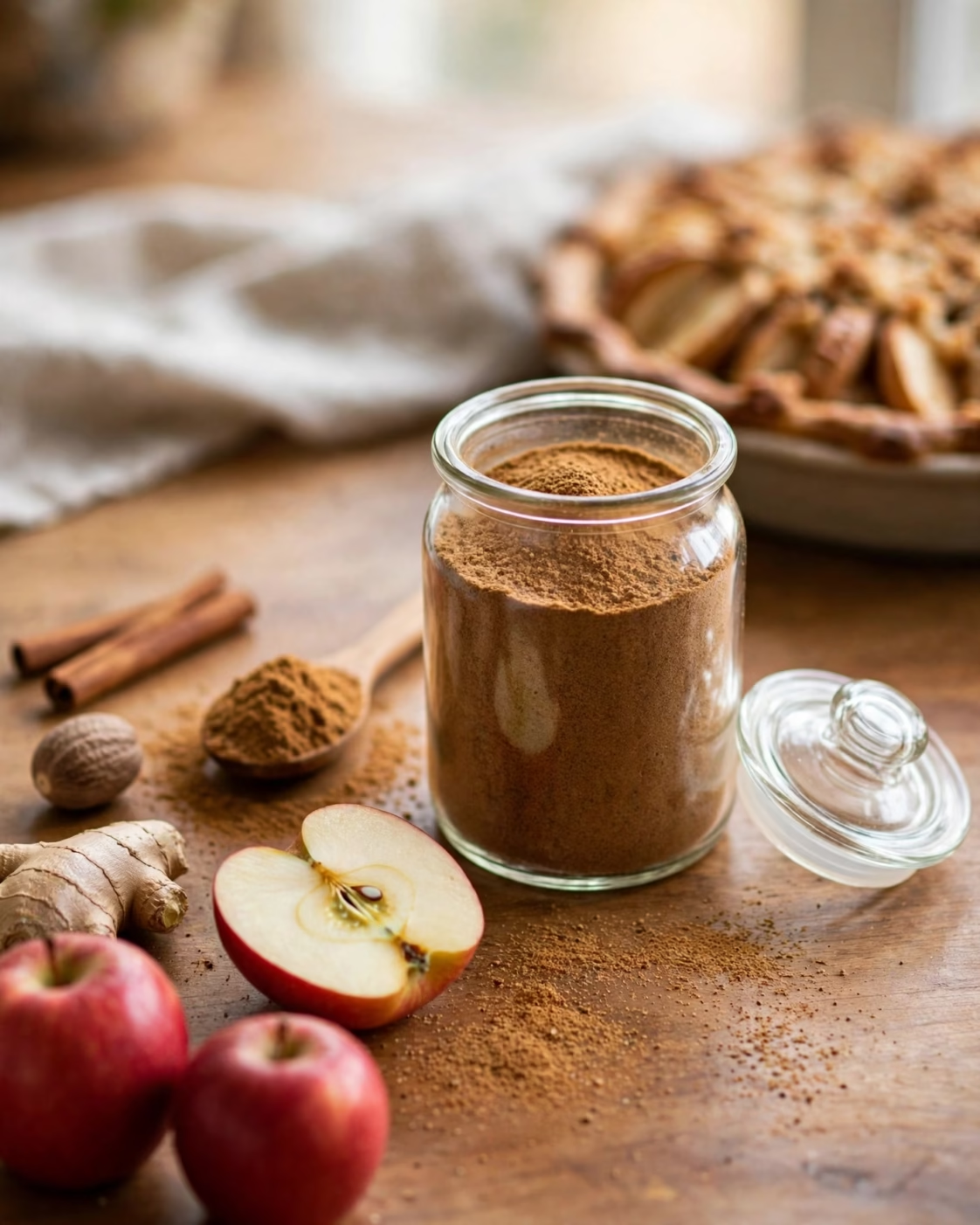
This version follows the original apple pie spice recipe. Make the base blend first. It needs no specialty spices, keeps cinnamon dominant, and leaves cloves optional.
Base Blend
- 4 tablespoons ground cinnamon
- 2 teaspoons ground nutmeg
- 1 teaspoon ground allspice
- 1 teaspoon ground ginger
Optional Add Ins for the Full Batch
For a deeper batch, add 1/2 teaspoon ground cardamom and 1/4 teaspoon ground cloves. The base makes about 16 teaspoons, or about 16 3/4 teaspoons with both additions. Use spoon measures first, since gram amounts vary by brand, grind, and age.
Equipment
You need measuring spoons, a small mixing bowl, and a mini whisk, fork, or spoon, plus a clean, airtight 4 fl oz spice jar for the full batch.
Method
- Measure the cinnamon, nutmeg, allspice, and ginger into a small mixing bowl.
- Add cardamom or cloves if you want a deeper, more aromatic blend.
- Whisk until the color looks even, breaking up clumps with the back of a spoon. Sift first if the spices are very clumpy.
- Transfer the blend to a clean, dry, airtight spice jar. Close it and shake briefly.
- Label the jar with the month you mixed it. Store it in a cool, dark, dry pantry away from the stove, oven, sunlight, and steam.
Homemade Apple Pie Spice Recipe Card
This card sums up the full batch for quick measuring, with the same base, the same optional accents, and the same five minute, no cook method. Yield: About 1/3 cup, roughly 16 teaspoons base blend or 16 3/4 teaspoons with optional spices.

Why This Ratio Works
This ratio works because cinnamon stays dominant while nutmeg and allspice give recognizable pie flavor. Sharper spices stay optional, so apples keep their freshness.
Apple Pie Spice Ratio Guide
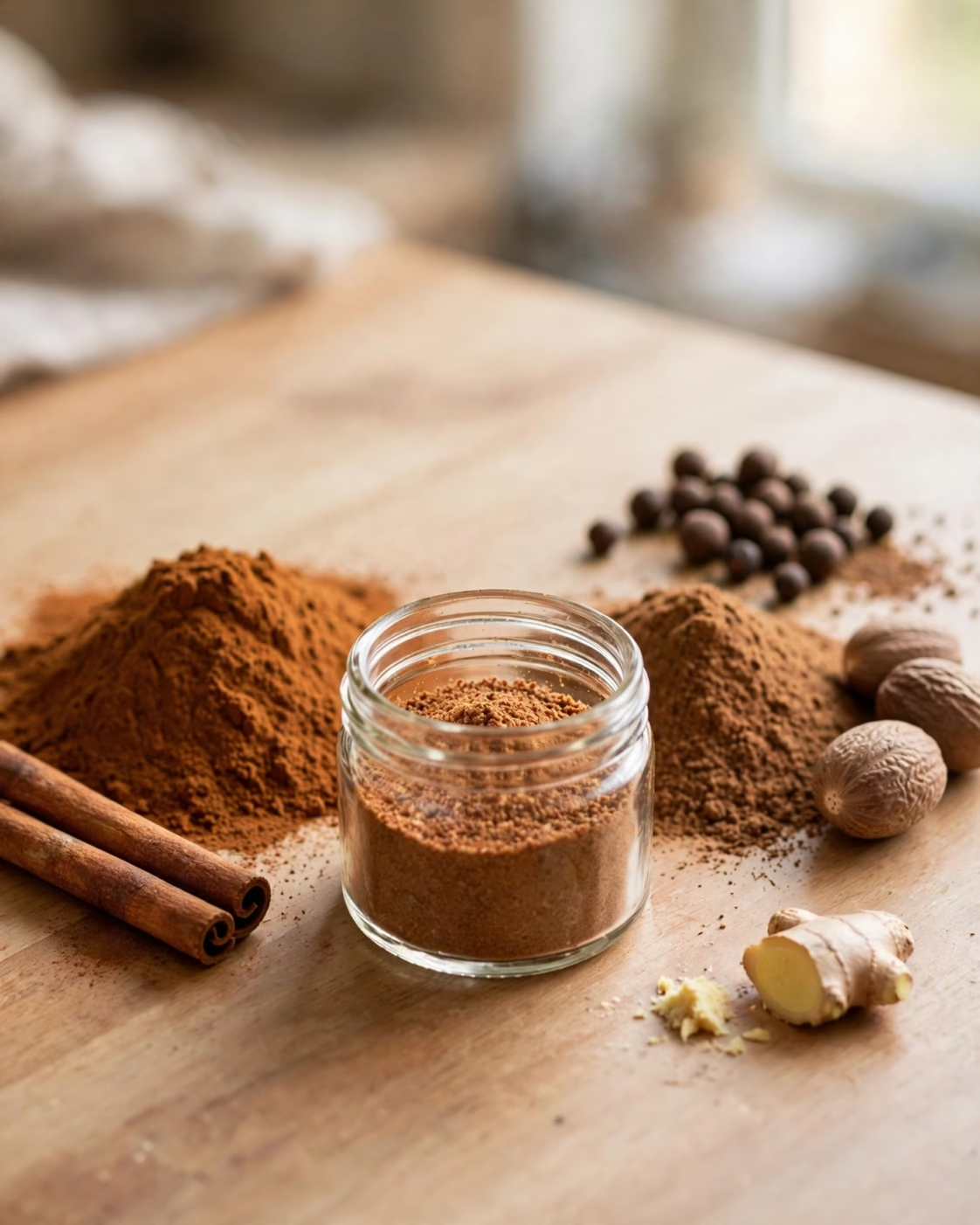
Cinnamon supplies the familiar aroma, nutmeg adds bakery warmth, allspice fills out the middle, and ginger prevents a dull result. The mix should sit behind the apples rather than take over.
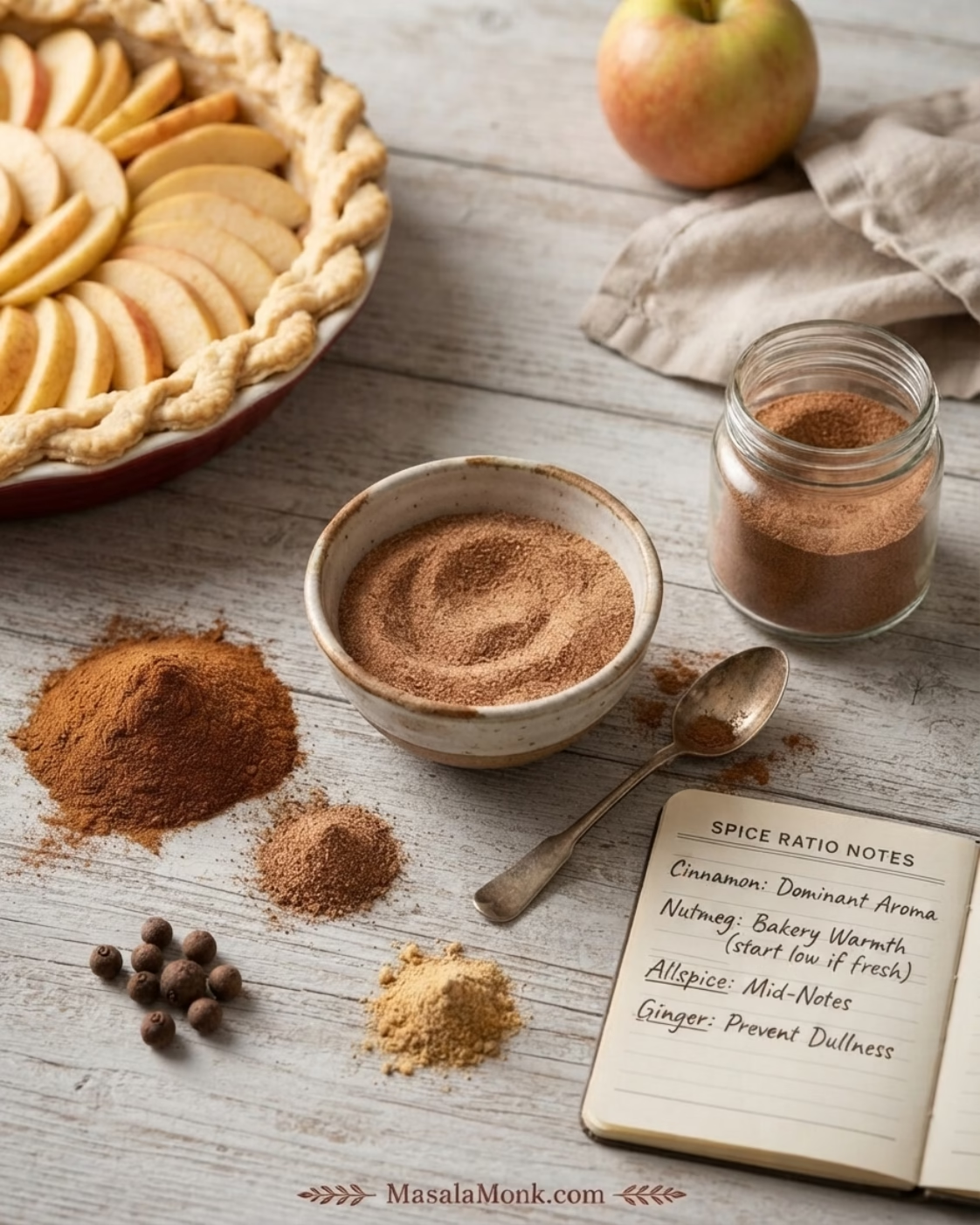
Smell it before jarring: a balanced blend reads mainly as cinnamon with a warm, rounded finish. Freshly grated nutmeg can taste stronger than already ground nutmeg, so start a little below the recipe amount when grating it yourself.
Keep cinnamon in charge, let apples stay first, and smell the blend before it goes in the jar.
Small Batch for 1, 2 Pies
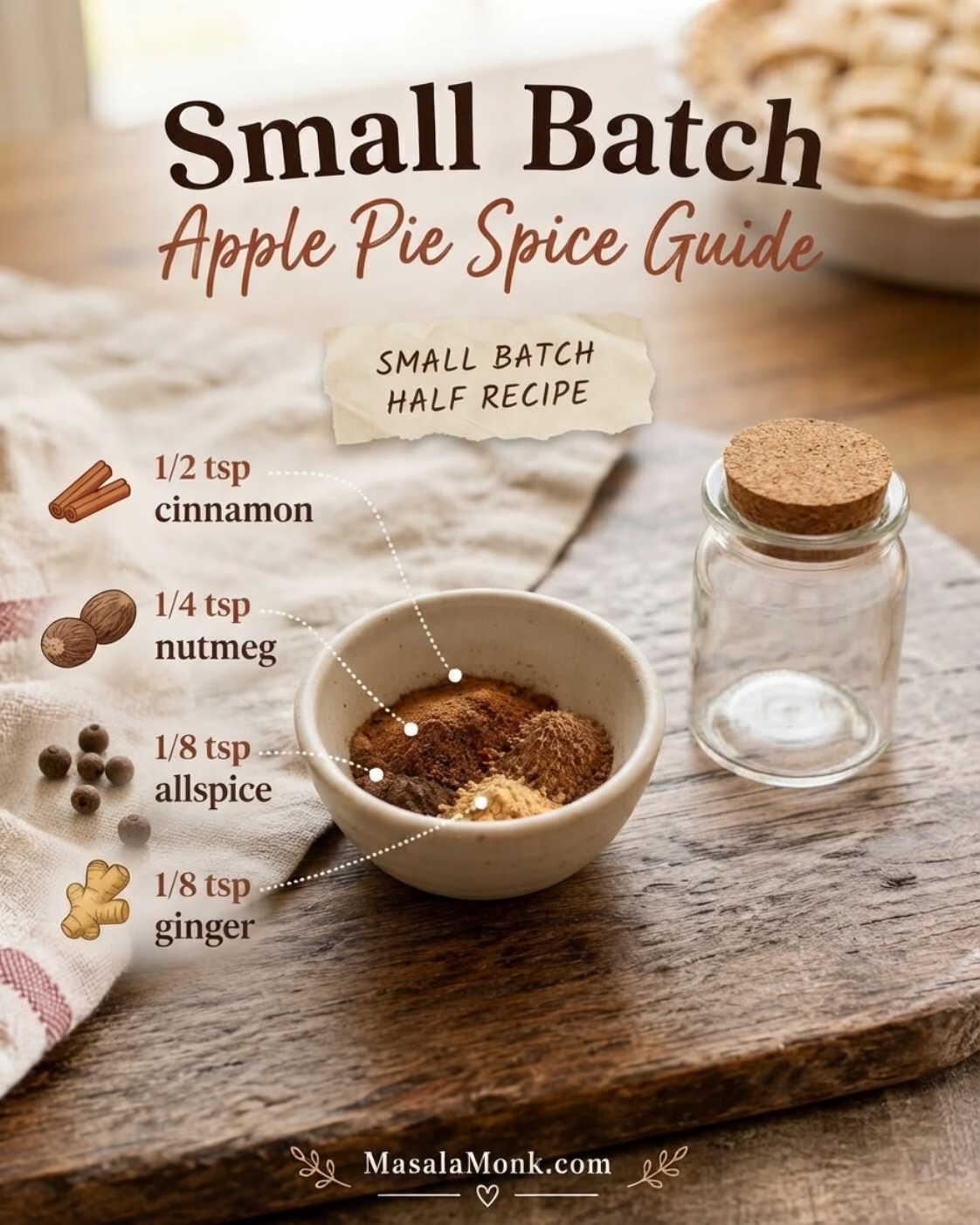
This smaller batch makes about 4 teaspoons, enough for two standard pies, or one pie plus leftovers for cider, oatmeal, or a cinnamon sugar topping. For one 9 inch pie, begin with 1 1/2 to 2 teaspoons in the filling.
- 1 tablespoon ground cinnamon
- 1/2 teaspoon ground nutmeg
- 1/4 teaspoon ground allspice
- 1/4 teaspoon ground ginger
Small Batch Apple Pie Spice Guide
Halve the main recipe for a half batch, and store it in a 2 fl oz spice jar. It offers a low risk way to learn whether you prefer a softer, brighter, or deeper apple spice profile.
How to Adjust the Flavor
Once you know what each spice contributes, you can tweak the mixture without worrying about ruining it. Keep cinnamon dominant, then use the other spices to make flavor rounder, brighter, or deeper.
How Each Spice Changes the Blend
You do not need every warm spice from the cabinet. The most familiar pantry result comes from keeping the mix mostly cinnamon, nutmeg, and allspice, and adding ginger only if you want extra warmth.
| Spice | Role |
|---|---|
| Cinnamon | Familiar aroma |
| Nutmeg | Bakery warmth |
| Allspice | Rounds the middle |
| Ginger | Brightness and gentle heat |
3 Ways to Make It
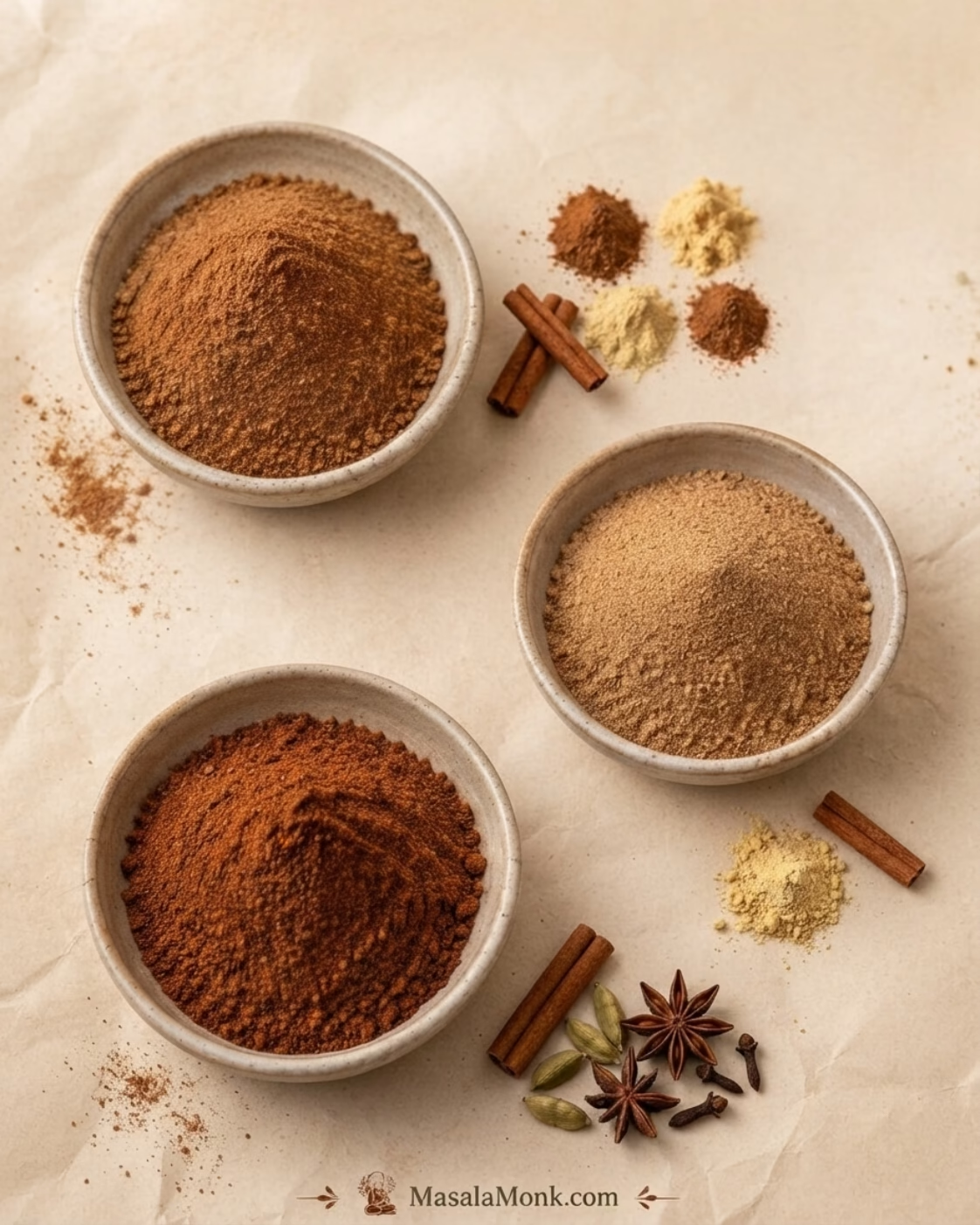
Pick a blend based on what you want from the apples: classic and familiar, simple and store bought style, or deeper and more bakery like. There is no single official version, so choose the one that matches your pantry and dessert.
Three Apple Pie Spice Versions
Use the store bought style version the same way you would use the full blend, but expect a simpler, more classic flavor. Reserve the aromatic version for cases where a deeper spice note will not overpower the apples.
How Much to Use
The common error is over seasoning rather than blending incorrectly. Begin with less than feels necessary, because warming apples with sugar, lemon, and butter intensifies the spices.
Start Low, Then Taste After Heating
For pie filling, cider, or stovetop apple topping, warm the mixture for several minutes before adjusting. Heat rounds cinnamon, warms nutmeg, and can sharpen clove and ginger. A valued pie deserves a fresh batch rather than extra old spice.
Quick Usage Amounts
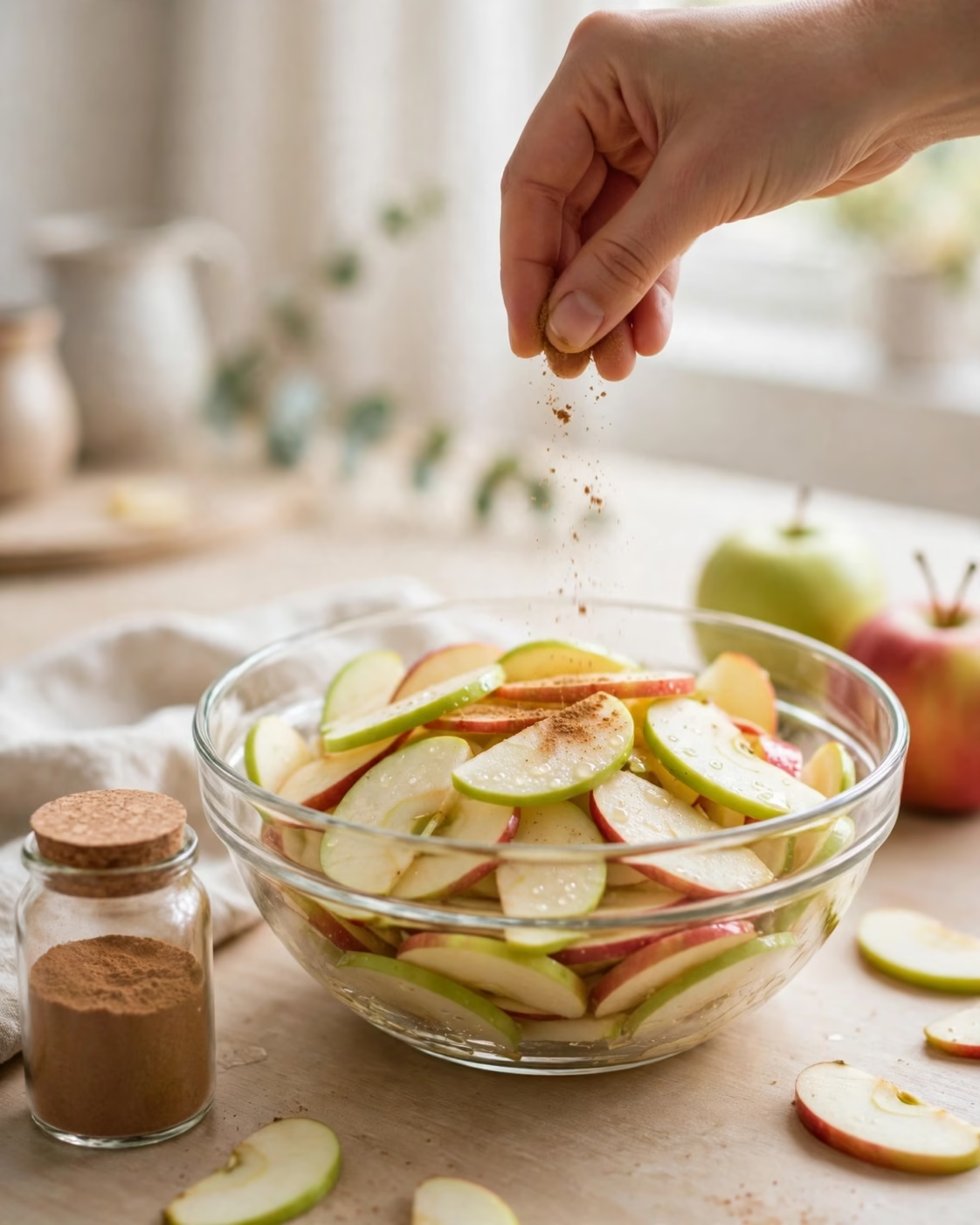
Cut back when the goal is fresh, tart, or floral apple character, as in plain raw apple salads or lightly sweetened compotes, where a pinch suffices.
A Useful Pie Benchmark
McCormick’s simple apple pie formula calls for 1 1/2 teaspoons for a whole pie with roughly 8 cups sliced apples. That amount works as a reliable starting point, rising to 2 teaspoons for richer fillings or larger apple quantities.
Adjust for the Apples and Crust
Sweet apples do well with lemon and a restrained hand on warm spices, while very tart apples can support deeper spicing. With rich homemade pastry, keep the filling gently warmed by spice rather than dominated by it.
Substitutions When You’re Missing a Spice
A missing spice is rarely a reason to stop. This blend is a background note rather than the whole dessert, so continue with what is on hand. The most reliable fallback is cinnamon with smaller additions of nutmeg and allspice.
Need 1 Teaspoon Apple Pie Spice Right Now?
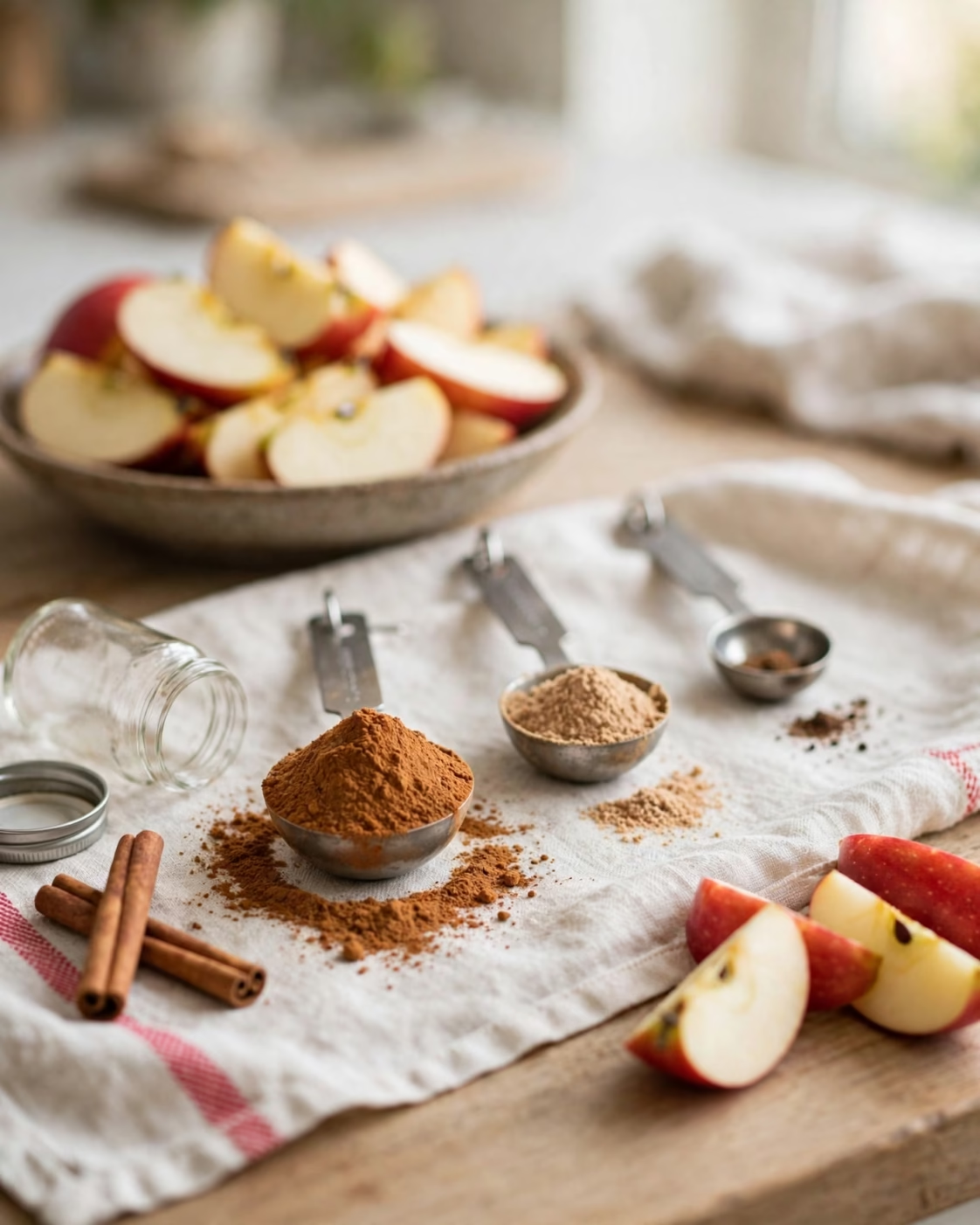
This option covers the moment when the jar is empty but baking must continue today. It gives cinnamon and nutmeg a rounder pie spice finish. Mix 3/4 teaspoon cinnamon, a scant 1/4 teaspoon nutmeg, and a small pinch of allspice.
Missing Spice Fixes
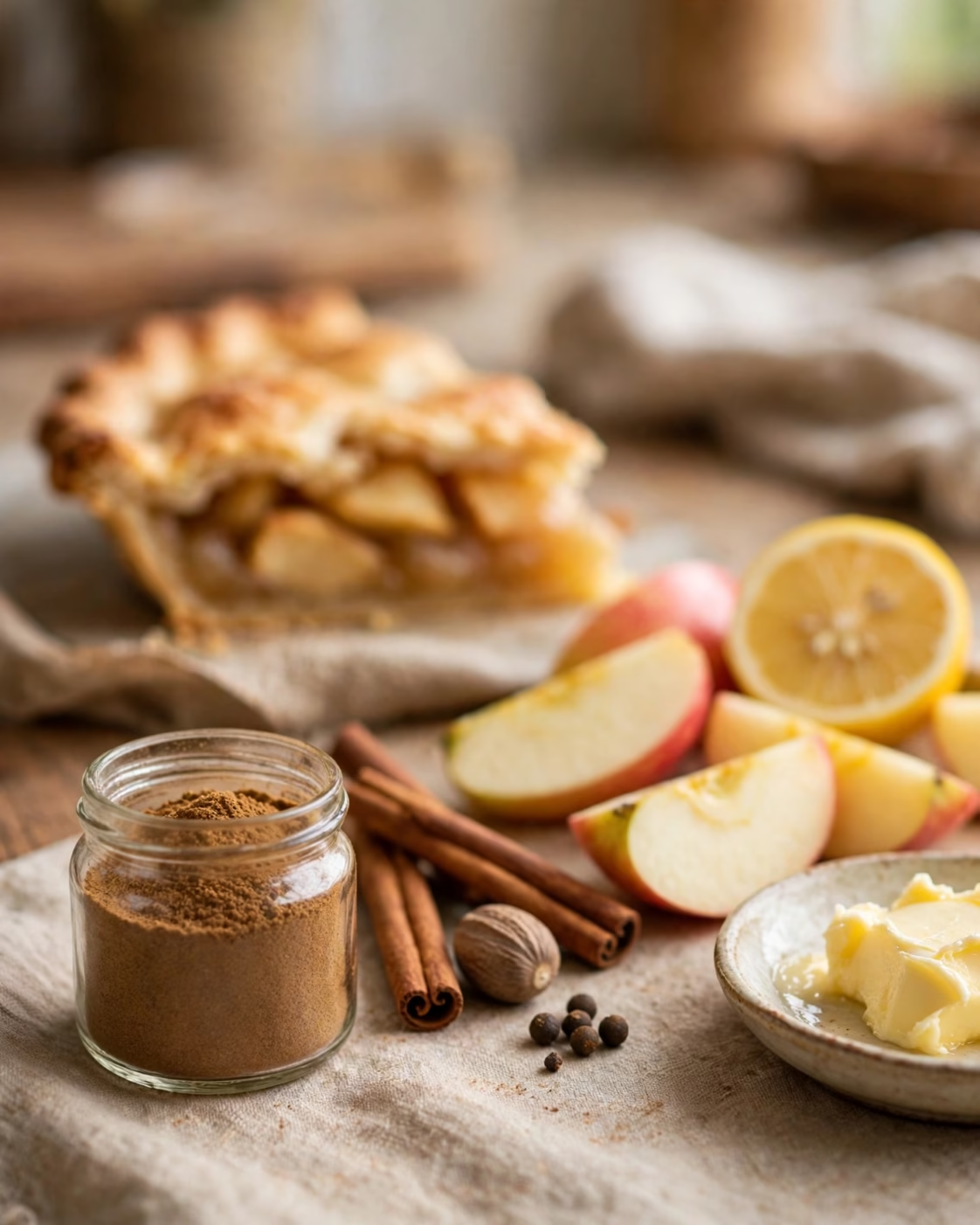
An approximate mixture is usually sufficient because apples, sugar, lemon, and butter carry the dessert. A tiny pinch of allspice helps round out cinnamon and nutmeg without a store trip. Chai spice can work in some apple desserts, but use it sparingly since it may taste stronger, more cardamom forward, or slightly peppery.
Can You Use Cinnamon Instead?
Cinnamon alone can work as a stand in, although flavor will be less layered. It carries the main scent associated with apple pie. Add vanilla, lemon, brown sugar, maple syrup, or butter to give the dessert more depth.
Can You Make It Without Cinnamon?
A warm apple seasoning can be made without cinnamon, but it will not match classic apple pie spice, since cinnamon defines flavor in most versions. For one pie, use 1/2 teaspoon allspice, 1/4 teaspoon ginger, 1/8 teaspoon nutmeg, and a tiny pinch of cardamom, and treat it as its own cinnamon free apple blend.
Can You Make It Without Nutmeg?
Nutmeg can be left out by relying on cinnamon, allspice, and ginger instead. A tiny pinch of mace is useful when available, because it is related to nutmeg and offers a similarly warm, aromatic character.
Apple Pie Spice vs Pumpkin Pie Spice
Apple pie spice and pumpkin pie spice are similar warm blends that can often be swapped in everyday baking. Apple pie spice is generally softer and led by cinnamon, allowing apple taste to remain bright and fruit led. Pumpkin pie spice is generally deeper and warmer, with ginger or clove more prominent, because pumpkin calls for stronger spice support.
Apple Pie Spice vs Pumpkin Pie Spice Comparison
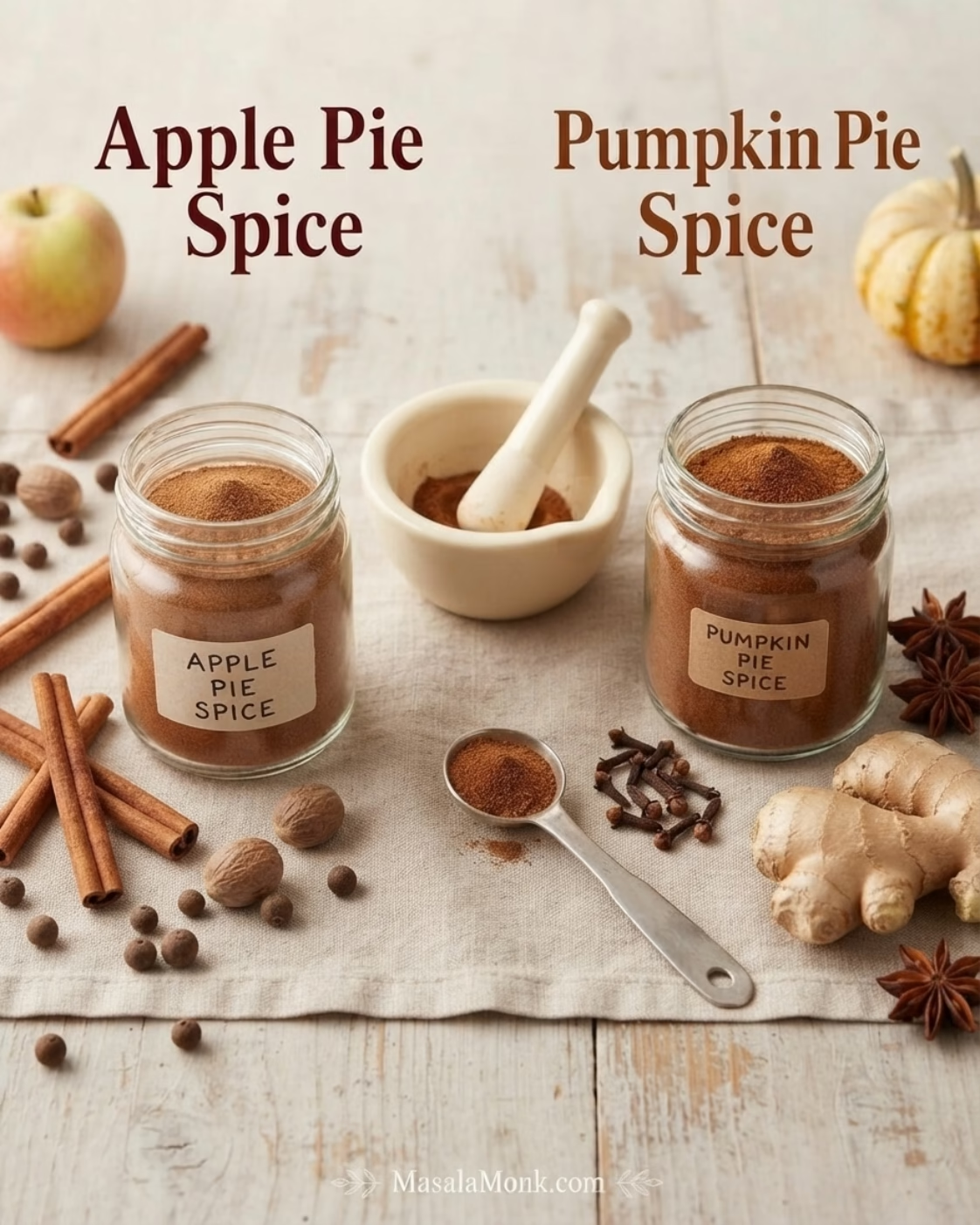
Pick the apple blend when apple flavor should remain dominant, and reach for Pumpkin pie spice when a deeper, heavier spice character is wanted.
If a pumpkin blend smells strongly of clove or ginger, begin with roughly three quarters of the quantity requested, then increase it only after checking the mixed filling by smell or a cooked filling, cider, or topping by taste.
Where This Blend Works Best
Treat the blend as a warm background note for dishes where apples need a little rounded warmth. The right amount shifts with the method, whether it is baked, simmered, sprinkled on top, or stirred into a drink.
Apple Desserts
Cooked apples tolerate a larger amount of spice because heat mellows sharp edges and lets cinnamon, nutmeg, and allspice meld into the fruit.
Apple Pie Filling
Apple pie filling is the clearest test for the blend because spices bloom as apples cook, so warm the filling and then decide whether more spice is needed. Use 1 1/2 to 2 teaspoons for 5 to 6 cups of filling.
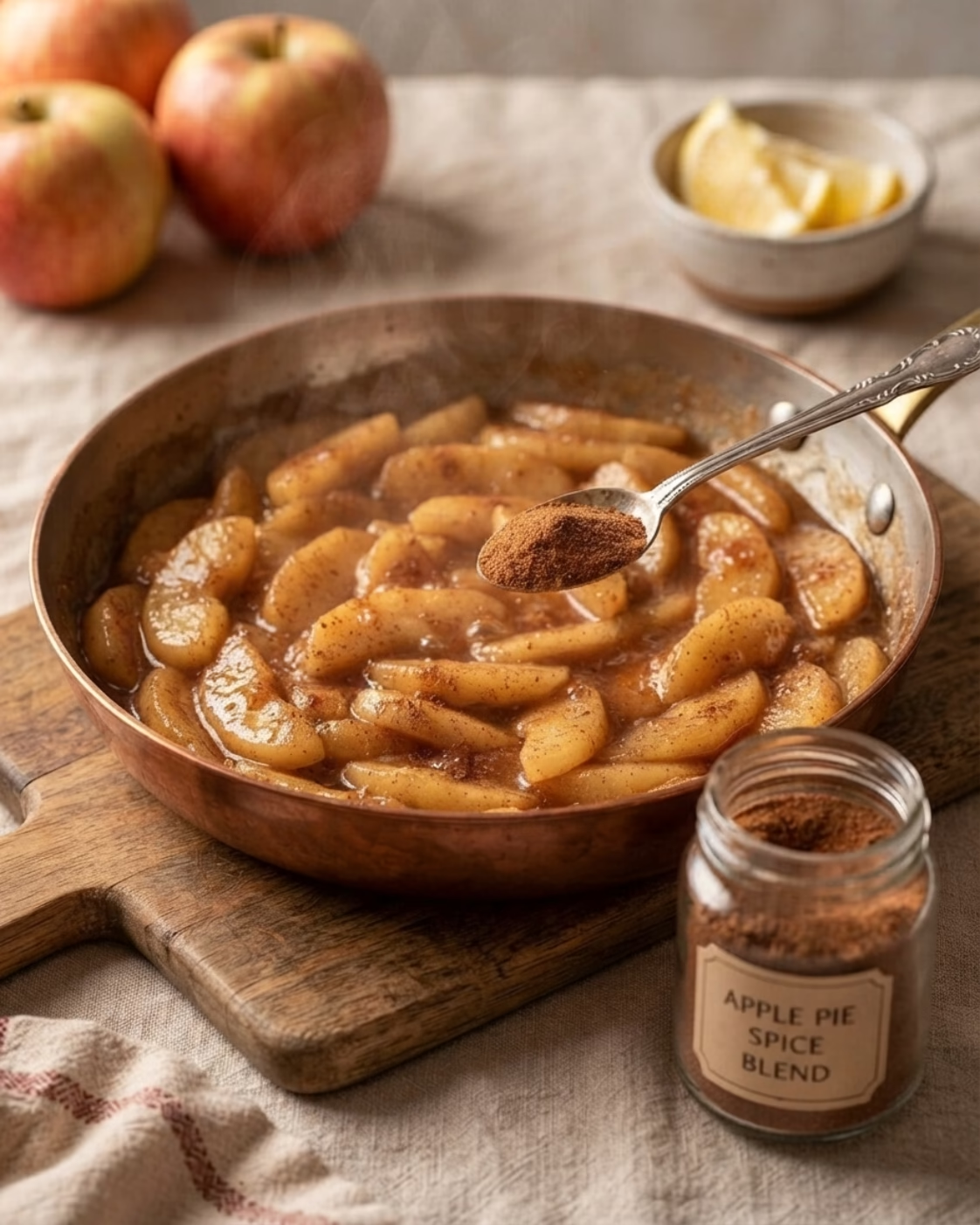
For a classic pie, use the blend in the filling alongside firm apples, lemon, sugar, and a buttery crust, as in this Cinnamon apple pie approach. For a Dutch pie, season the apples rather than heavily spicing the crumb topping.
For a crisp, season the fruit more than the topping. For baked apples, mix the blend with butter, brown sugar, oats, or chopped nuts before stuffing the apples.
Breakfast and Snacks
For breakfast dishes, use the blend sparingly. A pinch in a warmed stewed apple topping gives pancakes a dessert like character, while the same small amount in oatmeal with apples, maple syrup, and nuts adds warmth without dominating.
Apple Crisp, Muffins, and Quick Breads
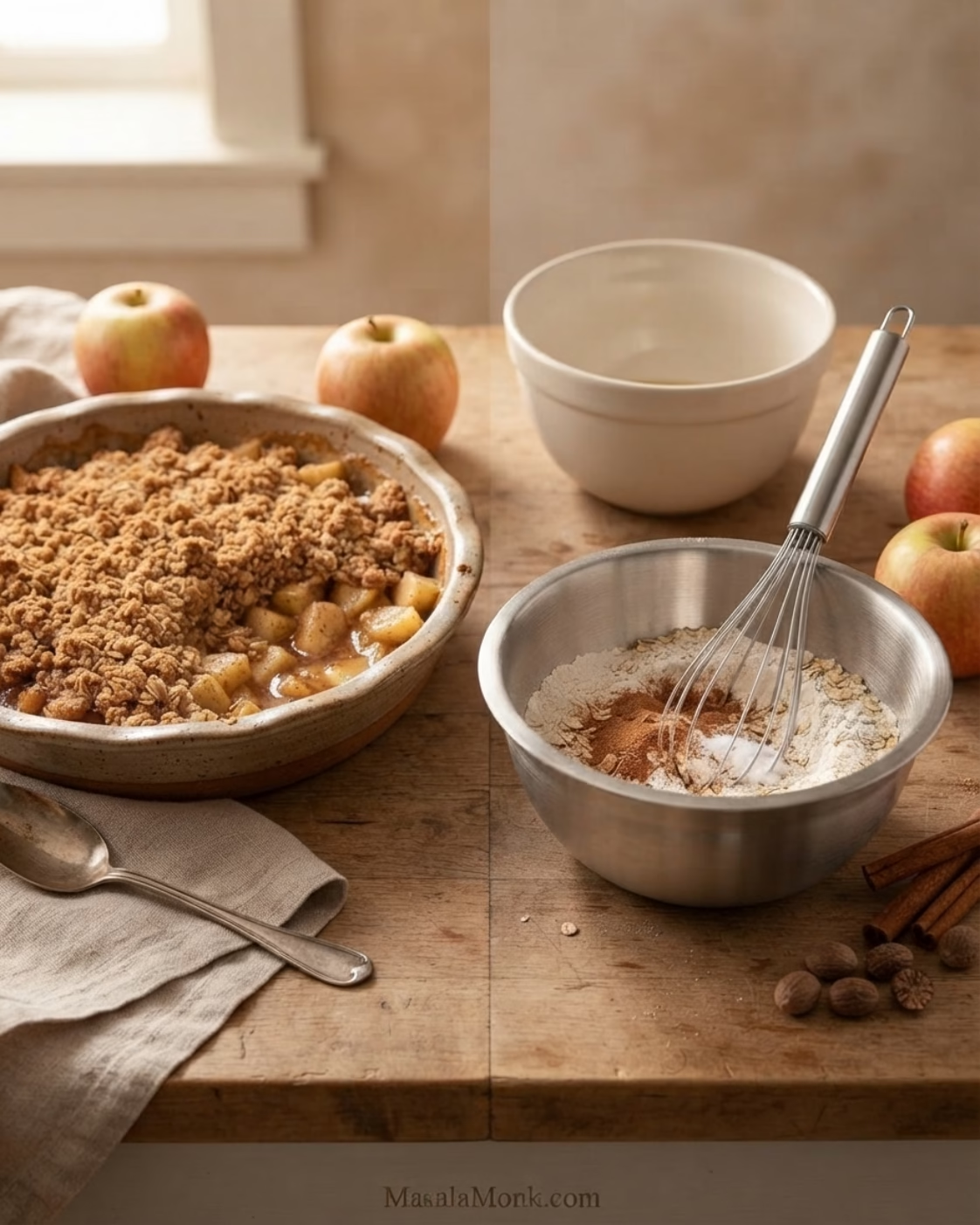
For crisps and crumbles, most seasoning belongs in the fruit itself, where it can develop as apples cook. For muffins and quick breads, whisk the blend through the dry ingredients before any wet ingredients are added.
Drinks and Toppings
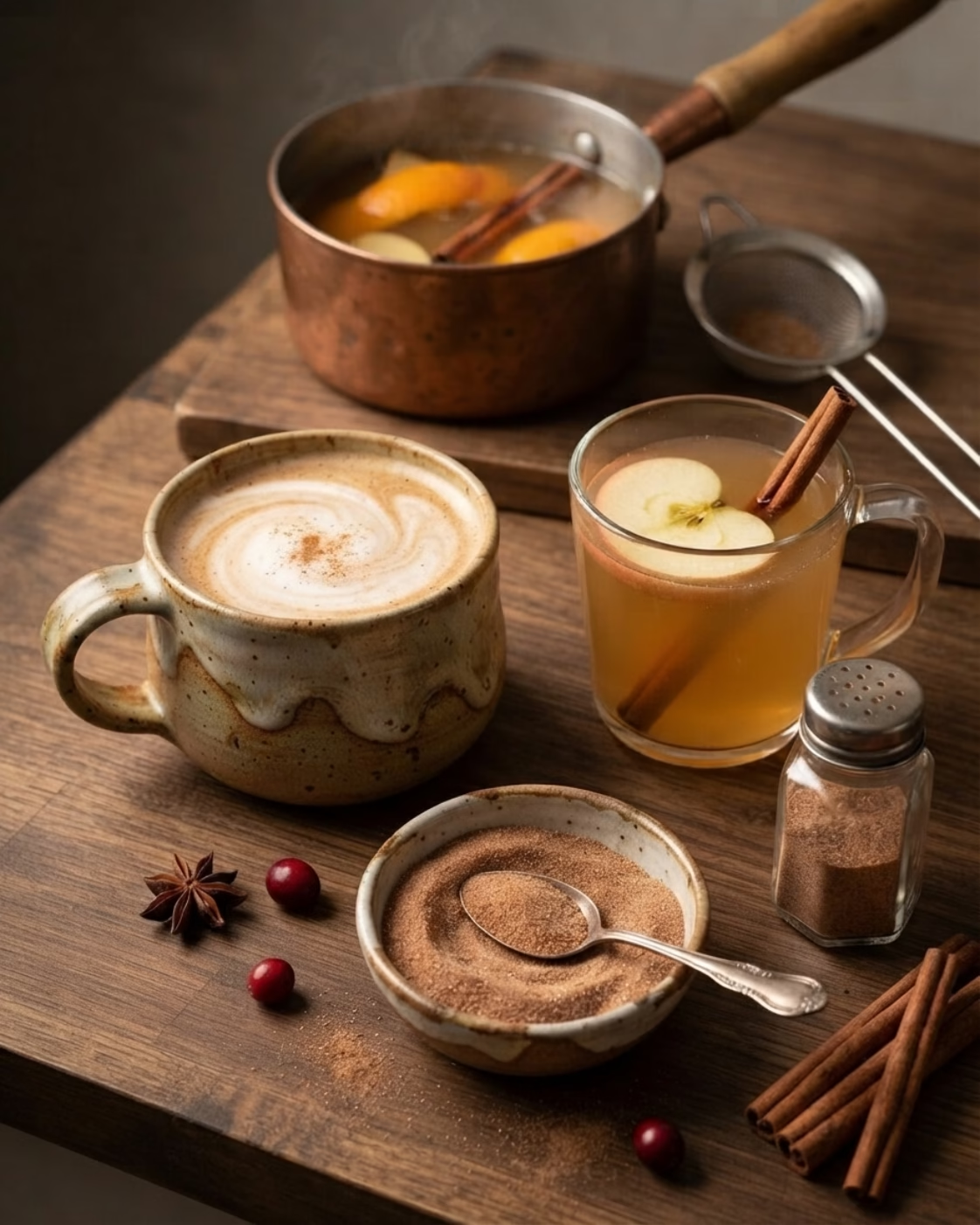
For cider, simmer gently with apple juice, orange peel, and sweetener if needed, then strain for a smoother mug. A tiny pinch in coffee, latte, or cocoa works best alongside milk, cream, or maple syrup. For a cinnamon sugar topping, combine 0.25 teaspoon of apple pie spice with 1 tablespoon of sugar and keep the spice proportion low.
How to Store It So It Stays Fragrant
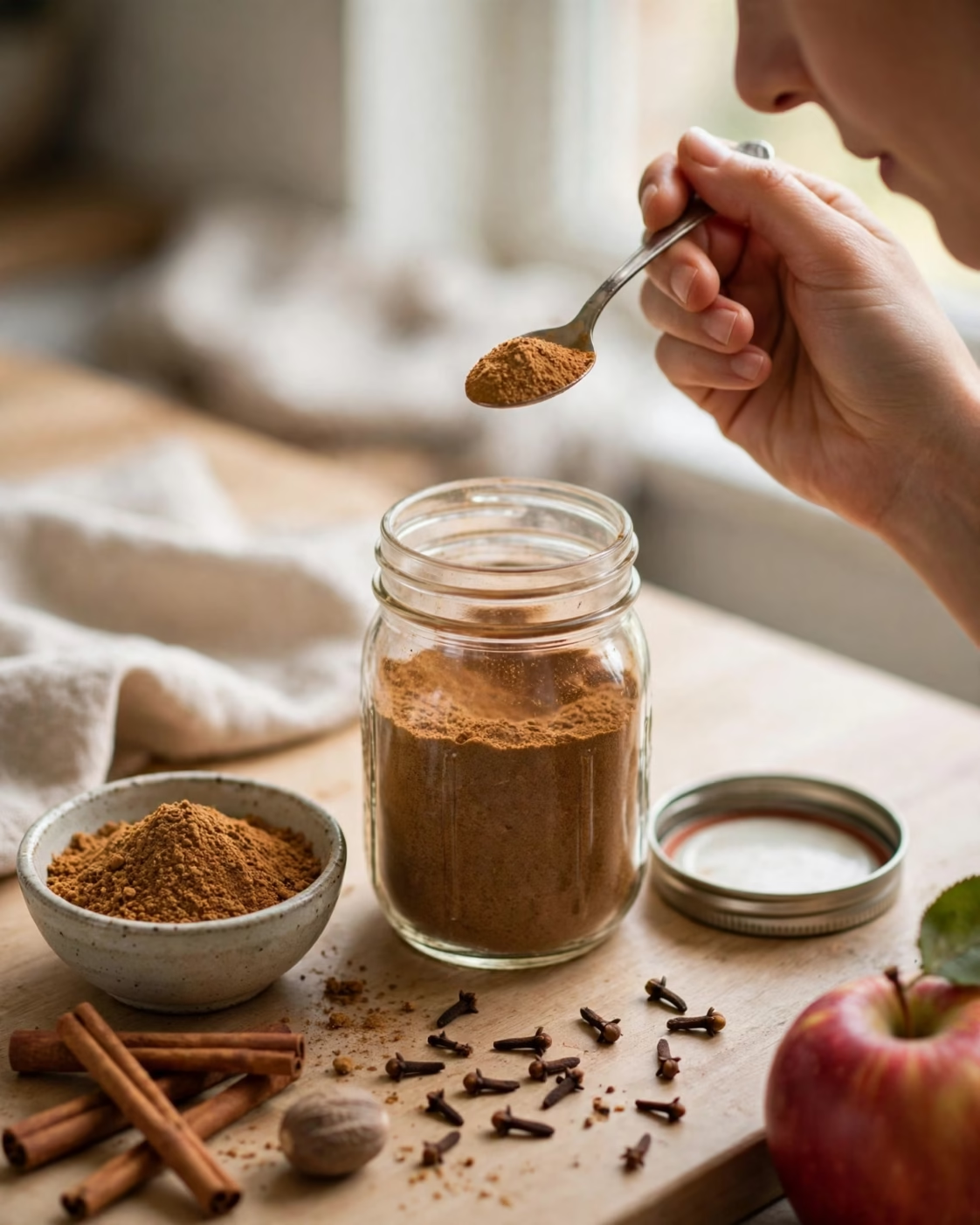
Ground spices lose potency gradually, so storage determines whether the finished mix stays fragrant. Keep it in a clean, dry, airtight jar in a cool, dark pantry, away from the stove, oven, dishwasher, sunny windows, and anywhere steam or heat can reach it.
Best flavor is within 6 to 12 months. Do not add brown sugar to the stored mix if a pure spice blend is wanted, because it can clump and turn the blend into a sweetened topping.
Best jar size
Because the complete mixture occupies roughly 80 to 85 ml, a 4 fl oz container is the appropriate choice for the whole amount, while a 2 fl oz container fits a halved amount rather than the entire recipe.
Freshness test
Judge freshness by opening the container and checking its scent, which ought to be warm, sweet, and distinctly spiced. When aroma is faint, a slightly larger amount can work for oatmeal or pancakes, yet a newly mixed batch is advisable before a holiday pie.
Storage and Troubleshooting Cues
Before significant baking, check aroma as a guide. A flat smelling mixture should be replaced, whereas an overly sharp mixture points to choosing gentler cinnamon or reducing stronger components in the next batch.
Common Mistakes to Avoid
Too much clove is a particular risk, since a sharp scent before baking becomes even more pronounced in a heated filling, so keep cloves to a pinch or leave them out. Cardamom is optional, and a version without it remains entirely acceptable.
Keep the stored mixture unsweetened so it remains flexible, smell cinnamon and nutmeg before mixing a full batch, and when in doubt, make the mix softer rather than sharper, since you can always add a pinch more later.
FAQs
What spices are in apple pie spice?
The base blend is 4 tablespoons ground cinnamon, 2 teaspoons ground nutmeg, 1 teaspoon ground allspice, and 1 teaspoon ground ginger, for about 1/3 cup total. For a more aromatic version, you can add 1/2 teaspoon ground cardamom and 1/4 teaspoon ground cloves. The blend contains no sugar, so sweetness can be set separately in the pie or dessert.
How much apple pie spice do I use for a 9-inch pie?
Use 1 1/2 to 2 teaspoons for a 9-inch apple pie, with 1 1/2 teaspoons as a safe starting point. Spices bloom as the apples warm with sugar, lemon, and butter, so a quiet blend in the bowl can taste stronger after baking. Start at the lower end for brighter apple flavor, and use 2 teaspoons for richer filling or a larger amount of apples.
Can you use pumpkin pie spice instead of apple pie spice?
Yes, pumpkin pie spice can usually replace apple pie spice 1 to 1. If it smells clove or ginger heavy, start with about 3/4 of the amount, then adjust after smelling the mixed filling or tasting a cooked filling. Apple pie spice is softer and more cinnamon-forward, while pumpkin pie spice is often deeper and more ginger or clove forward.
How long does homemade apple pie spice last, and how should I store it?
Store it in a clean, dry, airtight jar in a cool, dark, dry pantry away from the stove, oven, sunlight, and steam. Label the jar with the month you mixed it. For best flavor, use it within 6 to 12 months. It may remain usable longer if kept dry, but aroma and flavor will fade, and if it smells flat on opening it will probably taste flat in pie or crisp.
Final Thoughts
A useful blend should simplify baking rather than add extra work. Cinnamon should remain dominant, with nutmeg and allspice softening and completing it, while more potent spices stay in the background.
Ideally the mix smells warm on opening, gives the filling a balanced flavor, and blends quietly into the dessert while letting apple character come forward.
For a pie, use 1 1/2 to 2 teaspoons, store the remainder in a dry, dark place, and let the mixture warm the apples without overpowering them.
Print
Apple Pie Spice Recipe
In This Apple Pie Spice Guide If the jar is empty and apples are waiting, this guide keeps the fix simple. It starts with the ratio, then shows how to mix, use, and store the blend.
- Total Time: 5 min
- Yield: About 1/3 cup, roughly 16 teaspoons base blend or 16 3/4 teaspoons with optional spices 1x
Ingredients
Base Blend
4 tablespoons cinnamon, ground
2 teaspoons nutmeg, ground
1 teaspoon allspice, ground
1 teaspoon ginger, ground
Optional Add-Ins for the Full Batch
1/2 teaspoon cardamom, ground
1/4 teaspoon cloves, ground
Instructions
Method
1-Measure the cinnamon, nutmeg, allspice, and ginger: Measure the cinnamon, nutmeg, allspice, and ginger into a small mixing bowl.
2-Add cardamom or cloves if you want: Add cardamom or cloves if you want a deeper, more aromatic blend.
3-Whisk until the color looks even, breaking: Whisk until the color looks even, breaking up clumps with the back of a spoon. If the spices are very clumpy, sift them first.
4-Transfer the finished apple pie spice to: Transfer the finished apple pie spice to a clean, dry, airtight spice jar. Close and shake briefly if needed.
5-Label the jar with the month you: Label the jar with the month you mixed it and store it in a cool, dark, dry pantry away from the stove, oven, sunlight, and steam.
- Prep Time: 5 min
- Cook Time: 0 min
- Method: no_cook