

Why You’ll Love This Beef Bulgogi
Beef Bulgogi is a go-to recipe when you want big flavor with minimal fuss. This Korean classic combines thinly sliced, marinated beef with quick, high-heat cooking for caramelized edges and juicy centers. It works well on weeknights, for meal prep, or when you’re hosting friends and want something impressive without a lot of hands-on time.
- Ease of preparation: The Beef Bulgogi recipe uses a simple marinade you can mix in one bowl, and thin slices cook in 2 to 3 minutes per side. Freezing the steak briefly helps you slice it thinly and saves time, which makes this bulgogi perfect for busy parents, students, or working professionals who want a fast, satisfying meal.
- Health benefits: This version highlights lean, protein-rich rib eye steak and uses toasted sesame oil for healthy fats. The grated pear and brown sugar contribute natural sugars for flavor, while reduced sodium soy sauce offers a balanced savory note. For diet-conscious cooks, it is easy to adjust salt and oil levels to fit your needs.
- Versatility: Beef Bulgogi adapts to many serving styles. Pile it on steamed rice, serve with lettuce wraps and banchan, or toss with noodles. You can swap proteins or make simple swaps to fit gluten-free, low-calorie, or plant-based diets without losing the characteristic sweet-savory profile.
- Distinctive flavor: What makes this beef bulgogi special is the interplay of sweet, salty, nutty, and spicy elements: soy sauce, sesame oil, garlic, grated pear for tenderizing, and a spoonful of gochujang for subtle heat. Quick searing builds smoky caramelization that creates a crave-worthy crust on each slice.
Author: Camille Hayes
My blog shares my passion for cooking by offering a variety of recipes that are simple and accessible to everyone. My ambition is to inspire readers to try new flavors, cook with joy, and create memorable moments around the table.
For another quick weeknight Asian-inspired stir-fry, check out this quick chicken stir fry recipe for ideas on stir-fry timing and technique.
Jump To
- 1. Why You’ll Love This Beef Bulgogi
- 2. Essential Ingredients for Beef Bulgogi
- 3. How to Prepare the Perfect Beef Bulgogi: Step-by-Step Guide
- 4. Dietary Substitutions to Customize Your Beef Bulgogi
- 5. Mastering Beef Bulgogi: Advanced Tips and Variations
- 6. How to Store Beef Bulgogi: Best Practices
- 7. FAQs: Frequently Asked Questions About Beef Bulgogi
- 8. Beef Bulgogi
Essential Ingredients for Beef Bulgogi
Below is the complete ingredients list used in this Beef Bulgogi recipe. Each ingredient is shown with the exact measurement so you can shop and prepare with confidence.
- 1 1/2 pounds boneless rib eye steak – main protein, well-marbled for juicy, flavorful slices
- 1/2 small pear, peeled and coarsely grated – adds natural sweetness and tenderizes the meat
- 1/4 cup soy sauce (reduced sodium recommended) – provides savory umami and salt
- 2 tablespoons brown sugar – balances salt with caramelized sweetness
- 2 tablespoons toasted sesame oil – adds nutty aroma and healthy fats
- 3 cloves garlic, minced – builds savory depth
- 1 tablespoon freshly grated ginger – bright, warm flavor that lifts the marinade
- 1 tablespoon gochujang (Korean red pepper paste) – gives mild heat and fermented umami
- 2 tablespoons vegetable oil, divided – for high-heat cooking and searing
- 2 green onions, thinly sliced – garnish for color and fresh onion bite
- 1 teaspoon sesame seeds (optional) – optional garnish for texture and nutty notes
Special Dietary Options:
- Vegan: Use thin slices of pressed, extra-firm tofu or seitan instead of beef. Replace fish or beef-based ingredients with tamari and add a teaspoon of mushroom powder for savory depth.
- Gluten-free: Substitute tamari or a certified gluten-free soy sauce for regular soy sauce. Ensure gochujang is gluten-free or use a gluten-free chili paste alternative.
- Low-calorie: Swap rib eye for top sirloin or flank steak trimmed of excess fat, and reduce the sesame oil to 1 teaspoon. Use a sugar substitute or cut brown sugar to 1 tablespoon if desired.
How to Prepare the Perfect Beef Bulgogi: Step-by-Step Guide
The steps below walk you through preparation from start to finish, including timing and cooking tips so your beef bulgogi turns out tender, caramelized, and full of flavor.
First Step: Prep and slice the beef
Wrap the rib eye steak in plastic wrap and place it in the freezer for 20 to 30 minutes. This firms the meat so you can slice thin, even pieces. Remove the steak from the freezer, unwrap, and slice across the grain into 1/4-inch thick pieces. Cutting against the grain shortens muscle fibers and produces more tender bites. If you prefer even thinner slices, freeze a few minutes longer but do not let it freeze solid.
Second Step: Make the marinade
In a medium bowl, combine the following:
- 1/2 small pear, peeled and coarsely grated
- 1/4 cup soy sauce (reduced sodium recommended)
- 2 tablespoons brown sugar
- 2 tablespoons toasted sesame oil
- 3 cloves garlic, minced
- 1 tablespoon freshly grated ginger
- 1 tablespoon gochujang (Korean red pepper paste)
Whisk the mixture until the sugar mostly dissolves and the gochujang is evenly dispersed. Taste a small amount on a spoon and adjust salt or sweetness if needed. The grated pear will add juice and tenderizing enzymes, so the marinade will appear more liquid than some other sauces.
Third Step: Marinate the beef
Place the sliced steak and the marinade into a gallon-size resealable bag. Squeeze out excess air, seal, and massage the bag so each slice gets coated. Marinate in the refrigerator for at least 2 hours or overnight for deeper flavor. If you are short on time, 30 minutes will still add noticeable flavor, but longer marinating yields better tenderness and infusion. Turn the bag occasionally so the meat soaks evenly.
Fourth Step: Preheat your pan
Use a heavy-bottom pan or cast iron grill pan for best caramelization. Place the pan over medium-high heat and let it get very hot; the surface should shimmer when you add oil. Heat 1 tablespoon vegetable oil until it is nearly smoking. High heat is essential to get quick searing and prevent the meat from stewing in its juices.
Fifth Step: Cook in batches
Remove beef from the marinade with tongs, letting excess drip back into the bag (discard the leftover marinade). Lay the slices in a single layer in the hot pan; overcrowding will lower the pan temperature and cause steaming rather than browning.
- Cook slices 2 to 3 minutes per side until charred and cooked through. Watch closely; thin slices cook fast.
- Transfer cooked beef to a warm plate and tent loosely with foil to keep warm.
- Add the remaining 1 tablespoon of vegetable oil between batches to keep the pan hot and prevent sticking.
Repeat until all the beef is cooked. The goal is quick searing that creates caramelized edges while keeping the center juicy.
Final Step: Finish and serve
Once all batches are done, toss the beef with sliced green onions and sprinkle 1 teaspoon sesame seeds if using. Serve immediately with steamed rice and sides like kimchi or pickled cucumbers. For lettuce wraps, provide perilla or romaine leaves, sliced scallions, and ssamjang or gochujang-based dipping sauce on the side.
Tip: Cook in small batches and keep the pan hot. That quick contact heat is what makes bulgogi sing.
Timing Summary
| Step | Time |
|---|---|
| Prep and partial freeze | 20-30 minutes |
| Marinating | At least 2 hours or overnight |
| Cooking | About 15 minutes total |
| Total | Approximately 3 hours (including marinating) |

Dietary Substitutions to Customize Your Beef Bulgogi
Protein and Main Component Alternatives
If you want to swap the beef or adapt to a different diet, here are reliable options that keep the bulgogi spirit intact.
- Chicken: Use thinly sliced boneless chicken thighs for more forgiving texture. Marinate 1 to 2 hours and cook 2 to 4 minutes per side depending on thickness.
- Pork: Thin pork shoulder or pork tenderloin works well. Pork may need slightly longer cooking, so watch for doneness and avoid overcooking.
- Seafood: Thinly sliced firm fish or large shrimp can be used; marinate briefly (15 to 30 minutes) to avoid texture breakdown.
- Vegan: Substitute extra-firm tofu pressed and thinly sliced, or use seitan. Marinate for 30 minutes; pan-fry until browned and slightly crisp.
Vegetable, Sauce, and Seasoning Modifications
Customize the sauce and add-ins to suit taste or dietary needs.
- Gluten-free soy alternative: Use tamari or coconut aminos in place of soy sauce.
- Sugar swaps: Replace brown sugar with coconut sugar or a 1:1 sweetener to lower refined sugar content.
- Less heat: Reduce gochujang to 1/2 tablespoon or omit; add a pinch of smoked paprika for color without the spice.
- Extra veg: Toss in sliced onions, carrots, or shiitake mushrooms during the last minute of cooking for added texture and volume.
Mastering Beef Bulgogi: Advanced Tips and Variations
Once you have the basics down, try these techniques to refine texture, flavor, and presentation.
Pro cooking techniques
- Velveting: For ultra-tender meat, soak thin slices briefly in a baking soda slurry (1/4 teaspoon baking soda per cup of water) for 15 minutes, rinse, then marinate. Do not exceed 15 minutes to avoid an off texture.
- High-heat searing: Use a cast iron pan or grill pan and preheat thoroughly. A hot surface gives the best Maillard reaction and caramelization, creating that smoky, slightly charred flavor.
- Resting: Let cooked beef rest for a minute on a warm plate before serving to let juices redistribute.
Flavor variations
- Spicy-sweet: Increase gochujang to 2 tablespoons and add a teaspoon of honey for a sticky glaze.
- Citrus twist: Add 1 teaspoon of orange zest to the marinade for a bright citrus note that pairs well with rice and greens.
- Herb finish: Garnish with thinly sliced cilantro or Thai basil for a fresh contrast to the rich meat.
Presentation tips
- Serve bulgogi on a large platter with steamed rice in the center and garnishes around the edge for a family-style spread.
- Offer lettuce leaves, sliced cucumbers, kimchi, and ssamjang so guests can build their own wraps.
- Top with sliced green onions and a sprinkling of sesame seeds for color and texture.
Make-ahead options
- Marinate beef and store in the fridge up to 24 hours for easy weeknight cooking.
- Freeze marinated beef flat in resealable bags for up to two months; thaw overnight in the refrigerator before cooking.
- Cooked bulgogi freezes well in portions; reheat briefly in a hot skillet to restore texture.
How to Store Beef Bulgogi: Best Practices
Proper storage keeps your beef bulgogi safe and tasty for later meals. Use these guidelines for both cooked and uncooked marinated meat.
Refrigeration
Store cooked bulgogi in an airtight container in the refrigerator for 3 to 4 days. Allow food to cool slightly before sealing to avoid excess condensation. For uncooked marinated meat, keep it in the fridge for up to 24 hours; longer marinating is fine but avoid leaving raw meat longer than 48 hours for safety reasons.
Freezing
Marinated uncooked beef: Portion into resealable bags, press flat, and freeze for up to 2 months for meal prep. Cooked bulgogi: Freeze in meal-sized portions for up to 2 months. Label with the date for best quality.
Reheating
Reheat cooked bulgogi in a hot skillet for a few minutes to crisp the edges, or microwave briefly covered with a damp paper towel to retain moisture. Avoid overcooking during reheating to preserve tenderness.
Meal prep considerations
Pack rice and bulgogi separately to prevent sogginess. Add fresh garnishes when serving to keep textures bright. Pre-sliced vegetables and pre-cooked rice will speed lunchbox assembly for busy days.

FAQs: Frequently Asked Questions About Beef Bulgogi
What is beef bulgogi?
Beef bulgogi is a popular Korean dish featuring thinly sliced beef marinated in a sweet-savory sauce made with soy sauce, sesame oil, garlic, ginger, and often grated Asian pear for tenderness. The meat is quickly grilled or pan-fried until caramelized and juicy. It’s known for its bold flavors—sweet from sugar or fruit, umami from soy, and a touch of heat from gochujang or black pepper. Traditionally, ribeye or sirloin works best due to marbling, but it’s versatile for home cooks. Prep takes 15-20 minutes plus marinating time (30 minutes to overnight), and cooking is fast—2-3 minutes per side on high heat. Serve it wrapped in lettuce leaves with rice for an authentic banchan-style meal. This dish pairs well with banchan like kimchi and spinach namul. (98 words)
What cuts of beef work best for bulgogi?
Ribeye and top sirloin are top choices for beef bulgogi because their marbling keeps the thin slices tender and flavorful after quick cooking. For budget options, flank steak or skirt steak slice easily against the grain and absorb marinade well, though they benefit from shorter marinating to avoid toughness. Aim for 1/8-inch thick slices—partially freeze the beef for 20-30 minutes first to make slicing easier. Avoid lean cuts like round steak, as they dry out. When shopping, look for fresh, bright red meat without excess fat. Marinate for at least 30 minutes, up to 24 hours in the fridge for maximum flavor infusion. This flexibility makes bulgogi accessible for weeknight dinners. (112 words)
What can I substitute for pear in beef bulgogi marinade?
In beef bulgogi marinade, Asian pear adds natural sweetness and enzymes to tenderize the meat. A great substitute is grated Fuji apple, which provides similar juiciness, mild sweetness, and tenderizing enzymes—use one medium apple peeled and grated for one pear. Kiwi works too (one small kiwi for tenderizing power, but limit to 15-30 minutes marinating to avoid mushiness). Pureed onion or pineapple juice can mimic the effect in a pinch, though they alter flavor slightly. Blend substitutes finely for even distribution. Always taste the marinade before adding meat and adjust sugar if needed. These swaps keep the dish authentic-tasting without special ingredients. Store extra marinade separately to avoid cross-contamination. (108 words)
What is gochujang and do I need it for beef bulgogi?
Gochujang is a thick, fermented red chili paste essential in Korean cuisine, blending spicy gochugaru chili, glutinous rice, soybeans, and salt for sweet-heat-umami depth. In beef bulgogi, 1-2 tablespoons add authentic mild spice and richness to the marinade—find it in red rectangular tubs in the Asian aisle of most grocery stores like Walmart or online via Amazon. If unavailable, substitute with 1 tablespoon gochugaru (Korean chili flakes) mixed with 1 teaspoon miso and a pinch of sugar, or sriracha with honey for milder heat. Start with less if spice-sensitive, as flavors intensify during cooking. It’s shelf-stable once opened if refrigerated, lasting months. This ingredient elevates bulgogi’s profile without overpowering. (114 words)
How can I serve and store homemade beef bulgogi?
Serve beef bulgogi hot with steamed rice, kimchi, sliced cucumbers, perilla leaves, and ssamjang (soybean paste dip) for wrapping in lettuce leaves—authentic ssam style. Add banchan like seasoned spinach or bean sprouts for a full meal. Leftovers store in an airtight container in the fridge for 3-4 days; reheat in a hot skillet to crisp edges, or microwave with a damp paper towel. Freeze cooked bulgogi in portions for up to 2 months—thaw overnight in fridge and stir-fry briefly. Uncooked marinated beef freezes well too; portion into bags flat for quick thawing. Avoid refreezing cooked meat. This makes bulgogi ideal for meal prep, yielding 4 servings from 1.5 pounds beef. (112 words)
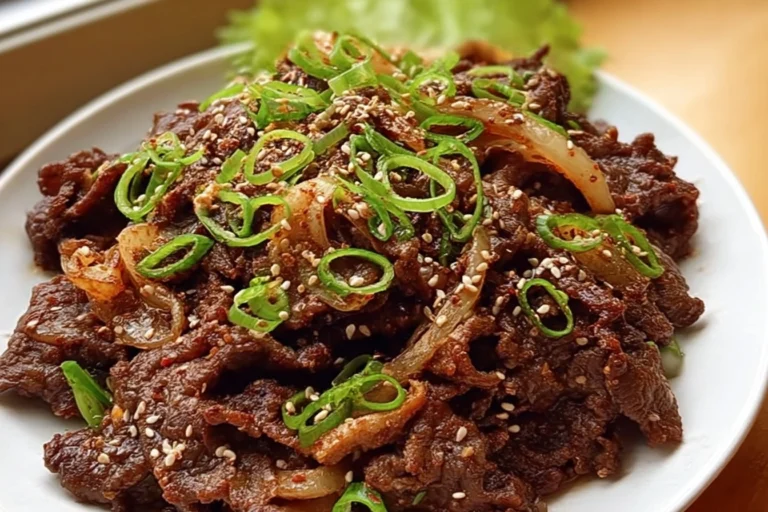
Beef Bulgogi
🥩 Tender and flavorful Korean marinated beef that melts in your mouth
🌶️ Perfect balance of sweet and savory with authentic Korean spices
- Total Time: 3 hours
- Yield: 6 servings
Ingredients
– 1 1/2 pounds boneless rib eye steak main protein, well-marbled for juicy, flavorful slices
– 1/2 small pear, peeled and coarsely grated adds natural sweetness and tenderizes the meat
– 1/4 cup soy sauce provides savory umami and salt
– 2 tablespoons brown sugar balances salt with caramelized sweetness
– 2 tablespoons toasted sesame oil adds nutty aroma and healthy fats
– 3 cloves garlic, minced builds savory depth
– 1 tablespoon freshly grated ginger bright, warm flavor that lifts the marinade
– 1 tablespoon gochujang gives mild heat and fermented umami
– 2 tablespoons vegetable oil for high-heat cooking and searing
– 2 green onions, thinly sliced garnish for color and fresh onion bite
– 1 teaspoon sesame seeds optional garnish for texture and nutty notes
Instructions
1-First Step: Prep and slice the beef Wrap the rib eye steak in plastic wrap and place it in the freezer for 20 to 30 minutes. This firms the meat so you can slice thin, even pieces. Remove the steak from the freezer, unwrap, and slice across the grain into 1/4-inch thick pieces. Cutting against the grain shortens muscle fibers and produces more tender bites. If you prefer even thinner slices, freeze a few minutes longer but do not let it freeze solid.
2-Second Step: Make the marinade In a medium bowl, combine the following: * 1/2 small pear, peeled and coarsely grated * 1/4 cup soy sauce (reduced sodium recommended) * 2 tablespoons brown sugar * 2 tablespoons toasted sesame oil * 3 cloves garlic, minced * 1 tablespoon freshly grated ginger * 1 tablespoon gochujang (Korean red pepper paste) Whisk the mixture until the sugar mostly dissolves and the gochujang is evenly dispersed. Taste a small amount on a spoon and adjust salt or sweetness if needed. The grated pear will add juice and tenderizing enzymes, so the marinade will appear more liquid than some other sauces.
3-Third Step: Marinate the beef Place the sliced steak and the marinade into a gallon-size resealable bag. Squeeze out excess air, seal, and massage the bag so each slice gets coated. Marinate in the refrigerator for at least 2 hours or overnight for deeper flavor. If you are short on time, 30 minutes will still add noticeable flavor, but longer marinating yields better tenderness and infusion. Turn the bag occasionally so the meat soaks evenly.
4-Fourth Step: Preheat your pan Use a heavy-bottom pan or cast iron grill pan for best caramelization. Place the pan over medium-high heat and let it get very hot; the surface should shimmer when you add oil. Heat 1 tablespoon vegetable oil until it is nearly smoking. High heat is essential to get quick searing and prevent the meat from stewing in its juices.
5-Fifth Step: Cook in batches Remove beef from the marinade with tongs, letting excess drip back into the bag (discard the leftover marinade). Lay the slices in a single layer in the hot pan; overcrowding will lower the pan temperature and cause steaming rather than browning. 1. Cook slices 2 to 3 minutes per side until charred and cooked through. Watch closely; thin slices cook fast. 2. Transfer cooked beef to a warm plate and tent loosely with foil to keep warm. 3. Add the remaining 1 tablespoon of vegetable oil between batches to keep the pan hot and prevent sticking. Repeat until all the beef is cooked. The goal is quick searing that creates caramelized edges while keeping the center juicy.
6-Final Step: Finish and serve Once all batches are done, toss the beef with sliced green onions and sprinkle 1 teaspoon sesame seeds if using. Serve immediately with steamed rice and sides like kimchi or pickled cucumbers. For lettuce wraps, provide perilla or romaine leaves, sliced scallions, and ssamjang or gochujang-based dipping sauce on the side.
Notes
🥡 Freeze the steak before slicing for thin, even pieces
🔥 Cook in batches to avoid overcrowding and steaming the meat
⏰ Marinated bulgogi freezes well for up to two months for meal prep
- Prep Time: 2 hours 45 minutes
- Cook Time: 15 minutes
- Category: Main Course
- Method: Grilling and Pan-frying
- Cuisine: Korean
- Diet: Non-Vegetarian
Nutrition
- Serving Size: 1 serving
- Calories: 320
- Sugar: 12g
- Sodium: 680mg
- Fat: 18g
- Saturated Fat: 7g
- Unsaturated Fat: 11g
- Trans Fat: 0g
- Carbohydrates: 15g
- Fiber: 1g
- Protein: 28g
- Cholesterol: 75mg


