

Why You’ll Love This Bibimbap With Ground Beef
This Bibimbap With Ground Beef recipe is a weeknight favorite for good reason. It brings big flavor with simple steps, and the mix-and-match nature makes it a practical meal for busy households. Whether you are feeding a family, cooking for roommates, or meal-prepping for the week, this bibimbap is approachable and satisfying.
- Ease of preparation: The recipe uses ground beef and quick-cooking veggies so you can get a full bowl on the table fast. Marinating the meat for about 30 minutes and stir-frying each component separately keeps flavors clean and cooking time short.
- Health benefits: With a balance of lean protein, fiber-rich vegetables, and rice, this bowl delivers steady energy and key nutrients. The included nutrition breakdown shows this is a filling meal that fits many diet plans.
- Versatility: Swap proteins, change vegetables, or adjust the sauce heat to match dietary preferences. This flexibility makes it great for picky eaters and adventurous cooks alike.
- Distinctive flavor: The sesame and soy-marinated beef paired with gochujang-based bibimbap sauce gives a sweet, savory, and slightly spicy profile that keeps you coming back for more.
For more rice-centered sides and simple accompaniments that work well with bibimbap, try this garlic butter rice with kale as an alternate rice option. If you want another easy protein idea to switch into your bowls, see this easy chicken stir-fry recipe for inspiration.
Jump To
- 1. Why You’ll Love This Bibimbap With Ground Beef
- 2. Essential Ingredients for Bibimbap With Ground Beef
- 3. How to Prepare the Perfect Bibimbap With Ground Beef: Step-by-Step Guide
- 4. Dietary Substitutions to Customize Your Bibimbap With Ground Beef
- 5. Mastering Bibimbap With Ground Beef: Advanced Tips and Variations
- 6. How to Store Bibimbap With Ground Beef: Best Practices
- 7. FAQs: Frequently Asked Questions About Bibimbap With Ground Beef
- 8. Bibimbap With Ground Beef
Essential Ingredients for Bibimbap With Ground Beef
The ingredient list below pulls together every item used in this version of bibimbap with ground beef. Each line starts with the quantity so shopping and mise en place are straightforward.
- 100 grams beef mince or other cuts – main protein, marinated for flavor
- 1 tablespoon soy sauce – salty, savory base for the meat marinade
- 1 tablespoon sesame oil – adds nutty aroma to the meat and sauce
- 1 teaspoon brown sugar – balances savory notes in the meat
- 1/4 teaspoon minced garlic – boosts savory depth in the marinade
- 250 grams spinach – blanched and seasoned for freshness
- 350 grams bean sprouts – provide crunch and light texture
- 100 grams shiitake mushrooms – sliced and sautéed for umami
- 120 grams carrots (1 small) – peeled and julienned for color and sweetness
- 1/2 teaspoon fine sea salt (split for cooking mushrooms and carrots) – seasoning for vegetables
- 3 to 4 servings steamed rice – base of the bowl (short-grain or jasmine)
- 3 to 4 eggs depending on serving size – fried and placed on top
- cooking oil (rice bran oil recommended) – neutral oil for frying and sautéing
- shredded toasted seasoned seaweed – final garnish for texture and flavor
- 2 tablespoons gochujang (Korean chili paste) – spicy-sweet base of bibimbap sauce
- 1 tablespoon sesame oil (for sauce) – brings fragrance to the sauce
- 1 tablespoon sugar (raw sugar preferred) – balances spice in the sauce
- 1 tablespoon water – thins the sauce for drizzling
- 1 tablespoon toasted sesame seeds – nutty crunch in the sauce
- 1 teaspoon vinegar (apple vinegar used) – brightens the sauce
- 1 teaspoon minced garlic (for sauce) – fragrant kick in the sauce
Special Dietary Options
- Vegan: Swap beef for crumbled firm tofu or tempeh, and fry or skip the egg. Use a vegan gochujang or reduce sugar and replace honey-style ingredients if present.
- Gluten-free: Use gluten-free tamari instead of soy sauce and verify gochujang is labeled gluten-free.
- Low-calorie: Use lean ground beef or ground turkey, reduce oil, and increase the veggie ratio to lower total calories per bowl.
How to Prepare the Perfect Bibimbap With Ground Beef: Step-by-Step Guide
First Step: Prep and mise en place
Gather all ingredients and set them out so the cook process flows. Wash the spinach and bean sprouts, peel and julienne the carrot, clean and thinly slice the shiitake mushrooms, and measure out the rice and sauce ingredients. If you make rice in advance, keep it warm. The primary keyword, Bibimbap With Ground Beef, should be top of mind as you prepare the components so each element shines.
Second Step: Marinate the beef
Combine the following for the meat marinade: 1 tablespoon soy sauce, 1 tablespoon sesame oil, 1 teaspoon brown sugar, and 1/4 teaspoon minced garlic. Add 100 grams beef mince to the marinade and mix well. Cover and let it rest in the fridge for about 30 minutes. Marinating tenderizes and seasons the beef properly.
Third Step: Cook the marinated beef
Heat a wok or skillet over medium-high heat and add 1 teaspoon cooking oil (rice bran oil recommended). Add the marinated ground beef and stir to break up clumps. Cook for 3 to 5 minutes until fully cooked and browned. If there is excess fat, drain it off. Remove the beef from the pan and keep warm.
Fourth Step: Prepare the bibimbap sauce
In a small bowl, whisk these items together: 2 tablespoons gochujang, 1 tablespoon sesame oil, 1 tablespoon sugar (raw sugar preferred), 1 tablespoon water, 1 tablespoon toasted sesame seeds, 1 teaspoon vinegar (apple vinegar used), and 1 teaspoon minced garlic. Taste and adjust sugar or gochujang to preference. Set aside.
Fifth Step: Cook the vegetables
Work through each vegetable separately so textures and flavors stay distinct.
- Spinach: Blanch 250 grams spinach for 30 to 60 seconds in boiling water, then drain and squeeze out excess water. Toss with a small splash of sesame oil and a pinch of salt.
- Bean sprouts: Cook 350 grams bean sprouts by blanching 1 to 2 minutes, drain, then season lightly with sesame oil and a pinch of salt. Alternatively, quickly stir-fry with a little oil and garlic if you prefer.
- Carrots: Rinse, peel, and julienne 120 grams carrots (about 1 small). Heat cooking oil in a pan and sauté the carrots with 1/4 teaspoon salt over medium-high heat for 2 to 3 minutes until just tender.
- Shiitake mushrooms: Clean and thinly slice 100 grams shiitake mushrooms. Heat oil in a pan and sauté with 1/4 teaspoon salt over medium-high heat for 2 to 3 minutes until cooked through and slightly browned.
Sixth Step: Fry the eggs
Fry 3 to 4 eggs depending on servings. Sunny side up is common for bibimbap since the runny yolk mixes into the rice, but cook the eggs how you prefer. Use a little oil in a nonstick pan over medium heat and cook until whites are set and yolks are at your desired doneness.
Final Step: Assemble and serve
Place 3 to 4 servings of steamed rice into individual bowls. Arrange cooked meat, spinach, bean sprouts, carrots, and shiitake mushrooms on top of the rice in sections so they are separated visually. Add shredded toasted seasoned seaweed over the bowl, drizzle with bibimbap sauce, and place a fried egg in the center. Mix everything together tableside before eating for the classic bibimbap experience.
Tip: Mix each portion just before eating so the textures stay fresh and the sauce warms through evenly.
Timing and temperatures at a glance
| Task | Time | Temperature/Notes |
|---|---|---|
| Marinate beef | 30 minutes | Room temp or refrigerated |
| Cook beef | 3-5 minutes | Medium-high heat |
| Prepare vegetables | 2-3 minutes per veg | Medium-high heat |
| Fry eggs | 2-4 minutes | Medium heat, cook to preference |
| Total | About 1 hour 30 minutes (includes marinating) | Prep time ~35 min, cook time ~55 min |

Dietary Substitutions to Customize Your Bibimbap With Ground Beef
Protein and Main Component Alternatives
If you need to adapt the main protein in this bibimbap with ground beef, here are reliable substitutes that keep the bowl satisfying:
- Ground turkey or chicken: Use the same marinade proportions but shorten cooking time if the meat is leaner. Ground poultry gives a lighter bowl while keeping protein high.
- Tofu or tempeh (vegan): Press tofu and crumble or slice tempeh, then marinate briefly. Pan-fry until golden for texture. These plant proteins soak up the marinade well.
- Sliced steak or bulgogi-style beef: If you prefer strips, thinly slice a beef cut and marinate; quick stir-fry over high heat gives restaurant-style results.
- Seafood: Shrimp or thinly sliced salmon can work; cook quickly to avoid toughness.
Vegetable, Sauce, and Seasoning Modifications
Vegetables are where you can really make the dish yours. Try these swaps and adjustments:
- Zucchini: Julienned and pan-fried until tender for a mild, slightly sweet addition.
- Cucumber: Thinly sliced and salted briefly for crunch and cooling contrast to the sauce.
- Kimchi: Add a spoonful for a tangy, fermented punch that pairs well with the beef.
- Sauce heat: Reduce gochujang by half or add a teaspoon of honey for a milder, sweeter profile. For extra heat, add a pinch of red pepper flakes or more gochujang.
- Sesame notes: Toast extra sesame seeds and sprinkle them on top for a toasty finish.
Mastering Bibimbap With Ground Beef: Advanced Tips and Variations
Pro cooking techniques
For an elevated home version, pay attention to pan temperature and sequencing. Heat your pan until it is hot before adding meat so you get good browning quickly. When stir-frying vegetables, work in small batches so they sear rather than steam. If you have a dolsot or hot stone bowl, warm it in the oven and place the rice inside to get a crisp, golden crust at the bottom.
Flavor variations
Try these twists to change the mood of the bowl:
- Sweet-savory: Add a touch more brown sugar to the meat or a drizzle of honey to the sauce for a sweeter finish.
- Smoky: Stir a small amount of smoked paprika into the beef marinade for a gentle smoky note that pairs surprisingly well with gochujang.
- Fresh-herb finish: Top bowls with chopped scallions, cilantro, or thinly sliced shiso leaves for fresh contrast.
Presentation tips
Arrange ingredients in neat sections around the egg so each color shows through. Use a small bowl or ring to compact rice before placing toppings for a tidy look. Sprinkle shredded toasted seasoned seaweed and sesame seeds last so they stay crisp.
Make-ahead options
Cook and store components separately: rice in a rice cooker, marinated and cooked beef in an airtight container, and vegetables cooled and packed in individual portions. Keep bibimbap sauce in a small jar in the fridge for up to one week. At serving time heat rice and beef gently, reheat vegetables briefly in a pan, fry eggs, and assemble.
How to Store Bibimbap With Ground Beef: Best Practices
Refrigeration
Store each component separately in airtight containers for up to 3 days. Keep the bibimbap sauce in a small jar in the fridge and the seaweed in a sealed bag to preserve crispness. When ready to eat, reheat rice and beef on the stove or in the microwave and gently warm vegetables.
Freezing
Freezing whole assembled bowls is not recommended because egg texture and some vegetables will degrade. You can freeze cooked beef in a freezer-safe container for up to 2 months. Thaw in the fridge overnight and reheat on the stove.
Reheating
Reheat rice with a tablespoon of water per cup to restore moisture. Reheat beef in a skillet over medium heat until warmed through. Vegetables can be reheated briefly in a pan to avoid overcooking. Add a freshly fried egg when serving to keep the bowl lively.
Meal prep considerations
For weekly meal prep, pack rice, beef, and veggies in separate containers and add sauce in a small jar. At lunchtime, combine and microwave or pan-heat, then top with an egg if possible. This approach keeps textures better and makes for quick, satisfying bowls all week.

FAQs: Frequently Asked Questions About Bibimbap With Ground Beef
What is bibimbap with ground beef?
Bibimbap with ground beef is a Korean mixed rice dish featuring steamed rice topped with seasoned ground beef, assorted vegetables, a fried egg, and gochujang-based sauce. The name “bibimbap” means “mixed rice,” and this ground beef version offers a quick, hearty twist on the traditional recipe using beef bulgogi-style marinade. Common veggies include spinach, bean sprouts, carrots, and shiitake mushrooms, all stir-fried separately for distinct flavors. Serve it in a hot stone bowl for a sizzling effect or a regular bowl for everyday meals. It’s customizable, family-friendly, and ready in under 45 minutes. Mix everything tableside with the spicy sauce for the full experience. This version uses ground beef instead of sliced steak, making it easier for weeknight dinners. (92 words)
How do you make bibimbap with ground beef at home?
Start by cooking jasmine or short-grain rice. Marinate 1 lb ground beef in 3 tbsp soy sauce, 1 tbsp sesame oil, 1 tbsp brown sugar, and 2 minced garlic cloves for 30 minutes. Stir-fry beef in a hot wok with 1 tsp oil for 4-5 minutes until browned. Separately blanch and season spinach, bean sprouts, julienned carrots, and sliced shiitake mushrooms with sesame oil and salt. Fry eggs sunny-side up. Layer rice in bowls, top with beef, veggies, egg, and sesame seeds. Drizzle with bibimbap sauce (gochujang, sesame oil, sugar, vinegar, garlic). Mix before eating. Total time: 40 minutes. Serves 4. Use a rice cooker for perfect rice every time. (118 words)
What vegetables go in bibimbap with ground beef?
Traditional bibimbap with ground beef uses spinach (blanched and seasoned with sesame oil), bean sprouts (quick-boiled and tossed with garlic), julienned carrots (stir-fried), and shiitake mushrooms (sautéed). These provide crunch, color, and balance to the savory beef. Add fernbrake or zucchini for variety. Prep tip: Cook each vegetable separately in 1 tsp sesame oil for 2-3 minutes to keep flavors distinct—overmixing makes it mushy. If short on time, use a bagged stir-fry mix or coleslaw as a shortcut. Aim for 1 cup total veggies per serving. This combo delivers about 20% of your daily vitamin A from carrots alone. Season lightly with salt and garlic for authentic taste. (112 words)
How do you cook ground beef for bibimbap?
For tender, flavorful ground beef in bibimbap, mix 1 lb beef with 3 tbsp soy sauce, 1 tbsp sesame oil, 1 tbsp brown sugar, 1 tsp minced garlic, and a pinch of black pepper. Let marinate 20-30 minutes in the fridge. Heat 1 tbsp neutral oil in a wok or skillet over medium-high heat. Add beef, breaking it up with a spoon, and cook 3-5 minutes until browned and no pink remains—stir occasionally for even cooking. Drain excess fat if needed. Taste and adjust seasoning. This yields juicy results without toughness. Pro tip: Don’t overcrowd the pan; cook in batches for better sear. Cooks up 16g protein per serving. (104 words)
What sauce goes with bibimbap with ground beef?
Bibimbap sauce is a spicy-sweet mix of 3 tbsp gochujang (Korean chili paste), 1 tbsp sesame oil, 1 tbsp sugar, 1 tbsp water, 1 tsp vinegar, 1 tsp minced garlic, and 1 tsp toasted sesame seeds. Whisk together until smooth; adjust sugar for less heat or gochujang for more spice. Start with 1-2 tsp per bowl, as it’s potent. Store extras in a jar for up to a week in the fridge. This sauce ties the ground beef, rice, and veggies together—essential for that addictive flavor. For milder versions, mix in honey or ketchup. Use store-bought gochujang from Asian markets. Makes enough for 4 servings. (106 words)
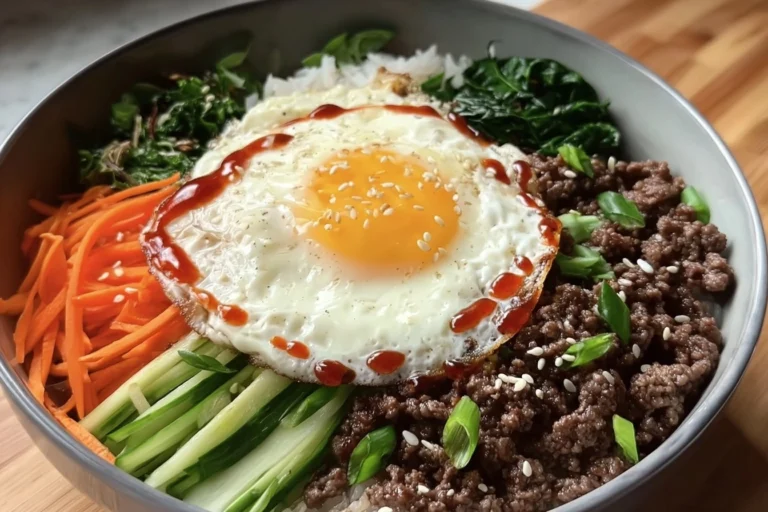
Bibimbap With Ground Beef
🍚 Nutritious and balanced Korean dish combining protein, vegetables, and rice in one bowl
🥘 Colorful and flavorful meal that’s both satisfying and packed with essential nutrients
- Total Time: 1 hour 30 minutes
- Yield: 4 servings
Ingredients
– 100 grams beef mince or other cuts – main protein, marinated for flavor
– 1 tablespoon soy sauce – salty, savory base for the meat marinade
– 1 tablespoon sesame oil – adds nutty aroma to the meat and sauce
– 1 teaspoon brown sugar – balances savory notes in the meat
– 1/4 teaspoon minced garlic – boosts savory depth in the marinade
– 250 grams spinach – blanched and seasoned for freshness
– 350 grams bean sprouts – provide crunch and light texture
– 100 grams shiitake mushrooms – sliced and sautéed for umami
– 120 grams carrots (1 small) – peeled and julienned for color and sweetness
– 1/2 teaspoon fine sea salt – seasoning for vegetables
– 3 to 4 servings steamed rice – base of the bowl (short-grain or jasmine)
– 3 to 4 eggs – fried and placed on top
– cooking oil – neutral oil for frying and sautéing
– shredded toasted seasoned seaweed – final garnish for texture and flavor
– 2 tablespoons gochujang (Korean chili paste) – spicy-sweet base of bibimbap sauce
– 1 tablespoon sesame oil – brings fragrance to the sauce
– 1 tablespoon sugar – balances spice in the sauce
– 1 tablespoon water – thins the sauce for drizzling
– 1 tablespoon toasted sesame seeds – nutty crunch in the sauce
– 1 teaspoon vinegar – brightens the sauce
– 1 teaspoon minced garlic – fragrant kick in the sauce
Instructions
1-First Step: Prep and mise en place Gather all ingredients and set them out so the cook process flows. Wash the spinach and bean sprouts, peel and julienne the carrot, clean and thinly slice the shiitake mushrooms, and measure out the rice and sauce ingredients. If you make rice in advance, keep it warm. The primary keyword, Bibimbap With Ground Beef, should be top of mind as you prepare the components so each element shines.
2-Second Step: Marinate the beef Combine the following for the meat marinade: 1 tablespoon soy sauce, 1 tablespoon sesame oil, 1 teaspoon brown sugar, and 1/4 teaspoon minced garlic. Add 100 grams beef mince to the marinade and mix well. Cover and let it rest in the fridge for about 30 minutes. Marinating tenderizes and seasons the beef properly.
3-Third Step: Cook the marinated beef Heat a wok or skillet over medium-high heat and add 1 teaspoon cooking oil (rice bran oil recommended). Add the marinated ground beef and stir to break up clumps. Cook for 3 to 5 minutes until fully cooked and browned. If there is excess fat, drain it off. Remove the beef from the pan and keep warm.
4-Fourth Step: Prepare the bibimbap sauce In a small bowl, whisk these items together: 2 tablespoons gochujang, 1 tablespoon sesame oil, 1 tablespoon sugar (raw sugar preferred), 1 tablespoon water, 1 tablespoon toasted sesame seeds, 1 teaspoon vinegar (apple vinegar used), and 1 teaspoon minced garlic. Taste and adjust sugar or gochujang to preference. Set aside.
5-Fifth Step: Cook the vegetables Work through each vegetable separately so textures and flavors stay distinct.* Spinach: Blanch 250 grams spinach for 30 to 60 seconds in boiling water, then drain and squeeze out excess water. Toss with a small splash of sesame oil and a pinch of salt.* Bean sprouts: Cook 350 grams bean sprouts by blanching 1 to 2 minutes, drain, then season lightly with sesame oil and a pinch of salt. Alternatively, quickly stir-fry with a little oil and garlic if you prefer.* Carrots: Rinse, peel, and julienne 120 grams carrots (about 1 small). Heat cooking oil in a pan and sauté the carrots with 1/4 teaspoon salt over medium-high heat for 2 to 3 minutes until just tender.* Shiitake mushrooms: Clean and thinly slice 100 grams shiitake mushrooms. Heat oil in a pan and sauté with 1/4 teaspoon salt over medium-high heat for 2 to 3 minutes until cooked through and slightly browned.
6-Sixth Step: Fry the eggs Fry 3 to 4 eggs depending on servings. Sunny side up is common for bibimbap since the runny yolk mixes into the rice, but cook the eggs how you prefer. Use a little oil in a nonstick pan over medium heat and cook until whites are set and yolks are at your desired doneness.
7-Final Step: Assemble and serve Place 3 to 4 servings of steamed rice into individual bowls. Arrange cooked meat, spinach, bean sprouts, carrots, and shiitake mushrooms on top of the rice in sections so they are separated visually. Add shredded toasted seasoned seaweed over the bowl, drizzle with bibimbap sauce, and place a fried egg in the center. Mix everything together tableside before eating for the classic bibimbap experience.
Notes
🥕 Other vegetables such as zucchini, cucumbers, or salads can be used instead of or in addition to the suggested vegetables
🍳 Adjust the bibimbap sauce quantity and spice level to personal preference
🥬 Use leftover vegetable side dishes or banchan to create simple vegetarian bibimbap
- Prep Time: 35 minutes
- Cook Time: 55 minutes
- Category: Main Course
- Method: Stir-frying and Assembling
- Cuisine: Korean
- Diet: Non-Vegetarian
Nutrition
- Serving Size: 1 serving
- Calories: 570
- Sugar: 14g
- Sodium: 916mg
- Fat: 23g
- Saturated Fat: 6g
- Unsaturated Fat: 17g
- Trans Fat: 1g
- Carbohydrates: 71g
- Fiber: 7g
- Protein: 24g
- Cholesterol: 187mg


