

Why You’ll Love This Chinese Rice Noodle Soup With Shrimp
If you need a cozy dinner that comes together fast, this Chinese Rice Noodle Soup With Shrimp is a great one to keep in your back pocket. It tastes fresh, comforting, and light, but still feels like a real meal after a long day.
- Fast and easy: With just 10 minutes of prep and 25 minutes of cooking, this Chinese Rice Noodle Soup With Shrimp fits busy weeknights, student meals, and last-minute dinners.
- Light but satisfying: Shrimp, bok choy, carrots, and rice noodles make a balanced bowl with protein, veggies, and just enough carbs to keep you full.
- Flexible for different diets: You can swap the shrimp for chicken, use tamari for a gluten-free version, or add extra vegetables like mushrooms or spinach.
- Fresh, bright flavor: The mix of sesame oil, ginger, garlic, soy sauce, fish sauce, and rice vinegar gives this soup a savory broth with a little tang at the end.
For home cooks who want something simple but still special, this recipe is the kind of meal that feels comforting without taking much effort. If you enjoy quick seafood dinners, you may also like this flavorful double garlic brown butter shrimp recipe for another easy weeknight idea.
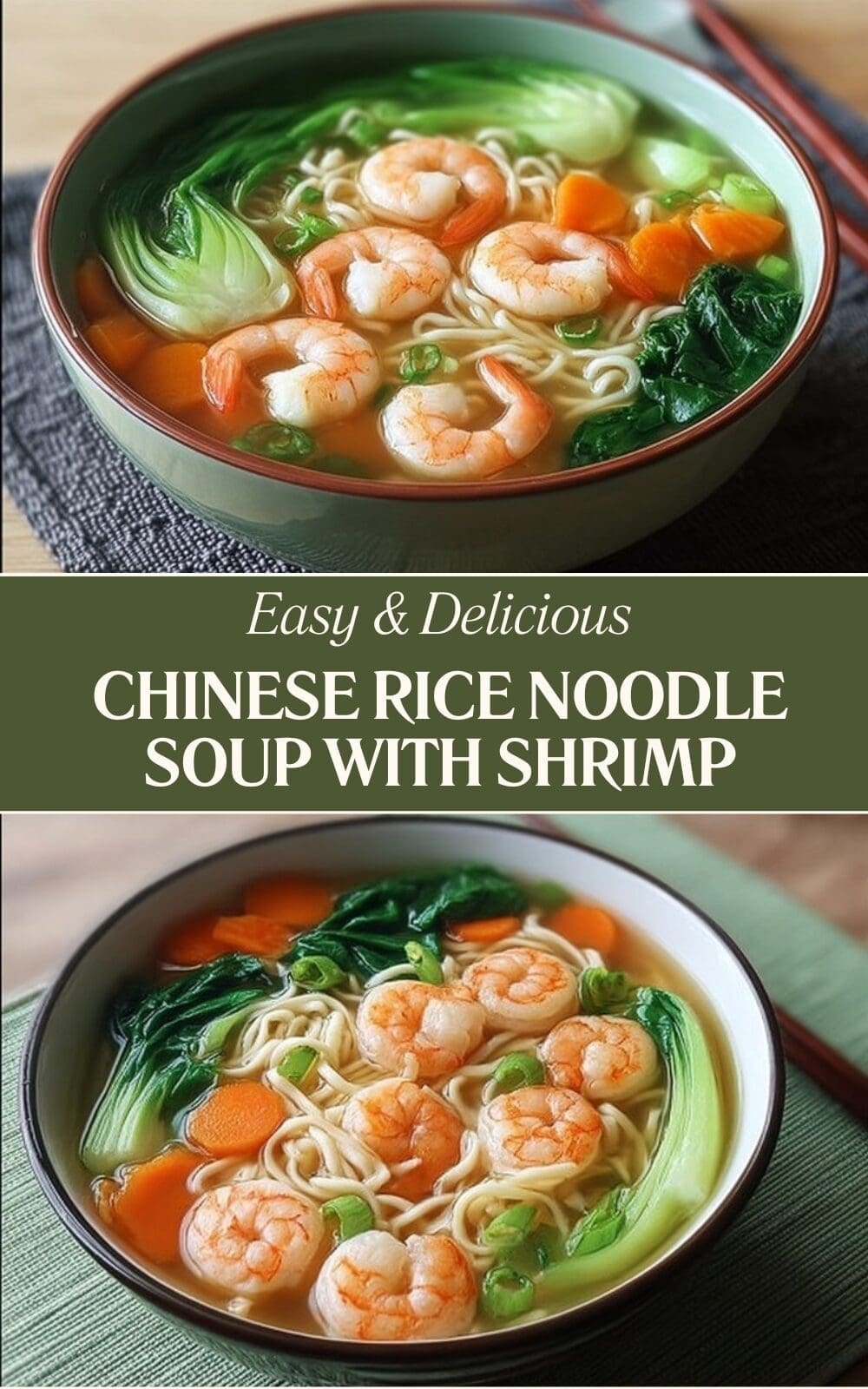
Warm, quick, and full of texture, this soup brings together tender noodles, juicy shrimp, and crisp vegetables in one pot.
It also works well for anyone who wants a lighter dinner without giving up flavor. Since the soup is built around simple pantry staples, it is a smart choice for busy parents, working professionals, and anyone who wants a meal that feels homemade with minimal fuss.
For more ways to build easy meals around rice, check out this garlic butter rice with kale recipe from the same kitchen.
Jump To
- 1. Why You’ll Love This Chinese Rice Noodle Soup With Shrimp
- 2. Essential Ingredients for Chinese Rice Noodle Soup With Shrimp
- 3. How to Prepare the Perfect Chinese Rice Noodle Soup With Shrimp: Step-by-Step Guide
- 4. Dietary Substitutions to Customize Your Chinese Rice Noodle Soup With Shrimp
- 5. Mastering Chinese Rice Noodle Soup With Shrimp: Advanced Tips and Variations
- 6. How to Store Chinese Rice Noodle Soup With Shrimp: Best Practices
- 7. Nutrition Information
- 8. FAQs: Frequently Asked Questions About Chinese Rice Noodle Soup With Shrimp
- 9. Chinese Rice Noodle Soup With Shrimp
Essential Ingredients for Chinese Rice Noodle Soup With Shrimp
This soup uses simple ingredients, but each one plays an important part in the final bowl. Here is a clear ingredient list with exact measurements so you can shop and cook with confidence.
Main Ingredients
- 1 tablespoon sesame oil – Adds a nutty, fragrant base and helps soften the vegetables.
- 4 baby bok choy, chopped and separated into white and green pieces – The white parts hold up well during sautéing, while the green leaves add freshness at the end.
- 1 large carrot, peeled and sliced very thin – Brings sweetness, color, and a little crunch.
- 2 cloves garlic, minced or crushed – Gives the broth a savory, bold flavor.
- 1 tablespoon fresh ginger, minced – Adds warmth and a bright, slightly spicy finish.
- 4 cups vegetable or chicken broth – Forms the savory soup base.
- 2 cups water – Helps balance the broth and create the right soup consistency.
- 2 tablespoons soy sauce or tamari – Adds saltiness and deep umami flavor.
- 2 tablespoons fish sauce – Gives the broth a rich, savory depth.
- 2 tablespoons rice vinegar – Stirred in at the end for a clean, tangy lift.
- 4 ounces pad thai rice noodles – Soak up the broth and make the soup filling.
- 1 pound small raw shrimp, peeled – The main protein, quick to cook and tender in soup.
- 1 bunch green onions, sliced – Adds a fresh, mild onion flavor and a nice finish.
Special Dietary Options
- Vegan: Use vegetable broth, replace shrimp with tofu or mushrooms, and skip the fish sauce in favor of more soy sauce or tamari plus a little extra salt.
- Gluten-free: Use tamari instead of regular soy sauce and check that your fish sauce and broth are labeled gluten-free.
- Low-calorie: Keep the noodles to the listed amount, add extra bok choy or spinach, and use a light broth to keep the bowl satisfying without adding much more fat.
| Ingredient | Why It Matters | Easy Swap |
|---|---|---|
| Rice noodles | Soft, slurpable texture | Thin rice vermicelli |
| Shrimp | Quick protein | Chicken breast or tofu |
| Bok choy | Fresh vegetables and crunch | Spinach or napa cabbage |
| Fish sauce | Deep savory flavor | Extra tamari plus salt |
How to Prepare the Perfect Chinese Rice Noodle Soup With Shrimp: Step-by-Step Guide
Making Chinese Rice Noodle Soup With Shrimp is simple, but a few small details help the soup turn out just right. The key is to keep the vegetables crisp, cook the noodles gently, and add the shrimp at the end so it stays tender.
First Step: Prep everything before turning on the stove
Start by chopping the baby bok choy and separating the white pieces from the green leaves. Slice the carrot very thin so it cooks quickly, then mince the garlic and ginger. Slice the green onions and measure out the broth, water, soy sauce, fish sauce, rice vinegar, and rice noodles so everything is ready when the cooking starts.
This recipe moves fast once the heat is on, so having everything prepped makes the process calm and easy. If you are cooking for a gluten-free eater, this is the best time to double-check that your tamari and broth are safe to use.
Second Step: Sauté the vegetables for a flavorful base
Heat 1 tablespoon sesame oil in a Dutch oven over medium-high heat. Once the oil is warm, add the white pieces of bok choy and the sliced carrots. Sauté for about 5 minutes, stirring now and then, until the carrots begin to soften and the bok choy starts to look tender at the edges.
This first sauté builds flavor right away. The sesame oil gives the soup a rich aroma, and the vegetables add sweetness to the broth. If you want a little more color or nutrition, you can add a handful of spinach later with the shrimp.
Third Step: Add garlic and ginger
Stir in the minced garlic and fresh ginger, then cook for 1 minute longer. Keep the heat moving so the garlic does not brown too quickly. You only need a short time here because garlic and ginger can turn bitter if they cook too long.
This step is what gives the soup its cozy, homemade taste. The ginger adds warmth, while the garlic brings that familiar savory flavor that makes the whole pot smell amazing. If you like a little heat, you can add chili flakes now, but skip them if you want a milder bowl.
Fourth Step: Build the broth
Pour in the 4 cups of broth, 2 cups of water, 2 tablespoons soy sauce or tamari, and 2 tablespoons fish sauce. Stir everything together, then bring the soup to a boil. This mix creates the savory base that carries the flavor of the shrimp and vegetables.
Once it boils, taste the broth if you like and decide whether it needs a little more soy sauce. If you are using chicken instead of shrimp, this is the point where the chicken breasts should go in with the broth. Let them simmer until cooked through, then remove them, shred the meat, and return it to the pot later.
The broth should taste bold enough on its own because the rice noodles will soak up some of that flavor as they cook.
Fifth Step: Cook the noodles
Add the 4 ounces of pad thai rice noodles directly to the boiling broth. Cook for about 2 minutes, gently separating the noodles as they soften. Rice noodles cook fast, so keep an eye on them and stir often enough to prevent clumping.
If you are making the soup ahead for later use, it is better to cook the noodles just until tender and not beyond that. They will continue to soften a little in the hot broth. For anyone who likes noodle-based comfort meals, this also pairs nicely with other simple dinner ideas like this easy chicken stir fry recipe.
Sixth Step: Add the shrimp and green vegetables
Stir in the 1 pound of peeled small raw shrimp, the sliced green onions, and the green pieces of bok choy. Cook for 2 to 3 minutes longer, just until the shrimp turn pink and opaque. The bok choy greens should wilt slightly but still keep a fresh bite.
Do not overcook the shrimp. Small shrimp cook quickly, and if they stay on the heat too long, they can become rubbery. If you are using chicken instead, return the shredded chicken to the pot during this step so it warms through with the noodles and vegetables.
Final Step: Finish with rice vinegar and serve right away
Turn off the heat and stir in 2 tablespoons rice vinegar. This last step brightens the broth and balances the salty, savory flavors. Taste the soup one more time, then ladle it into bowls and serve immediately while everything is hot and fragrant.
This soup is best enjoyed fresh from the pot because the noodles stay silky and the shrimp stays tender. A quick sprinkle of extra green onions on top makes the bowl look even more inviting.

Dietary Substitutions to Customize Your Chinese Rice Noodle Soup With Shrimp
Protein and Main Component Alternatives
If shrimp is not your thing, this recipe adapts well. Boneless skinless chicken breasts are the simplest swap, and the recipe already includes a method for using chicken with the broth. Cook the chicken until it is fully heated through, shred it, then return it to the soup with the noodles.
You can also use tofu for a vegetarian version. Firm tofu works best because it holds its shape in the broth. For a seafood variation, try adding scallops or thin slices of white fish, but keep the cook time short so the texture stays tender.
Vegetable, Sauce, and Seasoning Modifications
Baby bok choy gives this Chinese Rice Noodle Soup With Shrimp its clean, fresh taste, but you can swap in spinach, napa cabbage, mushrooms, or snap peas if that is what you have on hand. Mushrooms add a meaty bite, while spinach wilts quickly and works well for a lighter bowl.
If you need a gluten-free version, use tamari in place of soy sauce. For a less salty broth, reduce the fish sauce slightly and add a little more water. If you like more brightness, add a tiny splash more rice vinegar at the end. You can also leave out chili flakes for a mild family-friendly bowl or add them for extra heat.
For another seafood idea that feels quick and weeknight-friendly, you may enjoy this shrimp and corn recipe as well.
Mastering Chinese Rice Noodle Soup With Shrimp: Advanced Tips and Variations
Once you make this Chinese Rice Noodle Soup With Shrimp a few times, a few small tricks can make it even better. These tips help you keep the texture right, deepen the flavor, and fit the recipe into your routine.
Pro cooking techniques
Thaw and devein shrimp before cooking so they go straight into the pot without extra prep. Slice the carrots very thin so they soften quickly and do not stay too crunchy. Keep the broth at a steady boil only when adding the noodles, then lower the heat as soon as the shrimp go in so everything stays tender.
Flavor variations
If you want more depth, add mushrooms with the carrots. For extra greens, stir in spinach at the end and let it wilt for a minute. A little chili crisp can add gentle heat, while extra rice vinegar can give the soup a sharper finish. If you love sesame flavor, a few drops of toasted sesame oil at the table can be nice too.
Presentation tips
Serve the soup in wide bowls so the noodles and shrimp sit evenly in the broth. Top each bowl with sliced green onions and a few bright bok choy leaves for a fresh look. A small lime wedge on the side also works if you like a little more tang.
Make-ahead options
You can chop all the vegetables and mix the broth base ahead of time to make dinner faster. If you know you will have leftovers, consider cooking the noodles separately and adding them to each bowl before serving. That helps keep the texture better for the next day.
If you enjoy simple recipes that still feel special, this soup is right in that sweet spot. It is also a nice reminder that a good meal does not have to take all evening to make.
How to Store Chinese Rice Noodle Soup With Shrimp: Best Practices
This soup tastes best fresh, but leftovers can still be handled well if you store them the right way. Since rice noodles keep soaking up liquid, a little planning helps protect the texture.
Refrigeration
Place leftovers in an airtight container and refrigerate for 3 to 4 days. If possible, store extra broth and noodles separately so the noodles do not absorb too much liquid. This is especially helpful if you plan to eat it again for lunch the next day.
Freezing
Freezing is not the best choice for this Chinese Rice Noodle Soup With Shrimp because the noodles become mushy after thawing. If you really want to freeze part of it, freeze only the broth and vegetables, then cook fresh noodles and shrimp later. That gives you a better texture when serving.
Reheating
Reheat gently on the stove over medium-low heat or in the microwave in short bursts. Add a splash of water or broth if the noodles have absorbed too much liquid. Heat just until warm so the shrimp stays tender and does not overcook.
Nutrition Information
Here is the nutrition estimate for one serving of Chinese Rice Noodle Soup With Shrimp:
| Nutrient | Amount Per Serving |
|---|---|
| Calories | 203 kcal |
| Carbohydrates | 29 g |
| Protein | 10 g |
| Fat | 5 g |
| Saturated Fat | 1 g |
| Polyunsaturated Fat | 2 g |
| Iron | 2 mg |
| Sodium | 518 mg |
| Cholesterol | 84 mg |
| Fiber | 2 g |
| Sugar | 3 g |
| Vitamin A | 9470 IU |
| Calcium | 39 mg |
This makes a light but filling meal, especially for lunch or a simple dinner for two.
FAQs: Frequently Asked Questions About Chinese Rice Noodle Soup With Shrimp
Print
Chinese Rice Noodle Soup With Shrimp
🍜🦐 Slurp up this light, aromatic rice noodle soup loaded with tender shrimp, crisp veggies, and umami broth for a nourishing bowl.
🥬 Quick 35-minute comfort food that’s gluten-free adaptable, high in vitamins, and perfect for chilly days or light dinners.
- Total Time: 35 minutes
- Yield: 2 servings
Ingredients
– 1 tablespoon sesame oil for nutty, fragrant base and softening vegetables
– 4 baby bok choy, chopped and separated into white and green pieces for holding up during sautéing and adding freshness
– 1 large carrot, peeled and sliced very thin for sweetness, color, and crunch
– 2 cloves garlic, minced or crushed for savory, bold flavor
– 1 tablespoon fresh ginger, minced for warmth and bright, slightly spicy finish
– 4 cups vegetable or chicken broth for savory soup base
– 2 cups water for balancing broth and soup consistency
– 2 tablespoons soy sauce or tamari for saltiness and deep umami flavor
– 2 tablespoons fish sauce for rich, savory depth
– 2 tablespoons rice vinegar for clean, tangy lift
– 4 ounces pad thai rice noodles for soaking up broth and making soup filling
– 1 pound small raw shrimp, peeled for main protein, quick to cook and tender
– 1 bunch green onions, sliced for fresh, mild onion flavor and nice finish
Instructions
1-First Step: Prep everything before turning on the stove Start by chopping the baby bok choy and separating the white pieces from the green leaves. Slice the carrot very thin so it cooks quickly, then mince the garlic and ginger. Slice the green onions and measure out the broth, water, soy sauce, fish sauce, rice vinegar, and rice noodles so everything is ready when the cooking starts.
2-Second Step: Sauté the vegetables for a flavorful base Heat 1 tablespoon sesame oil in a Dutch oven over medium-high heat. Once the oil is warm, add the white pieces of bok choy and the sliced carrots. Sauté for about 5 minutes, stirring now and then, until the carrots begin to soften and the bok choy starts to look tender at the edges.
3-Third Step: Add garlic and ginger Stir in the minced garlic and fresh ginger, then cook for 1 minute longer. Keep the heat moving so the garlic does not brown too quickly. You only need a short time here because garlic and ginger can turn bitter if they cook too long.
4-Fourth Step: Build the broth Pour in the 4 cups of broth, 2 cups of water, 2 tablespoons soy sauce or tamari, and 2 tablespoons fish sauce. Stir everything together, then bring the soup to a boil. This mix creates the savory base that carries the flavor of the shrimp and vegetables.
5-Fifth Step: Cook the noodles Add the 4 ounces of pad thai rice noodles directly to the boiling broth. Cook for about 2 minutes, gently separating the noodles as they soften. Rice noodles cook fast, so keep an eye on them and stir often enough to prevent clumping.
6-Sixth Step: Add the shrimp and green vegetables Stir in the 1 pound of peeled small raw shrimp, the sliced green onions, and the green pieces of bok choy. Cook for 2 to 3 minutes longer, just until the shrimp turn pink and opaque. The bok choy greens should wilt slightly but still keep a fresh bite.
7-Final Step: Finish with rice vinegar and serve right away Turn off the heat and stir in 2 tablespoons rice vinegar. This last step brightens the broth and balances the salty, savory flavors. Taste the soup one more time, then ladle it into bowls and serve immediately while everything is hot and fragrant.
Notes
🦐 Thaw and devein shrimp fully for even cooking and best texture.
🥢 Use gluten-free tamari to make it fully gluten-free.
❄️ Avoid freezing leftovers as noodles will become mushy.
- Prep Time: 10 minutes
- Cook Time: 25 minutes
- Category: Soup
- Method: Simmering
- Cuisine: Chinese
- Diet: Pescatarian
Nutrition
- Serving Size: 1 bowl
- Calories: 203 kcal
- Sugar: 3g
- Sodium: 518mg
- Fat: 5g
- Saturated Fat: 1g
- Unsaturated Fat: 4g
- Trans Fat: 0g
- Carbohydrates: 29g
- Fiber: 2g
- Protein: 10g
- Cholesterol: 84mg


