

Why You’ll Love This duck confit
- Ease of preparation: This duck confit recipe breaks down the traditional process into manageable steps, making it surprisingly approachable, even for home cooks new to French cuisine. The overnight curing and slow cooking do most of the work, so your active prep time remains under 20 minutes.
- Health benefits: Duck confit provides a rich source of high-quality protein, essential vitamins, and minerals. Though cooked in duck fat, when enjoyed in moderation as part of a balanced diet, it supports muscle repair and satiety. The slow cooking preserves nutrients while creating tender, flavorful meat.
- Versatility: This dish adapts well to various dietary needs. It is naturally gluten-free, and the duck fat can be substituted with lighter fats for low-calorie adaptations. Additionally, the confit pairs beautifully with a wide range of sides from lentil ragout to fresh salads offering meal flexibility.
- Distinctive flavor: The hallmark of duck confit lies in its succulent texture and deep, savory taste. Slow-cooked in duck fat and infused with fresh herbs and spices, each bite delivers rich umami with crispy, golden skin that elevates your dining experience beyond typical poultry dishes.
Jump To
- 1. Why You’ll Love This duck confit
- 2. Essential Ingredients for duck confit
- 3. How to Prepare the Perfect duck confit: Step-by-Step Guide
- 4. Dietary Substitutions to Customize Your duck confit
- 5. Mastering duck confit: Advanced Tips and Variations
- 6. How to Store duck confit: Best Practices
- 7. FAQs: Frequently Asked Questions About duck confit
- 8. duck confit
Essential Ingredients for duck confit
- 4 duck legs (about 1 kg or 8 oz each) – skin-on and bone-in, providing the tender main protein
- 4 teaspoons kosher or cooking salt – critical for the dry cure, enhancing flavor and preservation
- 1/3 cup fresh thyme sprigs – imparts aromatic herbal notes
- 1/3 cup fresh sage sprigs – adds earthiness to the flavor profile
- 1/3 cup fresh rosemary sprigs – complements with pine-like fragrance
- 1/3 cup fresh oregano sprigs – enriches complexity and depth
- 6 smashed garlic cloves – infuses savory, pungent aroma
- 1 sliced eschalot (shallot), about 0.7 cm thick – subtle sweetness and texture
- 1 tablespoon black peppercorns – provides gentle heat and seasoning
- 1 tablespoon coriander seeds – offers warm, citrusy undertones
- 8 star anise – imparts fragrant, licorice-like flavor
- 2 bay leaves – adds subtle woody notes
- 2 tablespoons juniper berries – contributes resinous, piney aroma
- 8 cloves – warm spice complement
- Approximately 750 ml (25 fl oz) duck fat – essential for slow cooking and flavor infusion
Special Dietary Options:
- Vegan: Jackfruit or seitan prepared in a similar slow-cooked, fat-submerged method serve as plant-based substitutes for duck legs.
- Gluten-free: Duck confit is naturally gluten-free; ensure all spices and herbs are gluten-free certified to avoid cross-contamination.
- Low-calorie: Use olive oil or lighter vegetable oils instead of duck fat, recognizing the traditional flavor and texture will differ.
How to Prepare the Perfect duck confit: Step-by-Step Guide
First Step: Prepare the curing mixture and duck legs
Combine kosher salt with black peppercorns, coriander seeds, star anise, bay leaves, juniper berries, cloves, and fresh herb sprigs (thyme, sage, rosemary, oregano). Rub this dry cure thoroughly over the duck legs, including under the skin where possible. Add smashed garlic cloves and sliced eschalot on top. Place legs flat in a single layer, cover tightly, and refrigerate for 12 to 24 hours (up to 36 hours for deeper flavor).
Second Step: Rinse and dry the duck legs
After curing, rinse the duck legs under cold water to remove excess salt and spices. Pat dry completely with paper towels. This step prevents the final dish from becoming overly salty.
Third Step: Submerge duck legs in duck fat
Place the duck legs snugly in a roasting pan or Dutch oven with high sides, pouring approximately 750 ml (25 fl oz) of duck fat to cover them completely. Heat on stove over medium-high until the fat begins to bubble, then turn off the heat.
Fourth Step: Slow-cook the duck legs
Press a layer of parchment paper directly over the fat surface to reduce oxidation, then cover the pan tightly with foil. Transfer to a preheated oven at 100°C (210°F) and cook slowly for around 8 hours, preferably overnight, until the meat is tender and falls off the bone.
Fifth Step: Crisp the duck confit skin
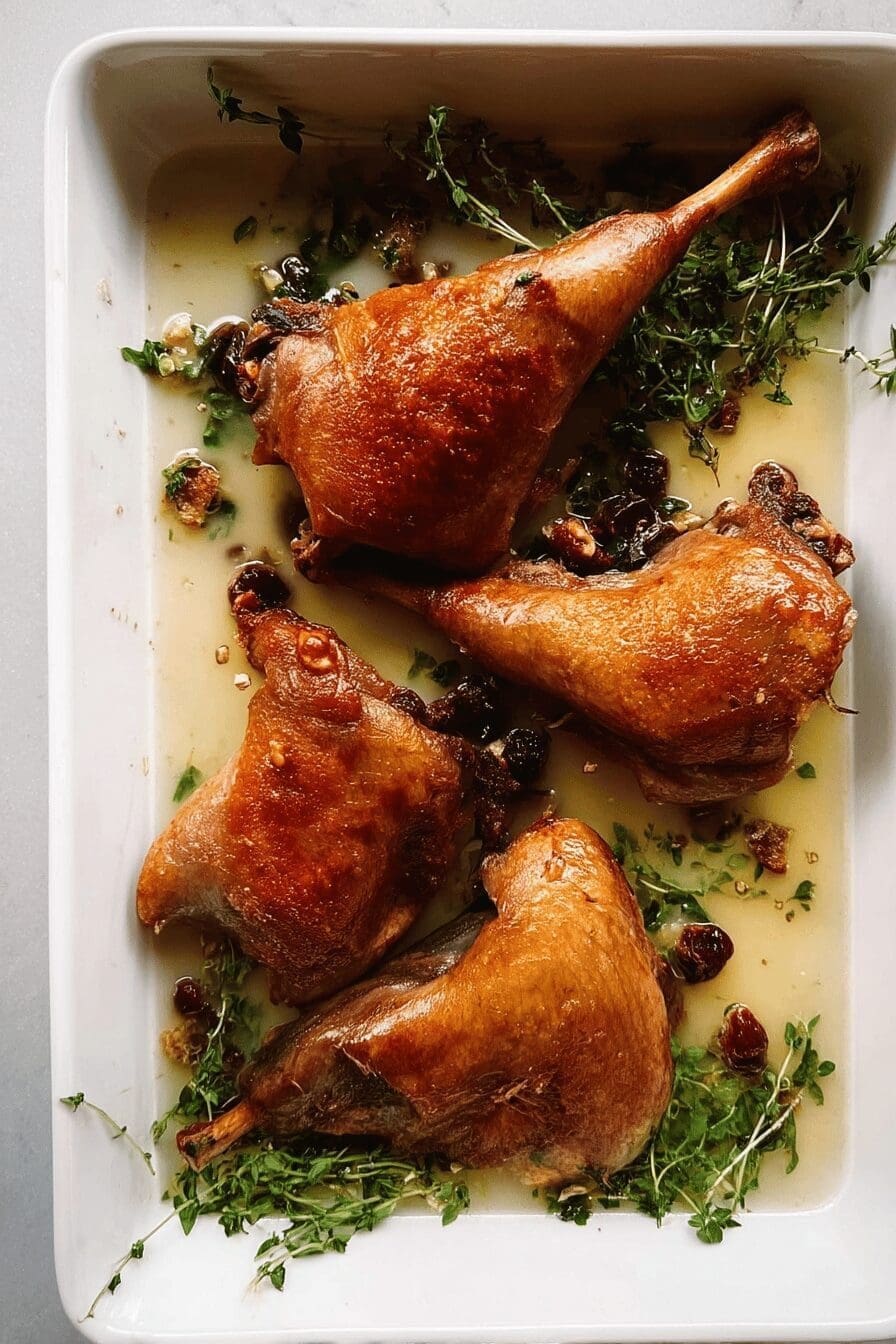
Remove duck legs from fat and pat dry. Set on a rack in a roasting pan with about 2.5 cm (1 inch) boiling water beneath. Roast in a preheated oven at 240°C (465°F) for approximately 40 minutes. Rotate if necessary until the skin is evenly browned and crispy while keeping the meat moist.
Final Step: Serve or store
Serve immediately with classic sides like lentil ragout or fresh salad, or store submerged in cooled duck fat in the refrigerator for up to 5 days. For longer storage, freeze submerged in fat for up to 3 months. Thaw in the refrigerator overnight and warm gently before crisping the skin again.

Dietary Substitutions to Customize Your duck confit
Protein and Main Component Alternatives
- Chicken thighs or turkey legs can replace duck for a leaner, more accessible confit variation while maintaining richness.
- Jackfruit or seitan, slow-cooked in flavored oils or fats, offer plant-based options mimicking the texture and savoriness.
Vegetable, Sauce, and Seasoning Modifications
- Season accompaniments with rosemary, sage, or bay leaves to complement the herbaceous notes of the confit.
- Use seasonal root vegetables like carrots, parsnips, or mushrooms as sides to balance richness.
- Adapt sauces by incorporating gluten-free soy sauce or tamari as needed for dietary restrictions.
Mastering duck confit: Advanced Tips and Variations
- Pro cooking techniques: Vacuum sealing during curing ensures even salt distribution and intensifies flavor penetration.
- Flavor variations: Infuse the curing blend with spices like star anise, cinnamon, or orange zest for delightful twists.
- Presentation tips: Serve duck confit over sautéed greens or potatoes dauphinoise, garnished with fresh herbs for elegant plating.
- Make-ahead options: Prepare confit several days ahead; storing submerged in fat prolongs preservation and allows quick reheating when needed.
How to Store duck confit: Best Practices
- Refrigeration: Keep cooked duck confit submerged in cooled duck fat inside an airtight container for up to two weeks, retaining moisture and flavor.
- Freezing: For long-term storage, wrap tightly and freeze submerged in fat for up to three months, preserving quality and taste.
- Reheating: Warm gently in a low oven to prevent drying. Avoid microwaving to maintain texture and crispness.
- Meal prep considerations: Cook in batches and store in portions to streamline reheating and serving throughout the week.
FAQs: Frequently Asked Questions About duck confit
What is duck confit and how is it made?
Duck confit is a French cooking method where duck legs are cured with salt, herbs, and spices for 12 to 24 hours, then slow-cooked submerged in duck fat at about 210°F (100°C) for 8 hours. This process preserves the meat and makes it exceptionally tender and flavorful. After cooking, it can be stored in the fat for several days or months when refrigerated or frozen.
Why is duck fat used for cooking duck confit instead of other fats?
Duck fat is preferred because it matches the flavor profile of the meat, enhancing the overall taste. While other fats can be used, cooking duck legs in duck fat keeps the dish authentic and provides a rich, silky texture that other oils or fats generally cannot replicate.
How do you get crispy skin on duck confit after cooking?
After slow-cooking, remove the duck legs from the fat and place them on a rack above a pan of boiling water in a preheated 465°F (240°C) oven. Roast for about 40 minutes until the skin turns deep golden brown and crispy. This method crisps the skin evenly while keeping the meat moist beneath.
Can I make duck confit ahead of time and how should I store it?
Yes, duck confit can be prepared in advance. Keep the cooked legs submerged in duck fat inside a sealed container in the refrigerator for up to 5 days. For longer storage, freeze the confit submerged in fat for up to 3 months or more, ensuring freshness and flavor retention.
How much duck fat do I need to cook duck confit and can I reuse it?
Use enough duck fat—typically 21 to 28 ounces (600 to 800 grams)—to fully cover the duck legs in the roasting pan. To minimize fat usage, choose a pan that fits the legs snugly in a single layer. After cooking, strain and store the duck fat in the fridge for up to 6 months or freeze it longer. It can be reused for more confit or other recipes like roasted potatoes.

duck confit
Delight in this simple yet satisfying caprese salad, combining ripe tomatoes, creamy mozzarella, and fragrant basil. It’s a perfect starter for any meal or a refreshing light lunch.
- Total Time: 10 minutes
- Yield: 4 servings
Ingredients
– 4 duck legs providing the tender main protein
– 4 teaspoons kosher salt critical for the dry cure
– 1/3 cup fresh thyme sprigs imparts aromatic herbal notes
– 1/3 cup fresh sage sprigs adds earthiness to the flavor profile
– 1/3 cup fresh rosemary sprigs complements with pine-like fragrance
– 1/3 cup fresh oregano sprigs enriches complexity and depth
– 6 smashed garlic cloves infuses savory, pungent aroma
– 1 sliced eschalot
– 1 tablespoon black peppercorns provides gentle heat and seasoning
– 1 tablespoon coriander seeds offers warm, citrusy undertones
– 8 star anise imparts fragrant, licorice-like flavor
– 2 bay leaves adds subtle woody notes
– 2 tablespoons juniper berries contributes resinous, piney aroma
– 8 cloves warm spice complement
– 750 ml duck fat essential for slow cooking and flavor infusion
Instructions
First Step: Prepare the curing mixture and duck legs Combine kosher salt with black peppercorns, coriander seeds, star anise, bay leaves, juniper berries, cloves, and fresh herb sprigs (thyme, sage, rosemary, oregano). Rub this dry cure thoroughly over the duck legs, including under the skin where possible. Add smashed garlic cloves and sliced eschalot on top. Place legs flat in a single layer, cover tightly, and refrigerate for 12 to 24 hours (up to 36 hours for deeper flavor).
Second Step: Rinse and dry the duck legs After curing, rinse the duck legs under cold water to remove excess salt and spices. Pat dry completely with paper towels. This step prevents the final dish from becoming overly salty.
Third Step: Submerge duck legs in duck fat Place the duck legs snugly in a roasting pan or Dutch oven with high sides, pouring approximately 750 ml (25 fl oz) of duck fat to cover them completely. Heat on stove over medium-high until the fat begins to bubble, then turn off the heat.
Fourth Step: Slow-cook the duck legs Press a layer of parchment paper directly over the fat surface to reduce oxidation, then cover the pan tightly with foil. Transfer to a preheated oven at 100°C (210°F) and cook slowly for around 8 hours, preferably overnight, until the meat is tender and falls off the bone.
Fifth Step: Crisp the duck confit skin Remove duck legs from fat and pat dry. Set on a rack in a roasting pan with about 2.5 cm (1 inch) boiling water beneath. Roast in a preheated oven at 240°C (465°F) for approximately 40 minutes. Rotate if necessary until the skin is evenly browned and crispy while keeping the meat moist.
Final Step: Serve or store Serve immediately with classic sides like lentil ragout or fresh salad, or store submerged in cooled duck fat in the refrigerator for up to 5 days. For longer storage, freeze submerged in fat for up to 3 months. Thaw in the refrigerator overnight and warm gently before crisping the skin again.
Notes
For best flavor, use freshest ingredients. You can add a splash of balsamic vinegar instead of glaze for a different take.
- Prep Time: 10 minutes
- Cook Time: 0 minutes
- Category: Salad
- Method: No-Cook
- Cuisine: Italian
- Diet: Vegetarian
Nutrition
- Serving Size: 1 serving
- Calories: 220
- Sugar: 3g
- Sodium: 240mg
- Fat: 18g
- Saturated Fat: 8g
- Unsaturated Fat: 9g
- Trans Fat: 0g
- Carbohydrates: 6g
- Fiber: 2g
- Protein: 12g
- Cholesterol: 35mg


I tried this for a family dinner and it was a hit! I added a bit of garlic to the duck fat for an extra layer of flavor, and it worked wonders.
Anyone else experiment with different herbs? 🌿