

Why You’ll Love This Easy Easter Cake
This easy Easter cake brings together everything you want in a holiday dessert: stunning presentation, incredible flavor, and simple preparation that even novice bakers can master. Whether you’re hosting a large family gathering or bringing a dish to share, this coconut-lemon Bundt cake delivers on all fronts and makes your Easter celebration memorable.
- Ease of preparation: Despite its impressive appearance, this cake comes together with straightforward mixing techniques. The Bundt pan does the decorative work for you, and the cream cheese frosting spreads easily over the cooled cake. With just 35 minutes of active prep time, you can focus on other holiday preparations while the cake bakes to golden perfection.
- Health benefits: Coconut provides healthy fats and adds fiber to your dessert, while fresh lemon zest and juice deliver vitamin C and bright flavor without artificial ingredients. The recipe uses real ingredients like whole milk, eggs, and butter rather than processed alternatives. According to Healthline’s guide to coconut nutrition, coconut contains medium-chain triglycerides that may support energy and metabolism.
- Versatility: This easy Easter cake adapts beautifully to different dietary needs and preferences. You can substitute buttermilk for sour cream, swap coconut oil for vegetable oil, or create individual mini Bundt cakes for portion-controlled servings. The frosting recipe works wonderfully as a base for other flavors too.
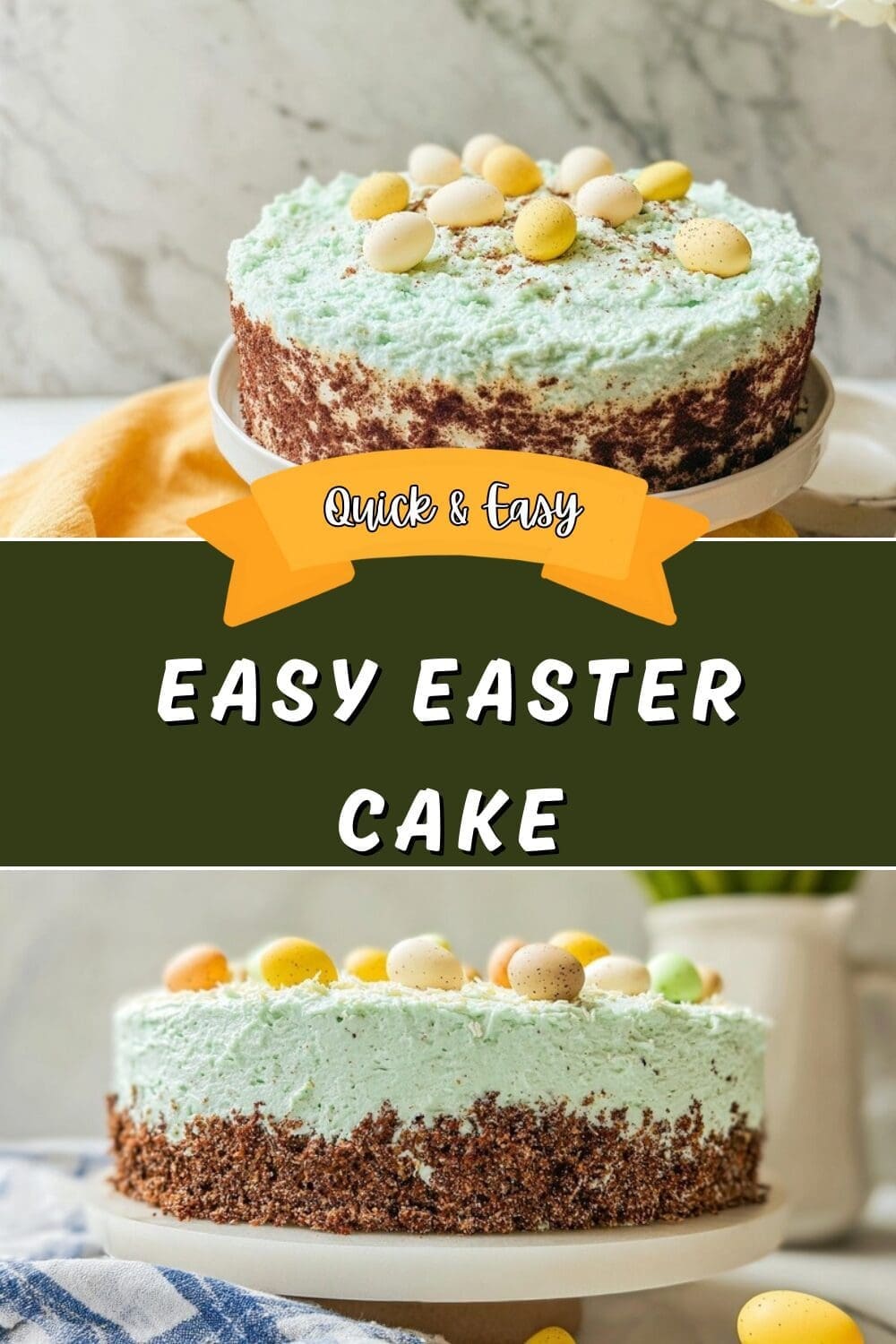
- Distinctive flavor: The combination of lemon and coconut creates a bright, tropical taste that feels perfect for spring. Sweetened shredded coconut in the batter keeps the cake moist, while toasted coconut on top adds nutty crunch and visual appeal. Candy-coated chocolate eggs tucked into the coconut nest create a festive finish that delights guests of all ages.
Jump To
- 1. Why You’ll Love This Easy Easter Cake
- 2. Essential Ingredients for Easy Easter Cake
- 3. How to Prepare the Perfect Easy Easter Cake: Step-by-Step Guide
- 4. Dietary Substitutions to Customize Your Easy Easter Cake
- 5. Mastering Easy Easter Cake: Advanced Tips and Variations
- 6. How to Store Easy Easter Cake: Best Practices
- 7. FAQs: Frequently Asked Questions About Easy Easter Cake
- 8. Easy Easter Cake
Essential Ingredients for Easy Easter Cake
Gathering your ingredients before you begin makes the baking process smooth and enjoyable. This easy Easter cake uses pantry staples combined with fresh dairy and zesty lemon for a from-scratch treat that tastes far better than boxed mixes.
Main Cake Ingredients
- 3 cups (360g) Cake Flour – Creates the tender, fine crumb texture that makes this cake special; all-purpose flour works but produces a slightly denser result
- 3 teaspoons Baking Powder – Provides lift and helps the cake rise evenly in the Bundt pan
- 1/2 teaspoon Baking Soda – Works with the acidic lemon juice for additional rise
- 1/2 teaspoon Salt – Balances sweetness and enhances all flavors
- 1 cup (226g) Unsalted Butter, softened – Forms the rich base; softened butter creams properly with sugar for volume
- 1 and 3/4 cups (350g) Granulated Sugar – Sweetens and helps create the fluffy texture when beaten with butter
- 1 heaping tablespoon Lemon Zest – Adds bright citrus oils and aroma throughout the cake
- 1/2 cup (120ml) Vegetable Oil – Keeps the cake moist for days; can substitute coconut oil for added flavor
- 5 large Eggs, room temperature – Bind ingredients and provide structure; room temperature eggs incorporate better
- 2 teaspoons Pure Vanilla Extract – Adds warm background flavor that complements both lemon and coconut
- 1 teaspoon Coconut Extract – Intensifies the coconut flavor throughout the cake
- 1/2 cup (120g) Full-fat Sour Cream or Plain Yogurt, room temperature – Creates moist, tender texture and adds slight tang
- 2/3 cup (180ml) Whole Milk, room temperature – Combines with lemon juice to create a buttermilk-like mixture
- 1/4 cup (60ml) Fresh Lemon Juice – Provides acidity for baking soda activation and bright flavor
- 1 cup (100g) Sweetened Flaked/Shredded Coconut for batter – Adds moisture and coconut texture throughout
- 1 and 1/2 cups (150g) Sweetened Shredded Coconut for topping – Creates the decorative nest effect on frosted cake
- 1 to 2 cups Candy-coated Chocolate Eggs – Festive decoration for the coconut nest center
Lemon Cream Cheese Frosting Ingredients
- 8 ounces (226g) Full-fat Cream Cheese, softened – Use block-style, not tub; creates tangy, creamy base
- 1/4 cup (56g) Unsalted Butter, softened – Adds richness and helps frosting hold shape
- 2 cups (240g) Confectioners’ Sugar – Sweetens and provides structure for spreading
- 1 to 2 tablespoons (15-30ml) Fresh Lemon Juice – Thins frosting and adds bright flavor
- 1 teaspoon Pure Vanilla Extract – Rounds out the lemon flavor in frosting
Special Dietary Options
| Dietary Need | Substitution | Notes |
|---|---|---|
| Gluten-free | Cup-for-cup gluten-free flour blend | May need slightly longer bake time |
| Dairy-free | Coconut oil for butter; coconut milk for dairy | Frosting will need alternative recipe |
| Lower calorie | Reduce sugar by 1/4 cup; use light sour cream | Texture will be slightly less tender |
How to Prepare the Perfect Easy Easter Cake: Step-by-Step Guide
Creating this easy Easter cake requires attention to a few key techniques, but the process remains straightforward even for beginning bakers. Follow these detailed steps for a cake that looks as beautiful as it tastes.
Step 1: Prepare Your Oven and Pan
Preheat your oven to 350°F (177°C) and position the rack in the center. Thoroughly grease a standard 10-12 cup Bundt pan with butter or cooking spray, making sure to coat every crevice of the decorative pan. For extra insurance against sticking, dust the greased pan with a light coating of flour, tapping out excess. A well-prepared pan ensures your cake releases cleanly with all its beautiful details intact.
Step 2: Combine Dry Ingredients
In a medium bowl, whisk together 3 cups cake flour, 3 teaspoons baking powder, 1/2 teaspoon baking soda, and 1/2 teaspoon salt. Whisking instead of stirring aerates the mixture and ensures even distribution of the leavening agents. Set this bowl aside while you prepare the wet ingredients. Proper measuring technique matters here spoon flour into measuring cups and level off rather than scooping directly, which can pack too much flour into the cup.
Step 3: Cream Butter, Sugar, and Zest
In a large mixing bowl, beat 1 cup softened unsalted butter until creamy using an electric mixer on medium speed, about 2 minutes. Add 1 and 3/4 cups granulated sugar and 1 heaping tablespoon lemon zest, then beat on medium-high speed for 3-4 minutes until the mixture appears pale yellow and fluffy. This creaming process incorporates air bubbles that help the cake rise. Mix in 1/2 cup vegetable oil until fully combined. The oil keeps the cake moist while butter provides flavor and structure.
Step 4: Add Eggs and Flavorings
Add 5 room-temperature eggs one at a time while mixing on low speed, allowing each egg to incorporate before adding the next. Scrape down the bowl as needed. Once all eggs are combined, add 1/2 cup room-temperature sour cream, 2 teaspoons vanilla extract, and 1 teaspoon coconut extract. Beat on medium-high speed for about 1 minute until the mixture looks smooth and creamy. Room temperature ingredients blend more easily and create a better emulsion for even baking.
Step 5: Incorporate Liquid and Dry Ingredients
In a measuring cup or small bowl, whisk together 2/3 cup whole milk and 1/4 cup fresh lemon juice. This mixture will slightly curdle, creating a buttermilk-like consistency. Add the dry ingredients to your wet mixture in three parts, alternating with the milk-lemon mixture in two parts between them. Begin and end with dry ingredients. Mix on low speed and stop as soon as each addition disappears overmixing develops gluten and creates a tough cake. Gently fold in 1 cup sweetened shredded coconut using a spatula.
Step 6: Bake the Cake
Pour the batter evenly into your prepared Bundt pan, smoothing the top with a spatula. Bake at 350°F for 55-65 minutes, checking at the 45-minute mark. If the top browns too quickly, tent a piece of aluminum foil loosely over the pan. The cake is done when a long wooden skewer inserted into the center comes out clean or with just a few moist crumbs. The center should spring back when lightly touched.
Pro tip: Bundt pans vary in size and material. Dark pans bake faster than light ones, and intricate designs may need extra greasing. Always check your cake 5-10 minutes before the minimum bake time.
Step 7: Cool and Invert
Let the cake cool in the pan on a wire rack for exactly 2 hours this timing prevents the cake from sticking while ensuring it releases cleanly. After cooling, run a thin knife around the edges if needed, place your serving plate upside down over the pan, and flip both together. Lift the pan straight up. Allow the cake to cool completely before frosting, which takes approximately 1 additional hour. If you try to frost a warm cake, the frosting will melt and slide right off.
Step 8: Prepare the Lemon Cream Cheese Frosting
While the cake finishes cooling, make your frosting. Beat 8 ounces softened full-fat cream cheese (block style, not tub) and 1/4 cup softened unsalted butter together on medium speed until completely smooth, about 2 minutes. Scrape the bowl once. With the mixer on low, add 2 cups confectioners’ sugar, 1 tablespoon lemon juice, and 1 teaspoon vanilla. Once incorporated, beat on high speed for 2-3 minutes until fluffy. Add more lemon juice (up to 1 additional tablespoon) if needed for spreadable consistency. The frosting should hold its shape but spread easily.
Step 9: Frost and Decorate
Place your completely cooled cake on the serving platter. Using an offset icing spatula, spread the cream cheese frosting over the top and sides of the Bundt cake, working from the center outward. Don’t worry about perfection the coconut topping will cover any imperfections. Press 1 and 1/2 cups sweetened shredded coconut onto the frosting, creating a textured coating all over the cake. Form a nest shape in the center and pile it with 1-2 cups candy-coated chocolate eggs for the signature Easter look.
Step 10: Optional Toasted Coconut Variation
For added flavor and visual interest, toast half or all of your coconut topping before decorating. Spread coconut on an ungreased baking sheet and bake at 300°F for 6-8 minutes, stirring every 2 minutes until golden brown. Cool completely before pressing onto the frosted cake. The toasted coconut adds nutty depth and creates a beautiful contrast against the white frosting.
Step 11: Serve and Enjoy
Serve your easy Easter cake immediately at room temperature, or refrigerate for up to 24 hours if preparing ahead. If refrigerated, let the cake sit at room temperature for 30 minutes before serving for the best texture and flavor. The cake slices beautifully and serves approximately 12-16 people, making it perfect for holiday gatherings.

Dietary Substitutions to Customize Your Easy Easter Cake
Protein and Main Component Alternatives
The eggs in this recipe serve as a crucial binder and provide structure, but you can adapt the recipe for different needs. For those avoiding eggs, a flax egg mixture (1 tablespoon ground flaxseed plus 3 tablespoons water per egg) works as a substitute, though expect a slightly denser texture. For a lighter version, you can reduce the whole eggs to 4 and add 2 egg whites, which lowers the fat content while maintaining structure.
If you prefer a different protein base or have ingredient availability concerns, buttermilk makes an excellent substitute for the combination of sour cream and milk. Use 1 cup buttermilk in place of both the sour cream and milk called for in the original recipe. This substitution maintains the tangy flavor and tenderizing properties while streamlining your shopping list. For those who love coconut flavor, try substituting coconut oil for the vegetable oil this intensifies the tropical notes throughout the cake.
Vegetable, Sauce, and Seasoning Modifications
While this easy Easter cake focuses on lemon and coconut flavors, you can customize the profile to suit your preferences or seasonal ingredients. Orange zest and juice can replace the lemon entirely for a different citrus experience, or combine both lemon and orange for a more complex flavor. The coconut extract can be omitted if you prefer a subtler coconut taste, or increased to 2 teaspoons for coconut lovers.
For the frosting, consider adding 1/2 teaspoon of almond extract alongside the vanilla for a nutty undertone that pairs beautifully with coconut. If you prefer a simpler topping, skip the cream cheese frosting entirely and dust the cooled Bundt cake with confectioners’ sugar before adding fresh berries to the center instead of candy eggs. This lighter approach works well for brunch gatherings where guests might prefer less sweetness. For more dessert inspiration, check out our lemon tart recipe or explore creative Easter cake ideas from Cake by Courtney for additional decorating inspiration.
Mastering Easy Easter Cake: Advanced Tips and Variations
Once you’ve mastered the basic recipe, these advanced techniques and creative variations will take your easy Easter cake to the next level while impressing family and friends.
Professional Baking Techniques
Success starts with ingredient temperature. All dairy products butter, eggs, sour cream, milk, and cream cheese should sit at room temperature for at least 30 minutes before baking. Room-temperature ingredients emulsify better, creating uniform batters that bake evenly. Cold ingredients can cause curdling, leading to dense spots in your finished cake.
Measuring accuracy significantly impacts results. Invest in a kitchen scale for the most precise measurements, especially for flour. If using measuring cups, spoon flour gently into the cup and level with a straight edge rather than scooping directly from the bag. Scooping packs flour down, potentially adding 20-30% more flour than intended and creating a dry, dense cake.
High-altitude baking requires adjustments above 3,500 feet. Increase flour by 2 tablespoons, reduce sugar by 1 tablespoon, and lower the oven temperature by 15-25°F while extending bake time slightly. The reduced air pressure at altitude affects how cakes rise and set.
Creative Flavor Variations
Transform this easy Easter cake into different seasonal treats with simple ingredient swaps. For a tropical version, add 1 cup drained crushed pineapple to the batter along with the coconut. A spice variation incorporates 1 teaspoon ground cinnamon and 1/2 teaspoon nutmeg for warm depth. For chocolate lovers, fold 1 cup chocolate chips into the batter and top with chocolate eggs instead of colorful ones.
Presentation and Garnishing Ideas
The Bundt shape creates natural elegance, but presentation details elevate the final result. Use an offset icing spatula for smooth, even frosting application. For a rustic look, create swirls and peaks in the frosting before adding coconut. Fresh flowers tucked around the base make a stunning presentation just ensure they’re food-safe varieties like roses, lavender, or pansies.
Individual mini Bundt pans create perfectly portioned servings ideal for gatherings. Reduce bake time to 15-20 minutes and check frequently. These smaller cakes also work beautifully for gift-giving during the Easter season. For a different presentation approach, try our zuccotto cake recipe technique for an elegant dome shape.
Make-Ahead Strategies
Baking the cake one day ahead reduces holiday stress significantly. Bake and cool the cake completely, then wrap tightly in plastic wrap or store in an airtight container at room temperature. Prepare the frosting and store separately in the refrigerator. On serving day, bring the frosting to room temperature, beat briefly to restore fluffiness, frost the cake, and add decorations. This approach ensures fresh-tasting results while freeing your schedule.
For longer storage, freeze the unfrosted cake wrapped in plastic and aluminum foil for up to 3 months. Thaw overnight in the refrigerator, then bring to room temperature before frosting. Never freeze the fully decorated cake the frosting texture suffers during freezing and thawing.
How to Store Easy Easter Cake: Best Practices
Proper storage preserves the moist texture and fresh flavor of your easy Easter cake, whether you’re saving leftovers or preparing ahead for your celebration.
Refrigeration Guidelines
Store frosted cake in the refrigerator for up to 5 days, loosely covered with plastic wrap or in a cake container. The cream cheese frosting requires refrigeration for food safety. Before serving refrigerated cake, let it sit at room temperature for 30 minutes to soften the frosting and bring out the flavors. Cold cake tastes less sweet and may seem dense until it warms slightly.
Freezing Instructions
For longer storage, freeze unfrosted cake only. Wrap the completely cooled cake tightly in two layers of plastic wrap, then aluminum foil. Label with the date and freeze for up to 3 months. Thaw in the refrigerator overnight, then bring to room temperature before frosting and decorating. Never freeze the assembled cake with cream cheese frosting the texture becomes grainy and separated upon thawing.
Leftover Management
Slice leftovers and store individually wrapped portions for easy grab-and-go treats. Each slice stays fresh for 3-4 days refrigerated. For best quality, remove slices from the refrigerator 20-30 minutes before enjoying to allow the cake to soften. The flavors actually improve after the first day as the lemon and coconut meld together, making this an excellent choice for next-day enjoyment.
Meal Prep Considerations
If you’re planning multiple celebrations, bake two cakes at once to save time and energy. Cool one completely for immediate use and freeze the second for later in the week. The frosting recipe doubles easily, so prepare a single batch and refrigerate half for the second cake. This strategy works well for busy holiday weekends when you’re hosting multiple gatherings.
FAQs: Frequently Asked Questions About Easy Easter Cake
Can I make easy Easter cake ahead of time?
Yes, prepare your easy Easter cake up to one day in advance for best results. Bake and cool the cake completely, then wrap it tightly in plastic wrap or store in an airtight container at room temperature. Add the cream cheese frosting and toasted coconut topping the next day just before serving to keep everything fresh. If refrigerating the frosted cake for up to 24 hours, let it sit at room temperature for 30 minutes beforehand so it softens and flavors meld nicely. This method prevents the cake from drying out and makes holiday prep stress-free. Avoid freezing the fully assembled cake, as the frosting may separate upon thawing—freeze just the plain cake layers if needed, wrapped well, for up to a month.
What substitutes can I use for sour cream in Easter cake recipe?
If you can’t eat sour cream or yogurt, swap it with buttermilk in equal amounts—it adds the same tangy moisture and tenderness to your Easter cake batter. For every cup of sour cream called for, use 1 cup buttermilk mixed with the milk in the recipe. Plain Greek yogurt works too if dairy-tolerant, but thin it slightly with milk to match consistency. Avoid direct milk substitution alone, as it won’t provide the richness. These changes keep the coconut Bundt cake fluffy and flavorful without altering bake time (typically 50-60 minutes at 350°F). Test a small batch first to ensure perfect texture for your Easter gathering.
Can I bake Easter Bundt cake in a 9×13 pan or other sizes?
This easy Easter cake batter is designed for a standard 10-12 cup Bundt pan, but you can adapt for mini Bundts or halve it for a 6-cup Bundt—reduce bake time to 25-35 minutes and check with a toothpick. For a 9×13-inch pan, use a different sheet cake recipe instead, as this batter may overflow or bake unevenly (aim for 40 minutes if trying). Always grease and flour pans well. Mini Bundt cakes bake in 15-20 minutes. Cool completely before frosting to avoid sticking. These tweaks make it versatile for Easter brunches or parties without compromising the moist coconut-lemon flavor everyone loves.
How do I fix runny cream cheese frosting on Easter cake?
For thick, spreadable cream cheese frosting on your easy Easter cake, start with full-fat block-style cream cheese—never the whipped or tub variety, which has too much water. Soften it slightly at room temperature, then beat with powdered sugar, lemon juice, and butter on low speed to avoid incorporating air. If it’s still runny, chill the bowl for 10-15 minutes and beat again, or add 1-2 tablespoons more powdered sugar gradually. Refrigerate the frosted cake for 30 minutes to set before topping with toasted coconut. This yields a creamy, pipeable frosting that holds up at room temperature for serving. Store leftovers in the fridge up to 3 days.
How do I toast coconut for easy Easter cake topping?
Toasting coconut adds a nutty crunch to your easy Easter cake topping—spread 1-2 cups sweetened shredded coconut evenly on an ungreased baking sheet. Bake at 300°F for 6-8 minutes, stirring every 2-3 minutes to prevent burning, until golden brown. Watch closely, as it toasts quickly. Remove from the oven, stir once more, and cool completely on the sheet (about 15 minutes) before sprinkling over cream cheese frosting. Use sweetened for extra moisture in the cake; unsweetened works but may dry it out. This simple step takes under 10 minutes active time and elevates the festive look—store toasted coconut airtight for up to a week if prepping ahead.

Easy Easter Cake
🐣 Ultra-moist lemon-coconut Easter Bundt cake crowned with coconut nest and candy eggs – festive showstopper with tight tender crumb for holidays!
🎂 Room-temp ingredients ensure fluffy texture, stores 5 days or freezes perfectly, bright citrus-coconut flavors beat boxed mixes every time.
- Total Time: 4 hours
- Yield: 12 servings
Ingredients
– 3 cups (360g) Cake Flour
– 3 teaspoons Baking Powder
– 1/2 teaspoon Baking Soda
– 1/2 teaspoon Salt
– 1 cup (226g) Unsalted Butter, softened
– 1 and 3/4 cups (350g) Granulated Sugar
– 1 heaping tablespoon Lemon Zest
– 1/2 cup (120ml) Vegetable Oil
– 5 large Eggs, room temperature
– 2 teaspoons Pure Vanilla Extract
– 1 teaspoon Coconut Extract
– 1/2 cup (120g) Full-fat Sour Cream or Plain Yogurt, room temperature
– 2/3 cup (180ml) Whole Milk, room temperature
– 1/4 cup (60ml) Fresh Lemon Juice
– 1 cup (100g) Sweetened Flaked/Shredded Coconut for batter
– 1 and 1/2 cups (150g) Sweetened Shredded Coconut for topping
– 1 to 2 cups Candy-coated Chocolate Eggs
– 8 ounces (226g) Full-fat Cream Cheese, softened
– 1/4 cup (56g) Unsalted Butter, softened
– 2 cups (240g) Confectioners’ Sugar
– 1 to 2 tablespoons (15-30ml) Fresh Lemon Juice
– 1 teaspoon Pure Vanilla Extract
Instructions
1-Step 1: Prepare Your Oven and Pan Preheat your oven to 350°F (177°C) and position the rack in the center. Thoroughly grease a standard 10-12 cup Bundt pan with butter or cooking spray, making sure to coat every crevice of the decorative pan. For extra insurance against sticking, dust the greased pan with a light coating of flour, tapping out excess. A well-prepared pan ensures your cake releases cleanly with all its beautiful details intact.
2-Step 2: Combine Dry Ingredients In a medium bowl, whisk together 3 cups cake flour, 3 teaspoons baking powder, 1/2 teaspoon baking soda, and 1/2 teaspoon salt. Whisking instead of stirring aerates the mixture and ensures even distribution of the leavening agents. Set this bowl aside while you prepare the wet ingredients. Proper measuring technique matters here spoon flour into measuring cups and level off rather than scooping directly, which can pack too much flour into the cup.
3-Step 3: Cream Butter, Sugar, and Zest In a large mixing bowl, beat 1 cup softened unsalted butter until creamy using an electric mixer on medium speed, about 2 minutes. Add 1 and 3/4 cups granulated sugar and 1 heaping tablespoon lemon zest, then beat on medium-high speed for 3-4 minutes until the mixture appears pale yellow and fluffy. This creaming process incorporates air bubbles that help the cake rise. Mix in 1/2 cup vegetable oil until fully combined. The oil keeps the cake moist while butter provides flavor and structure.
4-Step 4: Add Eggs and Flavorings Add 5 room-temperature eggs one at a time while mixing on low speed, allowing each egg to incorporate before adding the next. Scrape down the bowl as needed. Once all eggs are combined, add 1/2 cup room-temperature sour cream, 2 teaspoons vanilla extract, and 1 teaspoon coconut extract. Beat on medium-high speed for about 1 minute until the mixture looks smooth and creamy. Room temperature ingredients blend more easily and create a better emulsion for even baking.
5-Step 5: Incorporate Liquid and Dry Ingredients In a measuring cup or small bowl, whisk together 2/3 cup whole milk and 1/4 cup fresh lemon juice. This mixture will slightly curdle, creating a buttermilk-like consistency. Add the dry ingredients to your wet mixture in three parts, alternating with the milk-lemon mixture in two parts between them. Begin and end with dry ingredients. Mix on low speed and stop as soon as each addition disappears overmixing develops gluten and creates a tough cake. Gently fold in 1 cup sweetened shredded coconut using a spatula.
6-Step 6: Bake the Cake Pour the batter evenly into your prepared Bundt pan, smoothing the top with a spatula. Bake at 350°F for 55-65 minutes, checking at the 45-minute mark. If the top browns too quickly, tent a piece of aluminum foil loosely over the pan. The cake is done when a long wooden skewer inserted into the center comes out clean or with just a few moist crumbs. The center should spring back when lightly touched.
7-Step 7: Cool and Invert Let the cake cool in the pan on a wire rack for exactly 2 hours this timing prevents the cake from sticking while ensuring it releases cleanly. After cooling, run a thin knife around the edges if needed, place your serving plate upside down over the pan, and flip both together. Lift the pan straight up. Allow the cake to cool completely before frosting, which takes approximately 1 additional hour. If you try to frost a warm cake, the frosting will melt and slide right off.
8-Step 8: Prepare the Lemon Cream Cheese Frosting While the cake finishes cooling, make your frosting. Beat 8 ounces softened full-fat cream cheese (block style, not tub) and 1/4 cup softened unsalted butter together on medium speed until completely smooth, about 2 minutes. Scrape the bowl once. With the mixer on low, add 2 cups confectioners’ sugar, 1 tablespoon lemon juice, and 1 teaspoon vanilla. Once incorporated, beat on high speed for 2-3 minutes until fluffy. Add more lemon juice (up to 1 additional tablespoon) if needed for spreadable consistency. The frosting should hold its shape but spread easily.
9-Step 9: Frost and Decorate Place your completely cooled cake on the serving platter. Using an offset icing spatula, spread the cream cheese frosting over the top and sides of the Bundt cake, working from the center outward. Don’t worry about perfection the coconut topping will cover any imperfections. Press 1 and 1/2 cups sweetened shredded coconut onto the frosting, creating a textured coating all over the cake. Form a nest shape in the center and pile it with 1-2 cups candy-coated chocolate eggs for the signature Easter look.
10-Step 10: Optional Toasted Coconut Variation For added flavor and visual interest, toast half or all of your coconut topping before decorating. Spread coconut on an ungreased baking sheet and bake at 300°F for 6-8 minutes, stirring every 2 minutes until golden brown. Cool completely before pressing onto the frosted cake. The toasted coconut adds nutty depth and creates a beautiful contrast against the white frosting.
11-Step 11: Serve and Enjoy Serve your easy Easter cake immediately at room temperature, or refrigerate for up to 24 hours if preparing ahead. If refrigerated, let the cake sit at room temperature for 30 minutes before serving for the best texture and flavor. The cake slices beautifully and serves approximately 12-16 people, making it perfect for holiday gatherings.
Notes
🧈 Room temperature dairy and eggs ensure proper emulsification for moist crumb.
🌴 Sweetened shredded coconut adds essential moisture; toast half for crunch.
❄️ Prepare cake day ahead, frost on serving day; freezes unfrosted up to 3 months.
- Prep Time: 35 minutes
- Cooling: 2 hours
- Cook Time: 1 hour
- Category: Dessert
- Method: Bake
- Cuisine: American
- Diet: Vegetarian
Nutrition
- Serving Size: 1 slice
- Calories: 450 kcal
- Sugar: 30g
- Sodium: 250mg
- Fat: 20g
- Saturated Fat: 12g
- Unsaturated Fat: 8g
- Trans Fat: 0g
- Carbohydrates: 60g
- Fiber: 1g
- Protein: 5g
- Cholesterol: 100mg


