

Why You’ll Love This gado gado
- Ease of preparation: This gado gado recipe is wonderfully straightforward, making it ideal for busy home cooks or anyone short on time. With just about 30 to 45 minutes total prep and cooking time, you can whip up this vibrant Indonesian salad without fuss. The method uses simple steps like blanching vegetables and frying tempeh or tofu, allowing you to enjoy a fresh, flavorful dish quickly. It’s a refreshing change from complicated recipes yet packs a big flavor punch.
- Health benefits: Loaded with a variety of vegetables, boiled eggs, and protein-rich tempeh or tofu, gado gado is a nutritious powerhouse. The nutrient-dense peanut sauce made with natural peanut butter and coconut milk contributes healthy fats and antioxidants. Plus, it’s a great source of fiber, vitamins A and C, iron, and calcium, supporting overall wellness. For more on why peanut butter is heart-healthy, check out this Health Benefits of Peanut Butter.
- Versatility: One of gado gado’s greatest strengths is how easily it adapts to different diets and preferences. Whether you want it vegan, gluten-free, or lower in calories, you just swap or adjust ingredients like tempeh for tofu, gluten-free soy sauce for kecap manis, or lighten the peanut sauce. It’s a flexible salad that can be customized to suit diverse dietary needs without compromising its classic charm.
- Distinctive flavor: What sets gado gado apart is the luscious peanut sauce brimming with garlic, red curry paste, lime, and a hint of sweetness from kecap manis. This signature sauce perfectly complements the fresh, crisp vegetables and crispy tempeh or tofu. The balance of savory, sweet, creamy, and mildly spicy notes creates an unforgettable flavor experience that keeps people coming back for more.
Jump To
- 1. Why You’ll Love This gado gado
- 2. Essential Ingredients for gado gado
- 3. How to Prepare the Perfect gado gado: Step-by-Step Guide
- 4. Dietary Substitutions to Customize Your gado gado
- 5. Mastering gado gado: Advanced Tips and Variations
- 6. How to Store gado gado: Best Practices
- 7. FAQs: Frequently Asked Questions About gado gado
- 8. gado gado
Essential Ingredients for gado gado
Main Ingredients:
- 1/3 cup natural peanut butter (smooth or crunchy) – forms the creamy, nutty base of the peanut sauce
- 4 teaspoons red curry paste – adds authentic Indonesian spice and depth
- 3 teaspoons kecap manis (or dark soy sauce with honey) – contributes sweet and savory flavor
- 1 teaspoon sambal oelek or chili paste – provides adjustable heat level
- 1/2 teaspoon salt – enhances overall taste
- 1 large garlic clove, pressed (~3/4 teaspoon) – gives a pungent garlicky punch
- 1 1/2 tablespoons lime juice (or cider/white vinegar) – adds bright acidity
- 1/2 cup full-fat coconut milk – imparts richness and smoothness to the sauce
- 1/2 cup water – adjusts sauce consistency
- 1 bunch spinach (or kale/green cabbage) – leafy greens for nutrition and texture
- 4 cups bean sprouts – add crisp freshness
- 200g (7 oz) small potatoes, halved or cubed – provide heartiness and mild sweetness
- 1 cucumber, sliced diagonally (preferably Persian cucumber) – contributes cool crunch
- 2 to 3 boiled large eggs, peeled and halved – source of protein and richness
- 200g (7 oz) tempeh or firm tofu, pan-fried – adds crispy texture and extra protein
- 15 prawn crackers (optional), fried or microwaved – bring a crunchy contrast
- Garnishes: 1 tablespoon finely chopped peanuts, red chili slices, fried shallots, lime wedges – enhance texture and flavor layers
Special Dietary Options:
- Vegan: Use tofu exclusively instead of eggs and tempeh if preferred. For fried tofu, pat dry and dust lightly with flour for crispiness.
- Gluten-free: Choose gluten-free soy sauce alternatives instead of kecap manis, and check peanut sauce ingredients to avoid gluten.
- Low-calorie: Steam vegetables instead of frying tempeh/tofu, and consider making a lighter peanut sauce variant by reducing coconut milk or peanut butter amounts.
How to Prepare the Perfect gado gado: Step-by-Step Guide
First Step: Prepare and cook the peanut sauce
Gather all peanut sauce ingredients: 1/3 cup natural peanut butter, 4 teaspoons red curry paste, 3 teaspoons kecap manis (or dark soy sauce + honey), 1 teaspoon sambal oelek, 1/2 teaspoon salt, 1 large garlic clove pressed, 1 1/2 tablespoons lime juice, 1/2 cup coconut milk, and 1/2 cup water. In a small saucepan over medium-low heat, combine all and stir regularly to prevent sticking. Bring to a gentle simmer and cook for about 5 minutes until it thickens slightly. Taste and adjust seasoning with more lime juice, salt, or a pinch of sugar if needed. Keep the sauce warm while preparing other ingredients. For a vegan or low-calorie option, you can reduce the coconut milk or substitute water for part of it to reduce richness.
Second Step: Prepare the vegetables and potatoes
Boil 200g of small potatoes for about 5 minutes until tender; drain well. Blanch 4 cups of bean sprouts in boiling water for 3 minutes, then drain and gently press to remove excess moisture. Submerge 1 bunch of spinach or alternative leafy greens in boiling water just until wilted; drain and squeeze dry. If using additional vegetables like green beans or broccoli, blanch similarly until crisp-tender. Slice 1 cucumber diagonally and optionally slice tomatoes or carrots if desired. This step sets the foundation for fresh, crunchy textures in the salad. For a gluten-free variation, ensure all vegetables and preparation surfaces are free from cross-contamination.
Third Step: Cook tempeh or tofu
Cut 200g tempeh or firm tofu into strips about 0.75 cm x 5 cm. Heat 2 tablespoons vegetable or peanut oil in a skillet over medium-high heat. Fry tempeh strips about 2 minutes per side until golden and crispy; tofu strips require about 1.5 minutes per side for crispness. Remove and drain on paper towels to keep them dry. To keep the dish low-calorie, you can bake or steam the tofu instead of frying, which also works well. This crispy protein adds great texture and pairs beautifully with the creamy peanut sauce.
Fourth Step: Boil and prepare eggs
Boil 2 to 3 large eggs for 8-10 minutes until fully cooked. Cool in ice water, peel, and halve. For vegan adaptations, replace eggs with extra fried tofu or tempeh slices to maintain protein content without animal products. The boiled eggs provide richness and a satisfying bite to balance the fresh vegetables and spicy sauce.
Fifth Step: Assemble the gado gado salad
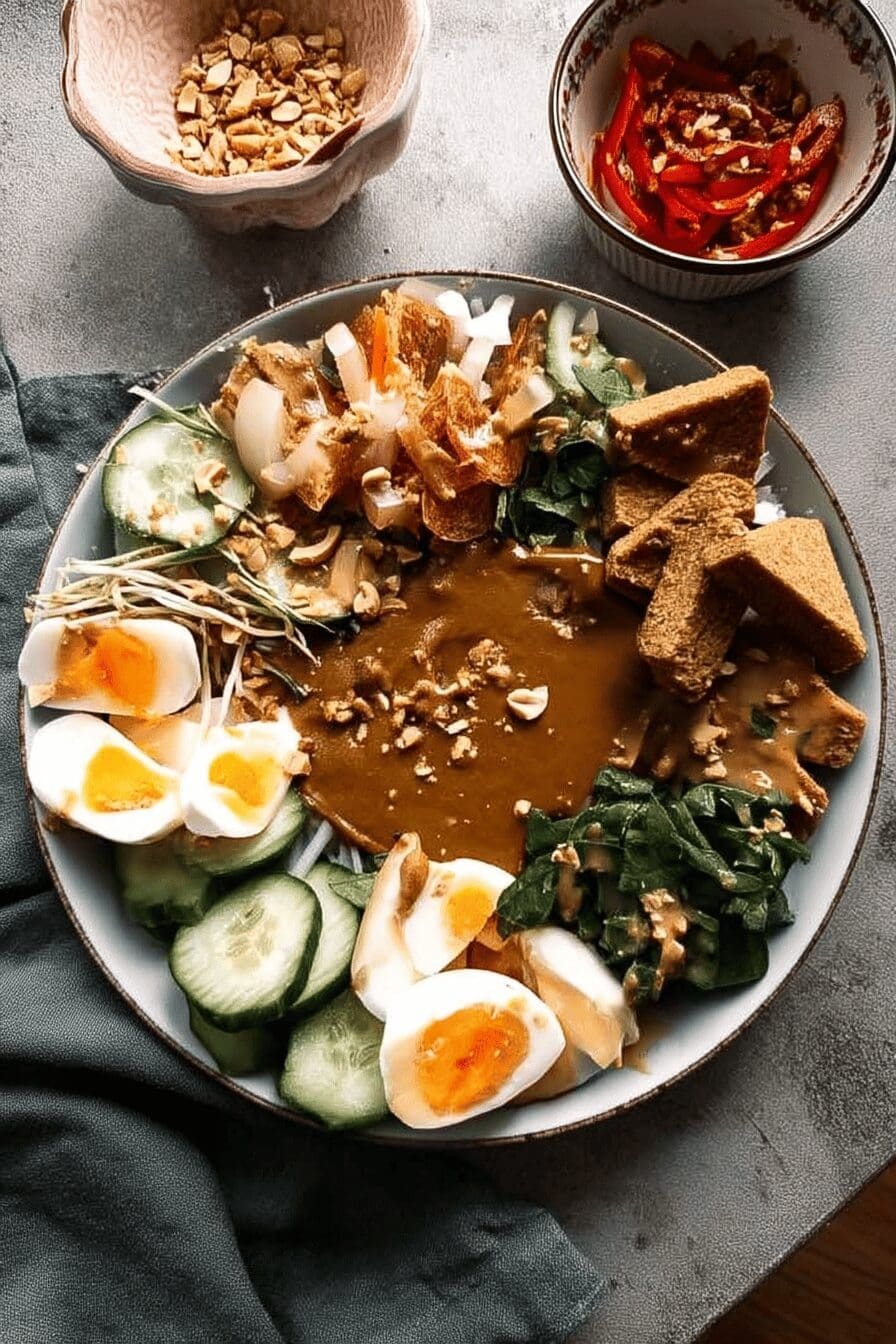
On a large serving plate, arrange the blanched vegetables, sliced cucumbers, tomatoes if using, boiled potatoes, fried tempeh or tofu, and halved boiled eggs attractively. Drizzle the warm peanut sauce generously over the salad or serve on the side for individual drizzling. Garnish with 1 tablespoon finely chopped peanuts, sliced red chilies, fried shallots, and lime wedges as desired. Serve prawn crackers alongside for added crunch, if using. This presentation allows everyone to mix flavors according to preference. The combination of fresh, soft, and crunchy components makes gado gado such a delightful and satisfying dish.
Final Step: Serve and enjoy
Serve the gado gado salad immediately to enjoy the mingling of warm peanut sauce with crisp vegetables and crispy protein. The salad works well as a hearty lunch or light dinner and benefits from the vibrant, layered flavors and textures. Adjust seasoning or spice level right before eating to suit your taste buds. For more ideas on side dishes that compliment this, check out the savory cucumber sandwiches.

Dietary Substitutions to Customize Your gado gado
Protein and Main Component Alternatives
Gado gado’s flexible protein options allow it to appeal to a broad range of dietary preferences:
- Vegan: Replace boiled eggs entirely with extra tempeh or tofu. Tempeh brings a nutty flavor and firm texture, while tofu can be pan-fried to crispness. For extra protein, consider edamame or roasted chickpeas.
- Non-vegetarian: Add grilled steak strips or shrimp stir fry to the salad for an indulgent and protein-rich twist. These options bring different textures and flavors to the classic gado gado, complementing the peanut sauce perfectly.
- Low-calorie: Opt for baked or steamed tofu instead of frying. Avoid prawn crackers and reduce the amount of coconut milk or peanut butter in the sauce to cut fat content while preserving flavor.
Vegetable, Sauce, and Seasoning Modifications
The vegetable mix and sauce components in gado gado can be customized seasonally or to address dietary needs:
- Substitute green beans with broccoli, asparagus, or even baby corn depending on seasonal availability.
- Use kale or green cabbage in place of spinach for a different leafy green texture and flavor.
- Swap peanut butter with almond or cashew butter for a nutty twist, remembering to adjust sweetness and spice.
- Use gluten-free soy sauce alternatives to replace kecap manis and ensure the sauce suits gluten-free diets.
- Adjust the chili paste level or add fresh lime juice to balance or boost the spiciness and acidity to your liking.
These variations let you tailor the signature gado gado salad to personal tastes and dietary restrictions without losing its essence.
Mastering gado gado: Advanced Tips and Variations
| Tip Category | Expert Advice | Benefit |
|---|---|---|
| Pro Cooking Techniques | Roast raw peanuts before blending the peanut sauce to enhance depth and nuttiness. Blanch vegetables lightly to retain crispness and bright colors. | Improves flavor complexity and preserves appealing texture |
| Flavor Variations | Try adding tamarind paste to the peanut sauce to introduce tangy brightness or swirl in more coconut milk for extra creaminess and richness. | Offers exciting new layers to the traditional taste profile |
| Presentation Tips | Serve gado gado in individual bowls for neat portions. Garnish with edible flowers, fresh coriander, or mint sprigs for a restaurant-quality look. | Elevates the visual appeal and makes the dish feel special |
| Make-Ahead Options | Prepare peanut sauce up to 5 days in advance and refrigerate. Blanch all vegetables and store separately chilled to speed up assembly on busy days. | Streamlines meal prep without compromising freshness |
Master these advanced tips to create your personalized gado gado salad experience. For detailed steps on making authentic Indonesian peanut sauce, visit this How to Make Indonesian Peanut Sauce guide.
How to Store gado gado: Best Practices
- Refrigeration: Store the peanut sauce and blanched vegetables separately in airtight containers in the refrigerator. This keeps each component fresh for up to 2 days, preserving optimal flavor and texture.
- Freezing: Avoid freezing fresh vegetables and peanut sauce as their texture and taste deteriorate once thawed. Cooked potatoes and tempeh/tofu can be frozen separately if needed, though quality may vary.
- Reheating: Reheat cooked potatoes and fried tempeh or tofu gently in a skillet or microwave. Keep vegetables and sauce cold or at room temperature to retain crispness and creaminess.
- Meal Prep Considerations: Assemble gado gado salad just before serving to prevent sogginess from sauce and moisture buildup. Preparing elements ahead helps speed up mealtime without sacrificing quality.
FAQs: Frequently Asked Questions About gado gado
What ingredients are used to make traditional gado gado peanut sauce?
Traditional gado gado peanut sauce is made from natural peanut butter, Thai red curry paste, coconut milk, kecap manis (sweet Indonesian soy sauce), garlic, lime juice, chili paste, and salt. These ingredients are simmered together until thick and creamy, giving the sauce its distinctive savory, slightly sweet, and mildly spicy flavor that complements the mixed vegetables.
Which vegetables are commonly included in gado gado salad?
Gado gado typically features a variety of blanched or fresh vegetables such as spinach, green beans, bean sprouts, boiled potatoes, cucumber, broccoli, cauliflower, carrots, cabbage, and tomatoes. The mix can be adjusted based on availability and preference, making gado gado a versatile and colorful vegetable dish.
How should tofu and tempeh be prepared for gado gado?
For gado gado, tofu and tempeh should be cut into bite-sized pieces and fried until they develop a crispy outer layer. This adds texture and enhances their nutty flavor, which pairs well with the peanut sauce and vegetables. If tempeh is unavailable, crispy tofu makes a good substitution.
Can gado gado be prepared in advance and how long does it keep?
Yes, you can prepare the peanut sauce and blanch the vegetables ahead of time. Store both separately in airtight containers in the refrigerator for up to 4 to 5 days. Assemble just before serving to maintain texture and freshness, especially for fried tofu or tempeh and any crispy toppings like prawn crackers.
What are good substitutes if I can’t find kecap manis for gado gado?
If kecap manis is unavailable, you can substitute it by mixing regular dark soy sauce with a small amount of honey or brown sugar. This combination replicates the thick, sweet, and savory flavor of kecap manis, which is essential for the signature taste of the peanut sauce.

gado gado
Classic Spaghetti Carbonara is a traditional Italian pasta dish made with eggs, cheese, pancetta, and pepper for a creamy and savory delight.
- Total Time: 25 minutes
- Yield: Serves 4
Ingredients
– 1/3 cup natural peanut butter
– 4 teaspoons red curry paste
– 3 teaspoons kecap manis
– 1 teaspoon sambal oelek or chili paste
– 1/2 teaspoon salt
– 1 large garlic clove
– 1 1/2 tablespoons lime juice
– 1/2 cup full-fat coconut milk
– 1/2 cup water
– 1 bunch spinach
– 4 cups bean sprouts
– 200g small potatoes
– 1 cucumber
– 2 to 3 boiled large eggs
– 200g tempeh or firm tofu
– 15 prawn crackers
– 1 tablespoon finely chopped peanuts
– red chili slices
– fried shallots
– lime wedges
Instructions
First Step: Prepare and cook the peanut sauce. Gather all peanut sauce ingredients: 1/3 cup natural peanut butter, 4 teaspoons red curry paste, 3 teaspoons kecap manis (or dark soy sauce + honey), 1 teaspoon sambal oelek, 1/2 teaspoon salt, 1 large garlic clove pressed, 1 1/2 tablespoons lime juice, 1/2 cup coconut milk, and 1/2 cup water. In a small saucepan over medium-low heat, combine all and stir regularly to prevent sticking. Bring to a gentle simmer and cook for about 5 minutes until it thickens slightly. Taste and adjust seasoning with more lime juice, salt, or a pinch of sugar if needed. Keep the sauce warm while preparing other ingredients. For a vegan or low-calorie option, you can reduce the coconut milk or substitute water for part of it to reduce richness.
Second Step: Prepare the vegetables and potatoes. Boil 200g of small potatoes for about 5 minutes until tender; drain well. Blanch 4 cups of bean sprouts in boiling water for 3 minutes, then drain and gently press to remove excess moisture. Submerge 1 bunch of spinach or alternative leafy greens in boiling water just until wilted; drain and squeeze dry. If using additional vegetables like green beans or broccoli, blanch similarly until crisp-tender. Slice 1 cucumber diagonally and optionally slice tomatoes or carrots if desired. This step sets the foundation for fresh, crunchy textures in the salad. For a gluten-free variation, ensure all vegetables and preparation surfaces are free from cross-contamination.
Third Step: Cook tempeh or tofu. Cut 200g tempeh or firm tofu into strips about 0.75 cm x 5 cm. Heat 2 tablespoons vegetable or peanut oil in a skillet over medium-high heat. Fry tempeh strips about 2 minutes per side until golden and crispy; tofu strips require about 1.5 minutes per side for crispness. Remove and drain on paper towels to keep them dry. To keep the dish low-calorie, you can bake or steam the tofu instead of frying, which also works well. This crispy protein adds great texture and pairs beautifully with the creamy peanut sauce.
Fourth Step: Boil and prepare eggs. Boil 2 to 3 large eggs for 8-10 minutes until fully cooked. Cool in ice water, peel, and halve. For vegan adaptations, replace eggs with extra fried tofu or tempeh slices to maintain protein content without animal products. The boiled eggs provide richness and a satisfying bite to balance the fresh vegetables and spicy sauce.
Fifth Step: Assemble the gado gado salad. On a large serving plate, arrange the blanched vegetables, sliced cucumbers, tomatoes if using, boiled potatoes, fried tempeh or tofu, and halved boiled eggs attractively. Drizzle the warm peanut sauce generously over the salad or serve on the side for individual drizzling. Garnish with 1 tablespoon finely chopped peanuts, sliced red chilies, fried shallots, and lime wedges as desired. Serve prawn crackers alongside for added crunch, if using. This presentation allows everyone to mix flavors according to preference. The combination of fresh, soft, and crunchy components makes gado gado such a delightful and satisfying dish.
Final Step: Serve and enjoy. Serve the gado gado salad immediately to enjoy the mingling of warm peanut sauce with crisp vegetables and crispy protein. The salad works well as a hearty lunch or light dinner and benefits from the vibrant, layered flavors and textures. Adjust seasoning or spice level right before eating to suit your taste buds. For more ideas on side dishes that compliment this, check out the savory cucumber sandwiches.
Notes
Ensure eggs are thoroughly mixed to avoid scrambling during the mixing process with hot pasta. For best results, use authentic Italian pancetta or guanciale.
- Prep Time: 10 minutes
- Resting Time: 0 minutes
- Cook Time: 15 minutes
- Category: Dinner
- Method: Stovetop
- Cuisine: Italian
- Diet: Non-Vegetarian
Nutrition
- Serving Size: One plate
- Calories: 670
- Sugar: 2g
- Sodium: 800mg
- Fat: 30g
- Saturated Fat: 10g
- Unsaturated Fat: 15g
- Trans Fat: 0g
- Carbohydrates: 75g
- Fiber: 3g
- Protein: 25g
- Cholesterol: 200mg


I made this dish for a small get-together last weekend, and it was a hit! 😍 I loved the crunch from the fresh veggies with the peanut sauce. Do you have any tips on making the peanut dressing a little spicier? Thanks for sharing such a delicious recipe!