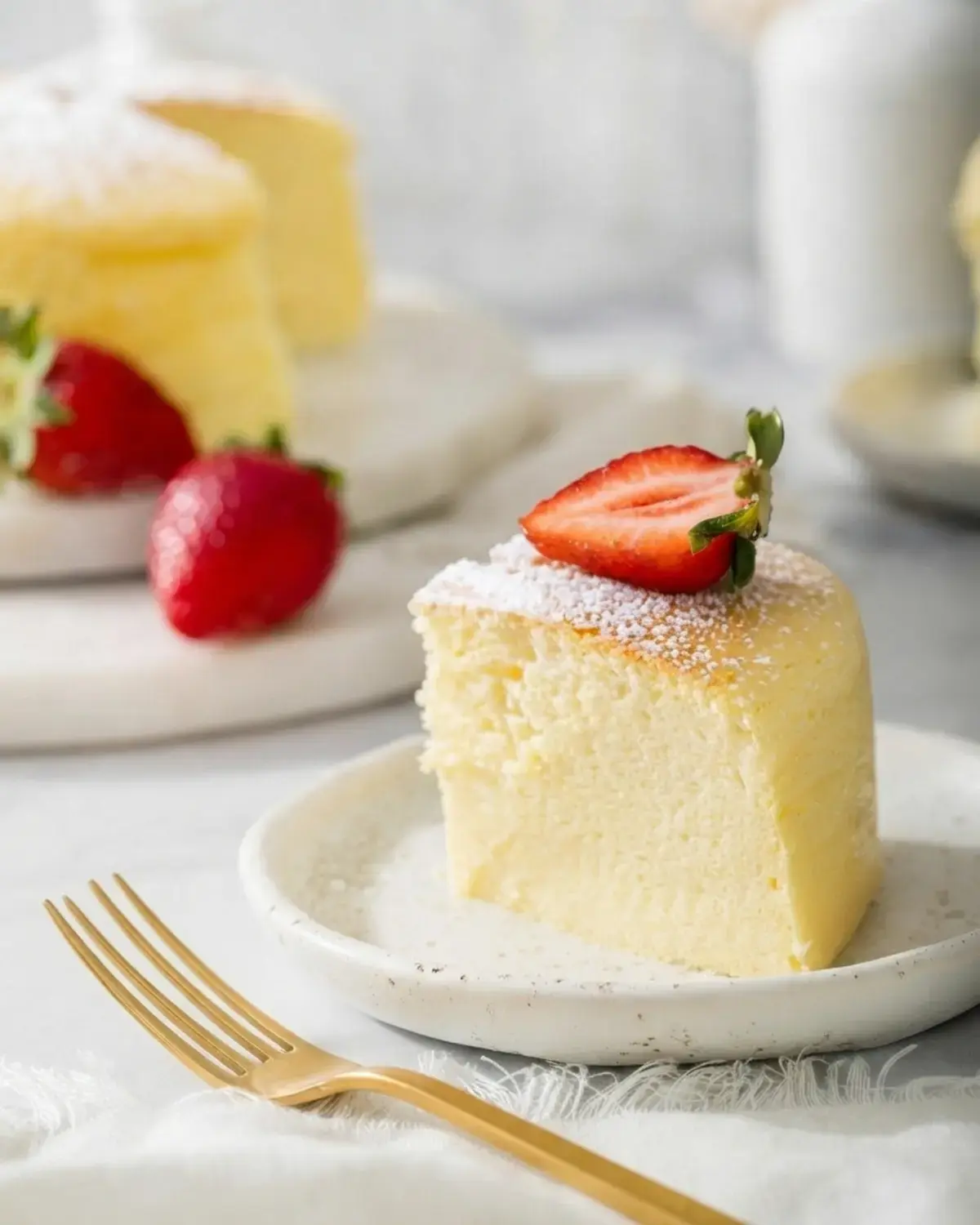
I still remember the afternoon a friend set a slice of Japanese cotton cheesecake in front of me at a family picnic.
It wobbled on the plate like a little pillow, and by the time I walked back to the table, most of the cake was already gone.
That jiggly, cloud like softness is exactly why this cake disappears so fast, and it is also why it is such a fun project to bake at home.
This recipe bakes in a 6 inch round pan and makes 5 servings. From start to finish you need about 125 minutes, with 20 minutes of prep, 1 hour 15 minutes in the oven, and 30 minutes of cooling.
There is no crust to press, so all of your attention goes into two things: a smooth batter and a fluffy meringue.
Read the whole recipe once before you start. The steps are simple, but the order matters, and a few small details decide whether your cake rises tall and stays bouncy or sinks in the middle. Stick with me and we will walk through it together.
Japanese cotton cheesecake goes by several names, and you may see it written as Japanese cheesecake, Japanese souffle cheesecake, or Japanese baked cheesecake. They all point to the same cake.
Unlike a classic New York style cheesecake, this one is crustless. It gets its lift from whipped egg whites folded into a cream cheese batter that is lightened with cake flour. The result is a texture that is bouncy, cotton soft, and melts in your mouth.
The flavor is gentle and familiar: sweet, a little vanilla, and subtly tangy, much like a classic cheesecake but far lighter. If you have only ever had dense cheesecake, this one will surprise you in the best way.
Ingredients
Everything here is a pantry staple you can find at your local grocery market. Nothing is hard to track down, which is one reason this cake makes such a good weekend project for beginners.
¼ cup (30 g) cake flour
2 tablespoons (20 g) cornstarch
¾ cup (180 g) cream cheese, full fat brick style, at room temperature
2 tablespoons (30 g) unsalted butter, at room temperature
3 ½ tablespoons (50 g) milk, full fat
3 large egg yolks, at room temperature
½ teaspoon (2 g) vanilla extract
3 large egg whites, at room temperature
⅓ cup (70 g) granulated sugar
½ teaspoon (2 g) lemon juice
Powdered sugar, for garnish, optional
Here is why each one matters.
Cake flour. It gives the cheesecake a soft, light, airy crumb. If you do not have cake flour, substitute 30 g of all purpose flour mixed with 10 g of cornstarch.
Cornstarch. This is the quiet hero. It makes the cheesecake lighter and fluffier, which is what gives you that melt in your mouth texture.
Cream cheese. Use full fat brick style cream cheese at room temperature. Brick style blends smoothly, and room temperature means fewer lumps.
Whole milk. The fat in whole milk helps keep the cheesecake moist.
Butter. It adds fat, flavor, and moistness to the batter.
Eggs. You separate 3 large eggs into yolks and whites, and the two parts go into different stages of the recipe. Bring the eggs to room temperature first.
Granulated sugar. Sugar is crucial in the meringue. It creates a thick, glossy foam that holds air and gives the cake its height.
Lemon juice. It adds acidity and helps the meringue rise. If you do not have lemon juice, ¼ teaspoon of cream of tartar works too.
One more thing worth knowing before you start: this recipe makes 5 servings. The source nutrition comes in at about 224 calories, 25 g of carbohydrates, 12 g of protein, and 8 g of fat per serving.
Instructions
This cheesecake can be tricky to master the first time, so take it step by step. Set out your ingredients, separate your eggs, and preheat the oven before you start mixing.
Preheat and prepare the pan. Preheat your oven to 300°F and line the bottom and sides of your 6 inch round baking pan with parchment paper.
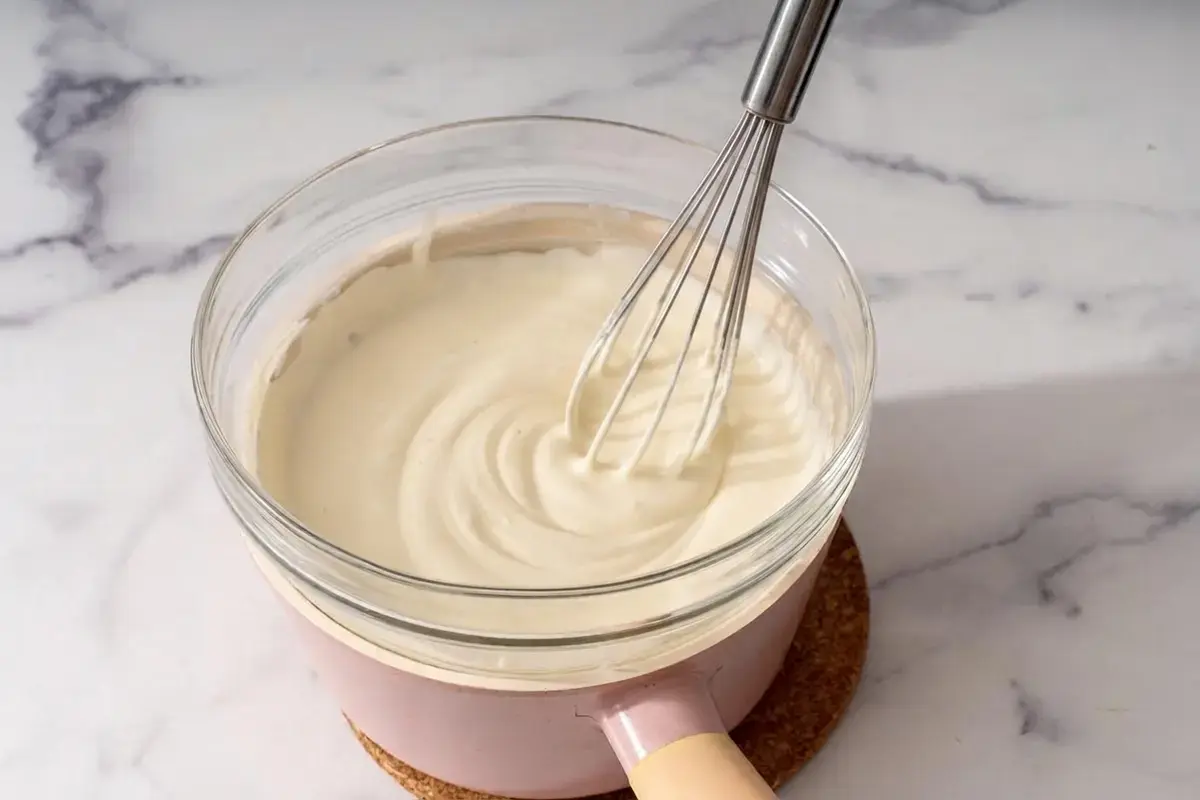
Melt the butter and cream cheese over a double boiler. Fill a small saucepan with water halfway and bring it to a boil. In a mixing bowl that fits on top of the saucepan, add the cream cheese, butter, and milk. Whisk until the butter and cream cheese are melted and fully combined and the mixture reaches about 130°F (55°C).
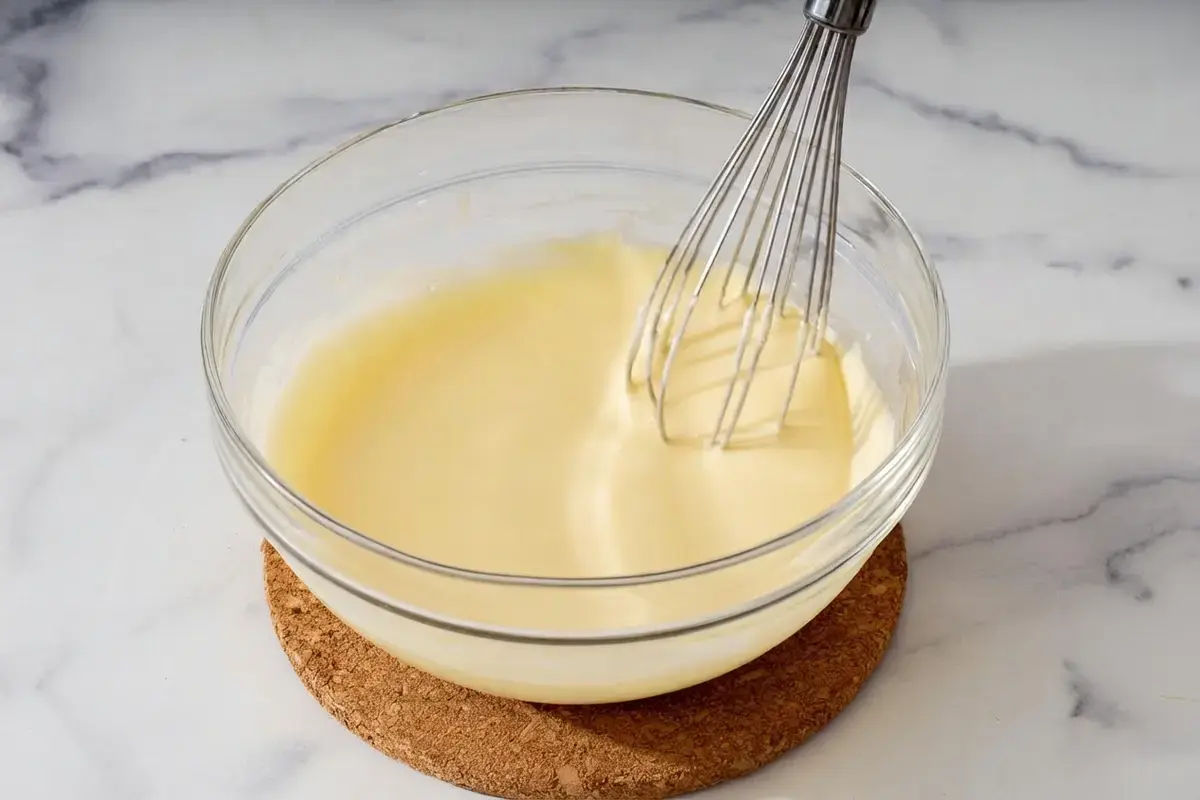
Add the egg yolks and vanilla. Remove the cream cheese bowl from the heat and whisk in the egg yolks and vanilla until combined.
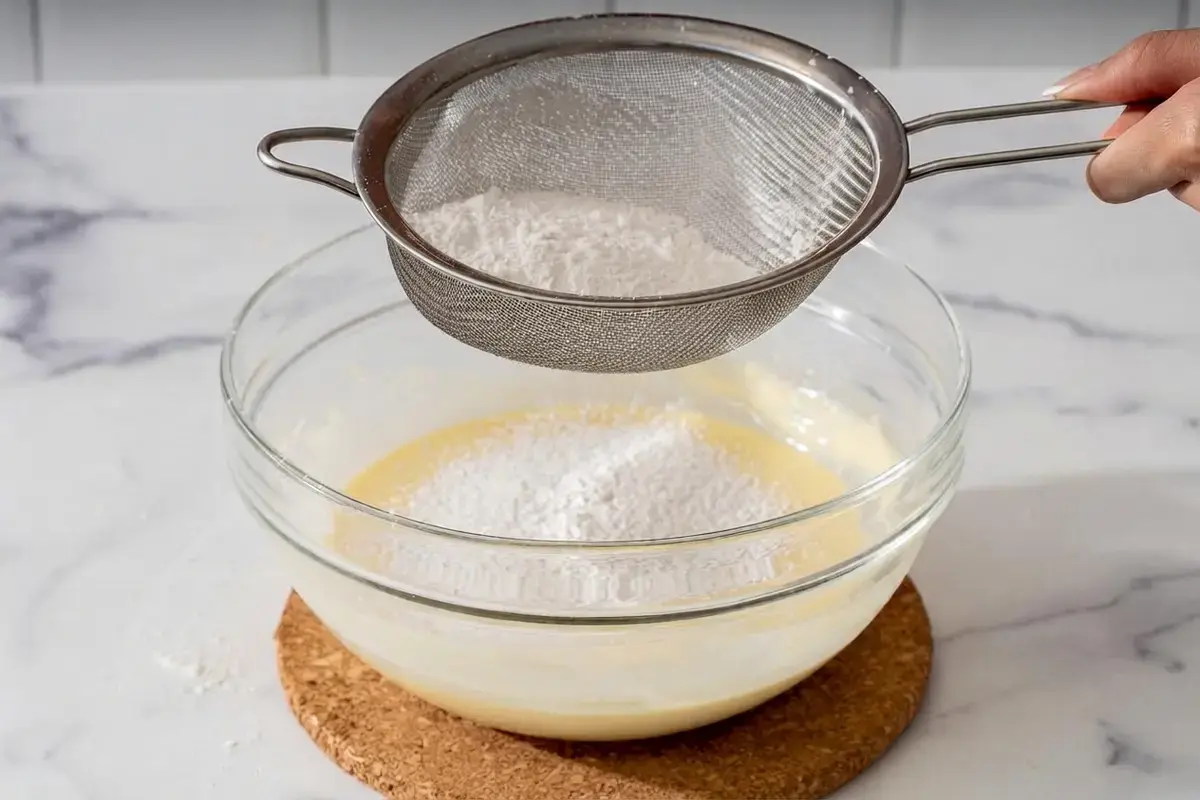
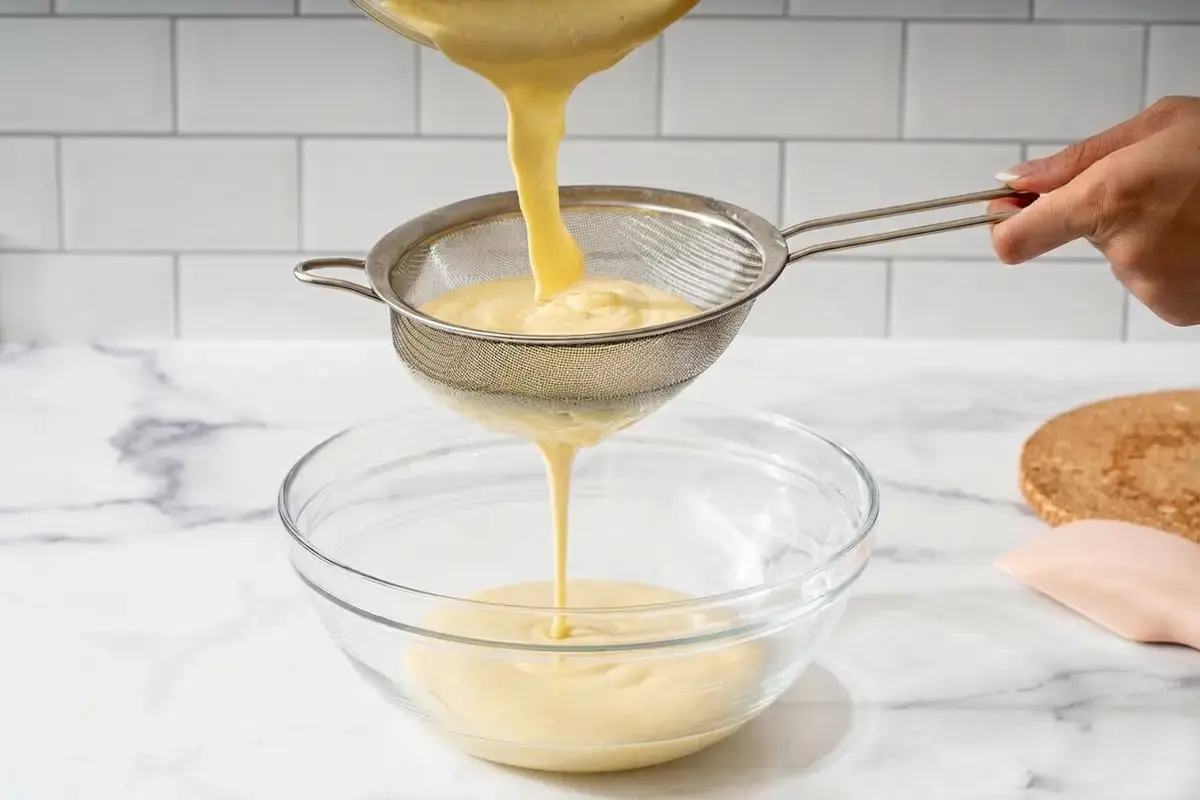
Sift in the cake flour. Using a fine mesh sieve, sift in the cake flour and cornstarch. Whisk until smooth. Then pour the batter through the fine mesh sieve to make sure it has no remaining lumps.
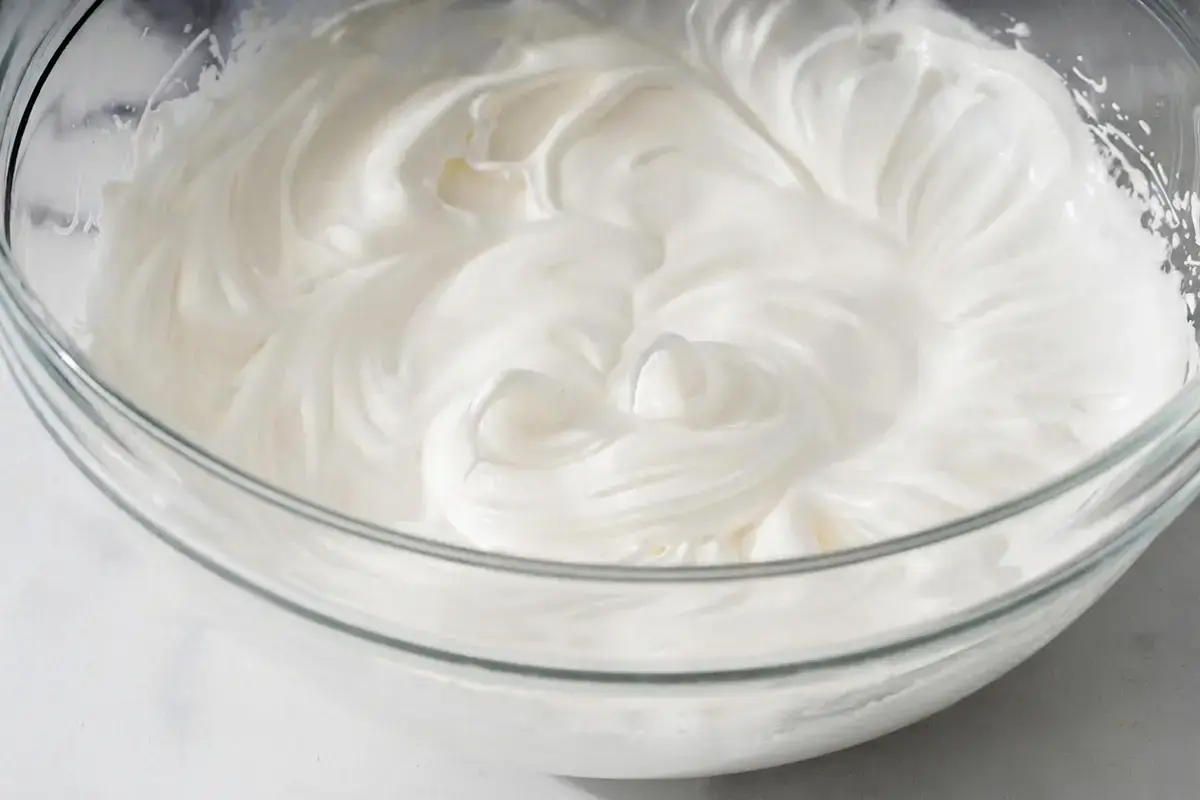
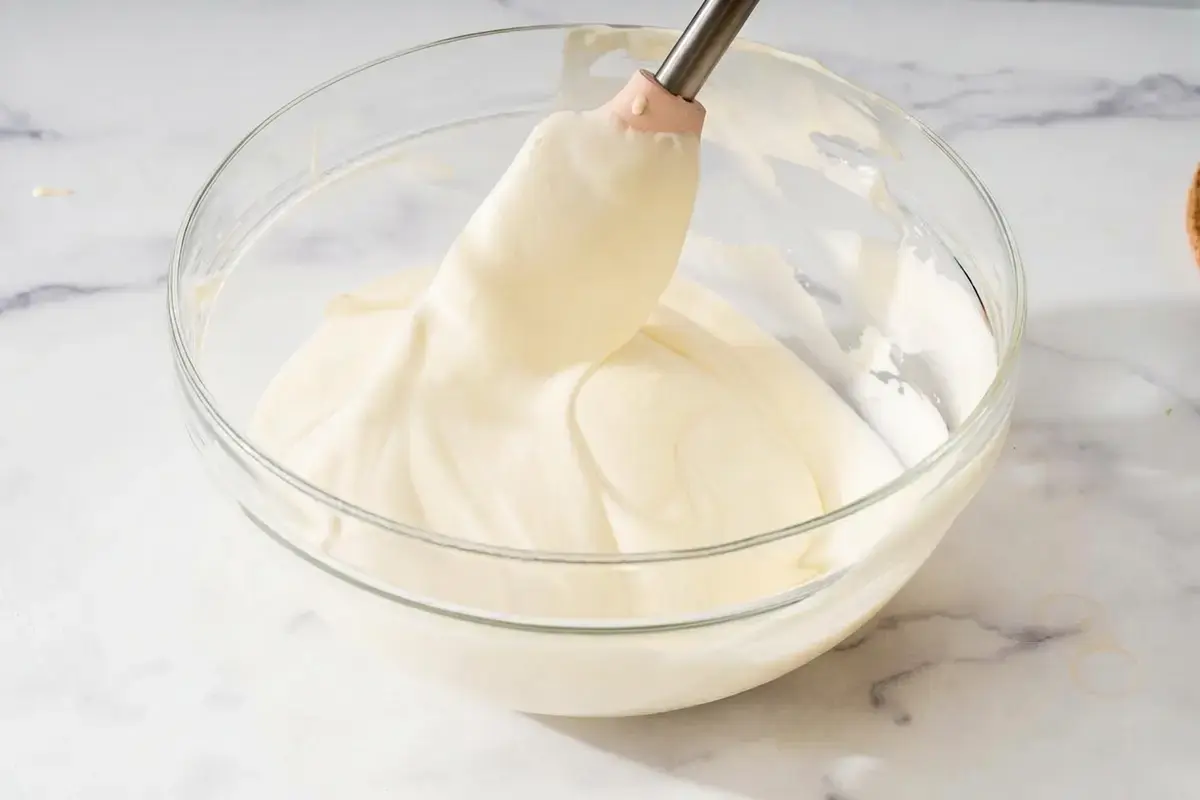
Make the meringue. In a large mixing bowl, add the egg whites and lemon juice. Using an electric hand mixer, beat the egg whites on high until white and frothy. Then, working in 3 batches, slowly pour in the sugar while the mixer is running. Keep mixing with the remaining thirds of sugar until the meringue reaches medium soft peaks, which means the peaks slowly fold over when you lift the mixer, like soft serve ice cream. Once it reaches soft peaks, turn the mixer to low and mix for an additional 30 seconds to beat out any large bubbles.
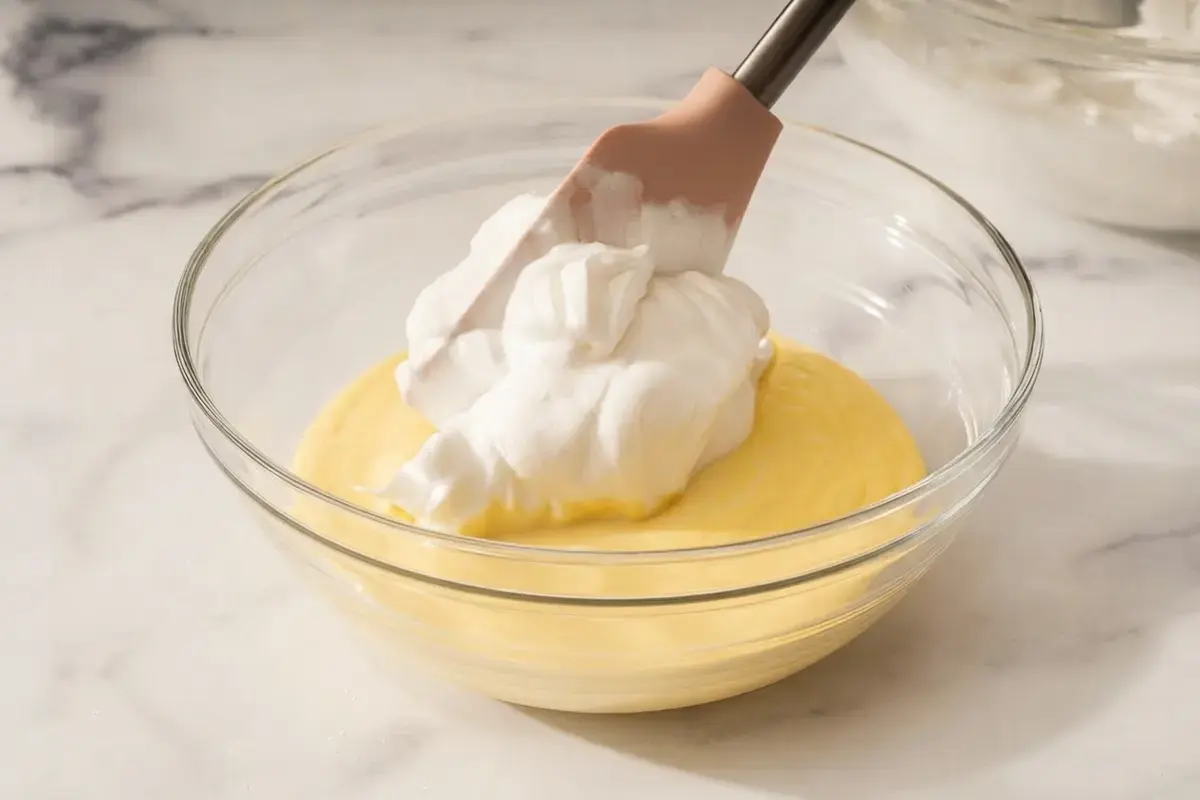
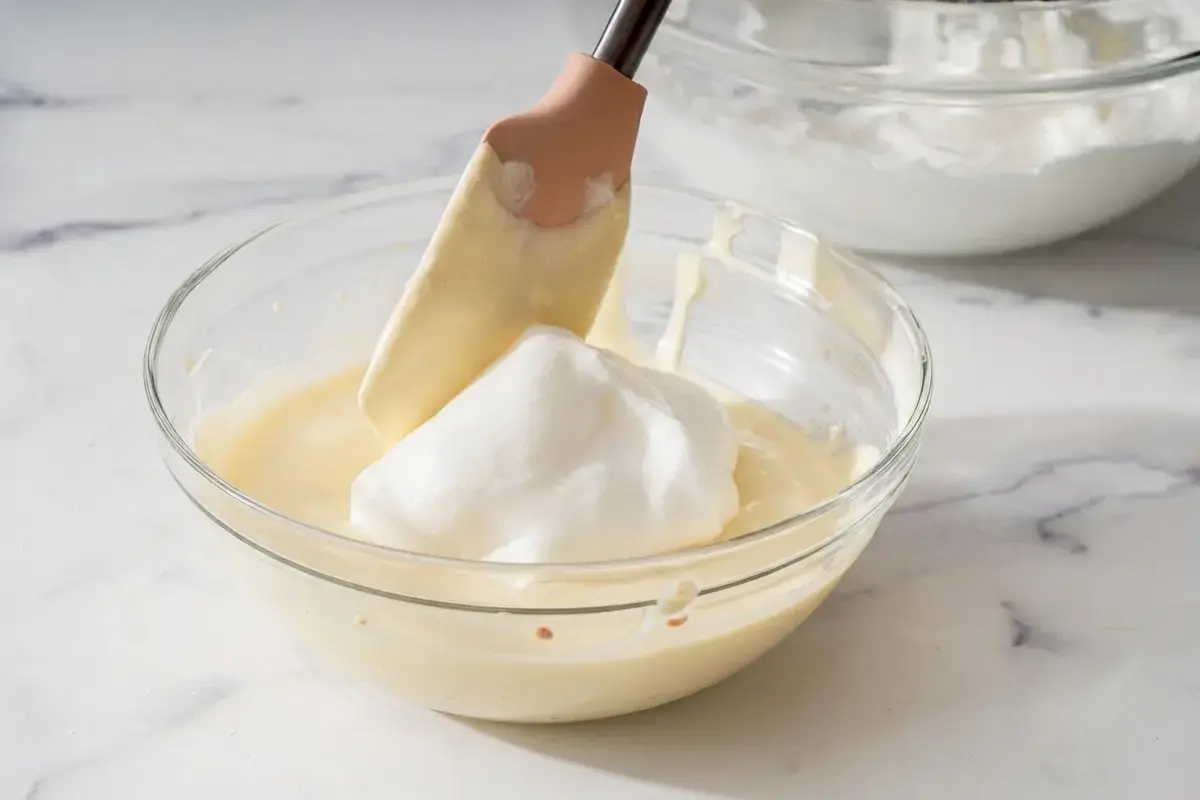
Mix 1/3 of the meringue into the egg batter. Fold until it is completely combined and smooth.
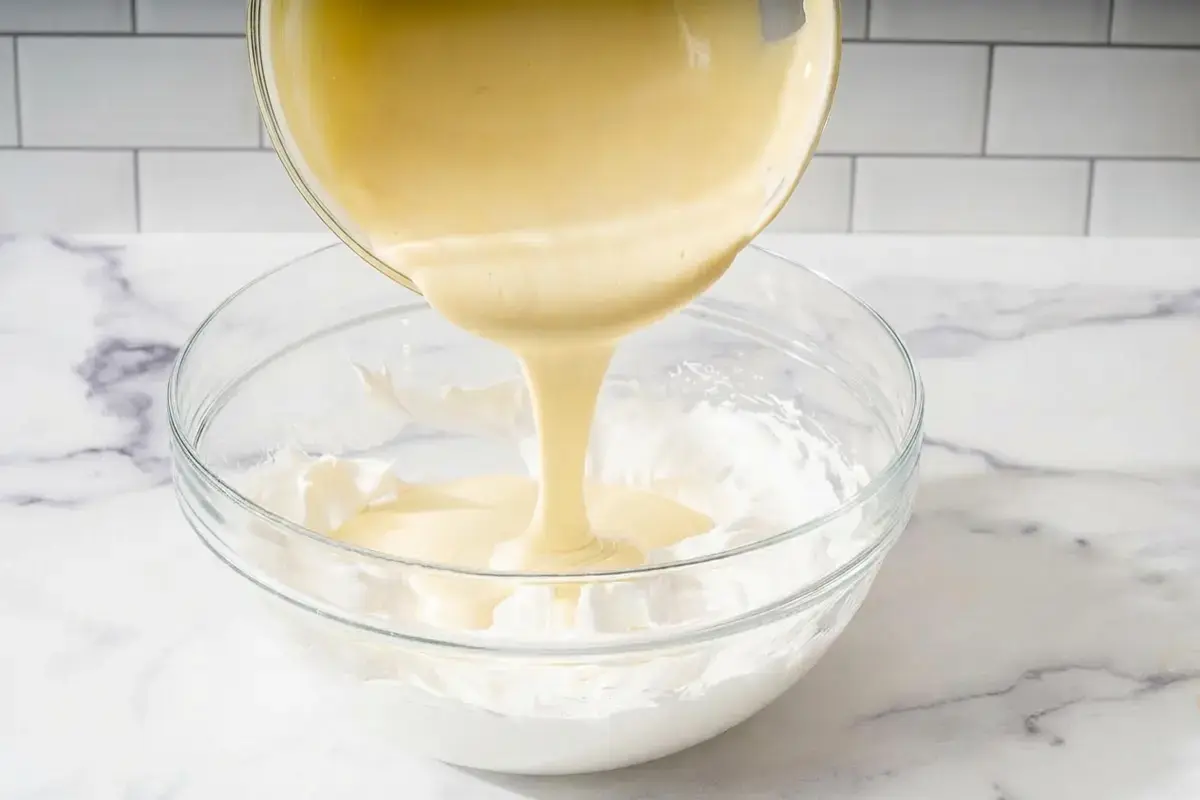
Mix the egg batter into the meringue. Then take the egg batter and gently pour it into the remaining meringue. Carefully fold the batter with a rubber spatula until just combined. Make sure not to over mix and deflate all the air in the batter.
Bake the Cheesecake
Prepare the pan. Pour the batter into the lined baking pan from about 5 inches above the pan to pop the remaining large air bubbles. Place the cheesecake round pan into a larger deep baking tray and fill it with about 1 to 2 cm of hot boiling water.
Bake. Bake at 300°F (150°C) for 30 minutes. After 30 minutes, lower the temperature to 230°F (110°C) and bake for another 30 minutes. Then increase the temperature to 275°F (135°C) for 13 to 15 minutes. Keep a close eye on the cake to prevent it from cracking. If the cake begins to crack, that means your oven is too hot, so slightly crack the oven door for about 5 seconds to release the steam. The cake is done when the top is golden and a toothpick inserted in the center comes out mostly clean.
Cool. Once the cake is done cooking, turn off the oven and leave the cake inside for about 15 minutes with the oven door cracked. Then remove the water bath and let the cake sit in the oven for another 15 minutes. This prevents temperature shock and dramatic shrinking. Remove the cake from the tin, place it on a rack to cool completely, sift some powdered sugar on top, and enjoy.
If you remember only one thing, remember this: glossy medium soft peaks and a gentle hot water bath are what give this cake its lift.
Expert Tips
Small habits make a big difference here. Here are the ones I lean on every single time.
Stop whipping at medium soft peaks. Whip the egg whites with an electric mixer only until the meringue is soft and glossy and holds medium soft peaks. At that stage the tip left by the lifted mixer bends over slowly instead of standing straight up. Stiff peaks will give you a dry, cracked top.
Use a hot water bath. The water bath keeps the oven heat steady and adds moisture, so the cake is less likely to crack.
Protect a springform pan. If you use a springform pan, set a slightly larger round pan between the 6 inch pan and the deep baking pan to keep water out, or wrap the bottom of the springform pan in aluminum foil.
Bake low and slow. This recipe moves through two different temperatures on purpose. Watch the cake as it bakes, and if it starts to crack, open the oven briefly to let heat escape.
Leave the cake in the oven. When baking finishes, switch the oven off, take the cheesecake out of the water bath, and leave it in the oven with the door cracked for roughly 20 minutes. That gradual step lessens the temperature shock that can shrink the cake.
Expect a little settling. A slight dip is normal for a souffle style cheesecake. Even cooling and a fully baked center are your best tools against dramatic shrinking.
If your first try comes out a little flat, do not worry. In my experience, nine times out of ten it comes down to the meringue, either under whipped or folded too hard, and the next batch is always better.
Storage Instructions
This Japanese cheesecake is best served immediately, while the texture is at its lightest and most jiggly. If you have leftovers, they keep beautifully.
Store the cheesecake in an airtight container in the refrigerator for up to 5 days. Bring a slice to room temperature for a few minutes before serving, and dust with a little extra powdered sugar if you like.
FAQs
What is Japanese cotton cheesecake?
Japanese cotton cheesecake, also known as jiggly cheesecake or Japanese souffle cheesecake, is a light and fluffy baked cheesecake made with cream cheese, whipped egg whites, and cake flour. It is crustless and has a soft, bouncy, cloud-like texture that wobbles when shaken. The cake is baked low and slow in a water bath to achieve its signature melt-in-the-mouth feel.
Why did my Japanese cheesecake crack?
Cracking most often happens when the oven temperature is too high or fluctuates, causing the cake to rise too quickly. Prevent cracking by baking at a low temperature, such as 300°F for 30 minutes then lowering to 230°F, and always using a hot water bath. If the cake begins to crack during baking, briefly crack the oven door to release steam. Use an independent oven thermometer to ensure accuracy.
Why is my Japanese cheesecake not fluffy?
A dense cheesecake usually results from under-whipped egg whites or over-mixing the meringue into the batter. Whip the egg whites and lemon juice with sugar to medium-soft peaks, where the tip slowly folds over like soft serve, ensuring plenty of air is incorporated. When folding the batter, work gently and stop as soon as the whites are just combined to avoid deflating the air.
How do you store Japanese cotton cheesecake?
Japanese cotton cheesecake is best served the same day for the most dramatic jiggle and softest texture. Store leftovers in an airtight container in the refrigerator for up to 5 days. Chilled cake will become firmer and more like a dense cheesecake, but you can gently reheat it in a low oven to restore some of its original softness.
Japanese Cotton Cheesecake I still remember the afternoon a friend set a slice of Japanese cotton cheesecake in front of me at a family picnic. It wobbled on the plate like a little pillow, and by the time I walked back to the table, most of the cake was already gone.
Total Time:125 min
Yield:51x
Ingredients
Scale
¼ cup (30 g) cake flour 2 tablespoon (20 g) cornstarch ¾ cup (180 g) cream cheese, full fat brick, room temperature 2 tablespoon (30 g) unsalted butter, room temperature 3 ½ tablespoon (50 g) milk, full fat 3 large egg yolks, room temperature ½ teaspoon (2 g) vanilla extract 3 large egg whites, room temperature ⅓ cup (70 g) granulated sugar ½ teaspoon (2 g) lemon juice powdered sugar, garnish
Instructions
1-Preheat and prepare pan: Preheat and prepare pan. Preheat your oven to 300°F and line the bottom and sides of your 6 inch round baking pan with parchment paper. 2-Melt the butter and cream cheese over: Melt the butter and cream cheese over a double boiler. Fill a small saucepan with water halfway and then bring it to a boil. In a mixing bowl that fits on top of the sauce pan, add the cream cheese, butter and milk. Whisk until the butter and cream cheese are melted and fully combined and reach about 130°F (55°C) 3-Add egg yolk and vanilla: Add egg yolk and vanilla. Remove the cream cheese bowl from the heat and whisk in the egg yolks and vanilla until combined. 4-Sift in the cake flour: Sift in the cake flour. Using a fine mesh sieve, sift in the cake flour and cornstarch. Whisk until smooth. Then pour the batter through the fine mesh sieve to make sure batter does not have any remaining lumps. 5-Make the meringue: Make the meringue. In a large mixing bowl, add the egg whites and lemon juice. Using an electric hand mixer, beat the egg whites on high until white and frothy. Then working in 3 batches, slowly pour in 1/3 of the sugar while the mixer is running. Keep mixing with the remaining thirds of sugar until the meringue reaches medium soft peaks or when you lift the mixer the peaks will slowly fold over like soft serve ice cream. Once it reaches soft peaks, turn the mixer on low and mix the eggs for an additional 30 seconds to beat out any large bubbles. 6-Mix 1/3 of the meringue into the: Mix 1/3 of the meringue into the egg batter. Mix 1/3 of the meringue into the egg batter and fold until it is completely combined and smooth. 7-Mix the egg batter into the meringue: Mix the egg batter into the meringue. Then take the egg batter and gently pour it into the meringue and carefully fold the batter with a rubber spatula until just combined. Make sure to not over-mix and deflate all the air in the batter. 8-Prepare the pan: Prepare the pan. Pour the batter into the lined baking pan at about 5 inches from the pan to pop the remaining large air bubbles. Place the cheesecake round pan into a larger deep baking tray and fill it up with about 1-2 cm of hot boiling water. 9-Bake: Bake. Bake in the oven at 300°F (150°C) for 30 minutes. After 30 minutes, lower the temperature to 230°F (110°C) and bake for another 30 minutes. Then increase the temperature to 275°F (135°C) for 13-15 minutes. Keep a close eye to prevent it from cracking, if the cake begins to crack that means your oven is too hot so slightly crack the oven to remove the steam for about 5 seconds. The cake is done when the top is golden and if you place a toothpick in the center and it comes out mostly clean. 10-Cool: Cool. Once the cake is done cooking, turn off the oven and leave the cake in the oven for about 15 minutes with the oven door cracked. Then remove the water bath and let the cake sit in the oven for another 15 minutes. This will prevent any shock in temperature and having the cake shrink dramatically. Remove the cake from the tin and place the cake on the rack to cool completely. Sift some powdered sugar on top and enjoy!
Notes
Additional time: follow the resting and cooling steps (30 min).