

Lemon Donuts with Lemon Glaze
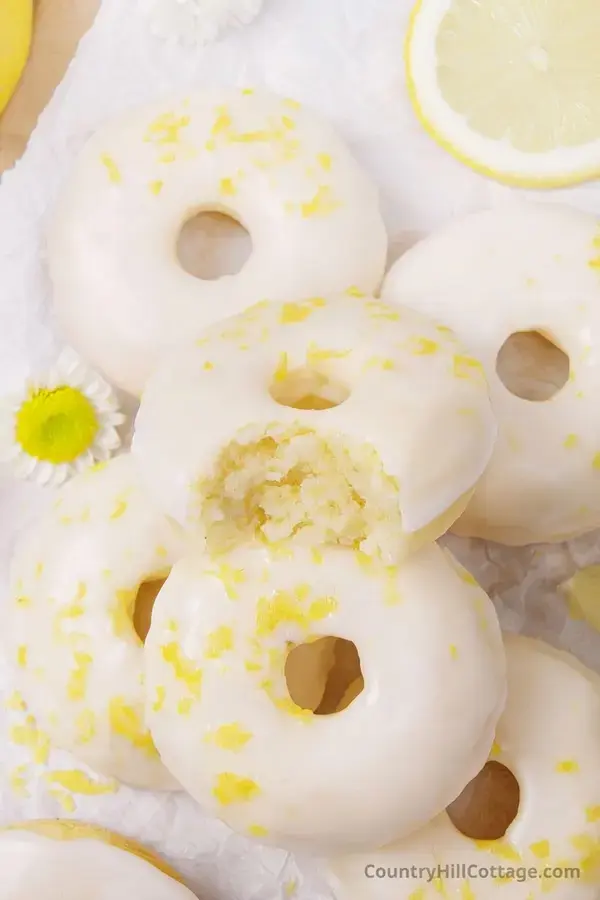
These baked lemon donuts are sweet, tender, and full of bright citrus aroma, finished with a fresh lemon glaze. They are made from scratch with everyday ingredients, and because they bake in a donut pan, there is no hot oil to manage and no deep frying mess to clean up afterward.
Real lemon does the work here. Freshly squeezed juice and freshly grated zest give the donuts a clean, natural citrus flavor, and the glaze adds just the right tangy sweetness on top. The result is light and fluffy, with a soft crumb that holds up well under the glaze.

| Recipe at a glance | Details |
|---|---|
| Method | Baked |
| Prep time | 20 minutes |
| Cook time | 10 minutes |
| Yield | 18 donuts |
| Serving size | 1 donut |
This article adapts the original lemon donut recipe from Country Hill Cottage, keeping the same ingredients, baking method, and lemon glaze.
Jump To
- 1. Lemon Donuts with Lemon Glaze
- 2. Baked lemon donuts
- 3. Why you’ll love this lemon donut recipe
- 4. Lemon donut ingredients
- 5. How to make lemon donuts
- 6. Tips for the best lemon cake donuts
- 7. Variations
- 8. Storage and shelf life
- 9. Tools to make lemon glazed donuts
- 10. More Baking
- 11. FAQs
- 12. Lemon Donuts Recipe
Baked lemon donuts
Baked lemon donuts give you the pleasure of a classic donut without the pot of hot oil. The batter goes into a donut pan and bakes until the surface springs back and a toothpick inserted near the center comes out clean.
The texture is the main attraction. These donuts come out delicate, fluffy, light, and airy, with a tender crumb that stays soft rather than heavy or dry. Fresh lemon juice and freshly grated zest create a vibrant citrus aroma, and the buttermilk in the batter keeps the lemon flavor bright and forward.
Because the donuts are baked, the process is calm and predictable. There is no oil temperature to watch and no frying smell in the kitchen. The same idea shows up in these baked lemon glazed donuts, which also get their flavor from real lemon.
Donuts like these are a familiar part of American home baking, and they work just as well for breakfast as they do for afternoon tea or dessert.
Why you’ll love this lemon donut recipe
This is a straightforward recipe with results that feel special, which is exactly why it earns a spot in the regular baking rotation.

- Short ingredient list. Count the lemon as one ingredient, juice and zest together, and the batter needs just 7 pantry staples.
- Quick prep. About 20 minutes of active prep, then the pan goes into the oven.
- Light and fluffy texture. The donuts are soft and airy, not dense or dry.
- Real citrus flavor. Fresh juice and zest give a bright, natural lemon taste.
- Versatile serving. Enjoy them for breakfast, teatime, or dessert.
- Good keepers. Stored well, they stay fresh for up to 3 days, and unglazed donuts freeze well.
For reference, the source nutrition lists one glazed donut at about 76 calories, 13 g carbohydrates, 2 g protein, and 2 g fat.
Lemon donut ingredients
Every item in this list has a purpose, and the batter is simple enough that small details make a real difference.
- 1/2 cup butter, softened. Soft butter creams evenly with the sugar. The original recipe uses salted butter, and unsalted butter plus 1/8 teaspoon fine salt works just as well.
- 1/2 cup powdered sugar. It sweetens the batter and helps keep the donuts light.
- 1 egg. An egg at room temperature binds the batter and blends in more smoothly.
- 1 1/4 cups buttermilk. Buttermilk highlights the lemon flavor and creates a tender, soft crumb.
- 3 tablespoons lemon juice. Squeeze it fresh for the cleanest citrus taste.
- Zest of 1 organic lemon. Rinse organic lemons under warm water before zesting, then grate only the yellow peel.
- 2 cups all purpose flour, spooned and leveled. Spoon flour into the measuring cup and level it off, or weigh it on a digital scale. Too much flour makes donuts tough and dry.
- 2 1/2 teaspoons baking powder. This gives the donuts their rise and their light, fluffy texture.
Bring the butter and egg to room temperature before you start. They combine more evenly, and the batter comes together faster as a result.
Lemon glaze for donuts
The glaze is where sweet and tart meet. It uses three ingredients, and all three also appear in the donut batter.

- 1 1/2 cups powdered sugar, sifted. Sifting prevents lumps and gives you a smooth, glossy glaze.
- 2 to 3 tablespoons lemon juice. The juice adds tartness that balances the sweetness of the sugar.
- Freshly grated lemon zest, optional. Sprinkle it over the glazed donuts as a quick decoration.
Whisk the sugar with 2 tablespoons of juice to start, then add a little more juice if you want a thinner consistency. The full measurements and instructions are listed in the method below.
How to make lemon donuts
Preheat the oven and gather your ingredients before you begin, then follow the steps in order. The whole process is quick once the batter is mixed.
Step 1: Preheat oven
Preheat the oven to 350°F (180°C, gas mark 4).
Step 2: Prep donut tin
Grease the donut pan with butter or spray it with nonstick cooking spray. Dust the pan with a light coat of flour as well. That extra step helps the baked donuts release cleanly.
Step 3: Mix batter
In a large mixing bowl, use an electric mixer to cream the butter and powdered sugar for 2 minutes, until the mixture is light and fluffy. Then whisk in the buttermilk, egg, lemon juice, and lemon zest until everything is well incorporated.
Step 4: Add dry ingredients
Add the flour and baking powder. Stir by hand until the wet and dry ingredients are just combined and a thick batter forms. Switch to a spatula here so you do not overwork the batter.
Step 5: Fill pan
Transfer the batter to a pastry bag fitted with a large round tip. Pipe it into the greased donut tin, filling each mold about 2/3 full. Piping is neater than spooning and gives you even donuts.
Step 6: Bake donuts
Bake the donuts for 10 to 12 minutes, until a toothpick inserted near the center comes out clean. Let them cool in the pan for 10 minutes so they set, then invert the pan and release the donuts onto a wire rack.
Step 7: Make glaze
While the donuts cool, make the glaze. Put the sifted powdered sugar into a shallow, medium sized mixing bowl. Add 2 tablespoons of lemon juice and whisk until the glaze is smooth. If you prefer a thinner glaze, whisk in a little more juice.
Step 8: Glaze donuts
Dip the top of each donut into the glaze, then flip it back over onto the wire rack.

Sprinkle with lemon zest if you like, and let the glaze set before serving.
Tips for the best lemon cake donuts
A few small habits separate a fluffy donut from a dense one. Keep these in mind as you bake.
- Stop mixing once the flour goes in. Beating the batter after the flour is added activates gluten, which makes the donuts dense. Stir by hand only until the flour disappears into the wet mixture.
- Grease the pan thoroughly. Wipe each cavity with butter or coat it with nonstick spray, then sprinkle in a little flour. Well prepared molds release without tearing.
- Pipe the batter. The batter is fairly thick, so a pastry bag fills the molds more evenly and with less mess than a spoon.
- Fill the molds properly. Fill each cavity 2/3 to 3/4 full for plump, thick donuts with a good shape.
- Watch the baking time. Check at the 10 minute mark with a toothpick or cake tester inserted in the center. The donuts are done when it comes out clean or with just a few crumbs clinging to it.
- Cool before glazing. Let the donuts set in the pan first, then move them to a rack so the glaze does not slide off.
If you want a second reference for crumb texture, these light and fluffy lemon donuts follow a similar baked approach.

Variations
The base batter is flexible, and a few simple additions change the whole personality of the batch.

- Lemon poppy seed donuts. Fold 3 tablespoons of poppy seeds into the batter and bake as directed.
- Blueberry lemon donuts. Prepare the batter and fill the molds as usual, then press a few blueberries into the batter in each mold before baking.
- Lemon ricotta donuts. Replace the buttermilk with ricotta for a richer, slightly denser crumb.
- Lemon filled donuts. Fit a pastry bag with a small round piping nozzle, fill it with lemon curd, and pipe the curd into the bottom of each donut while circling the entire donut.
A few substitutions are also useful. Lemon extract, about 1 to 2 teaspoons, can replace the lemon juice in the batter. Plain Greek yogurt is the recommended stand in for buttermilk, and sour cream works too, though it gives a denser result.

If you would rather skip the glaze, roll the warm donuts in lemon sugar made from granulated sugar and lemon zest.
Storage and shelf life
These donuts are best the day they are made, but they keep well when stored properly.
How to store lemon donuts
Keep leftover lemon donuts in an airtight container at room temperature, where they stay fresh for up to 3 days. Refrigeration is not recommended because the cold makes the donuts dense and firm.
Can you freeze lemon donuts?
Yes. For longer storage, freeze the donuts in a freezer safe container for up to 2 months. Freeze them unglazed if you can, since the glaze does not hold up well in the freezer. Let the frozen donuts defrost in the fridge.
Tools to make lemon glazed donuts
The equipment list is short, and most of it is already in a home kitchen.
- Donut pan. The pan that gives the donuts their shape.
- Lemon squeezer. For juicing fresh lemons without seeds.
- Citrus zester. For removing only the bright yellow peel.
- Mixing bowl. A large one holds the full batch of batter.
- Electric mixer. Used to combine the wet ingredients and cream the butter with the sugar.
- Silicone spatula. Stirs the dry ingredients in by hand without overmixing.
- Pastry bag with a round piping tip. Fills the donut pan evenly.
More Baking
If this batch disappears quickly, there are plenty of ways to keep the oven busy. For another citrus bake, these Lemon Ricotta Poppy Seed Pancakes carry the same bright lemon flavor into breakfast. And if you enjoy baking donuts at home, Chocolate Glazed Donuts are a natural next project.
FAQs
How do you make baked lemon donuts light and fluffy?
To achieve light and fluffy baked lemon donuts, cream the butter and powdered sugar for a full 2 minutes and stir the dry ingredients in by hand just until combined. Overmixing activates gluten, which makes the donuts dense and tough. Fresh buttermilk also helps create a tender, airy crumb.
What can I substitute for buttermilk in lemon donuts?
Plain Greek yogurt is the best substitute for buttermilk in this recipe, as it provides similar acidity and moisture. Sour cream can also be used, but it will produce a slightly denser texture. Use an equal amount of either replacement in place of the buttermilk.
How should I store baked lemon donuts to keep them fresh?
Store baked lemon donuts in an airtight container at room temperature for up to three days. Refrigeration is not recommended because it makes the donuts dense and dry. For longer storage, freeze the unglazed donuts for up to two months and add the glaze after thawing.
Can I use lemon extract instead of lemon juice in the donut batter?
Yes, lemon extract can replace the lemon juice in the donut batter. Use 1 to 2 teaspoons of lemon extract instead of the 3 tablespoons of lemon juice. If you omit the juice, you may need a splash of milk or water to maintain the batter’s moisture balance.

Lemon Donuts Recipe
Lemon Donuts with Lemon Glaze These baked lemon donuts are sweet, tender, and full of bright citrus aroma, finished with a fresh lemon glaze. They are made from scratch with everyday ingredients, and because they bake in a donut pan, there is no hot oil to manage and no deep frying mess to clean up afterward.
- Total Time: 30 min
- Yield: 18 donuts 1x
Ingredients
Donut Batter
1/2 cup butter, softened
1/2 cup powdered sugar
1 egg
1 1/4 cups buttermilk
3 tablespoon lemon juice
lemon zest, freshly grated from 1 organic lemon
2 cups all-purpose flour, spooned and leveled
2 1/2 teaspoon baking powder
Lemon Glaze
1 1/2 cups powdered sugar, sifted
2 – 3 tablespoon lemon juice
lemon zest, freshly grated
Instructions
Main
1-Preheat oven to 350°F / 180° /: Preheat oven to 350°F / 180° / gas mark 4.
2-Grease the donut pan with butter or: Grease the donut pan with butter or spray with nonstick cooking spray. Dust the pan with a light coat of flour to allow for easy removal.
3-In a large mixing bowl using an: In a large mixing bowl using an electric mixer, cream the butter and powdered sugar until light and fluffy for 2 minutes. Whisk in the buttermilk, egg, lemon juice, and lemon zest until well incorporated.
4-Add the flour and baking powder: Add the flour and baking powder. Stir by hand until the wet and dry ingredients are combined, and a thick batter is formed.
5-Transfer the dough into a pastry bag: Transfer the dough into a pastry bag equipped with a large round tip. Pipe the batter into the greased donut tin. Fill each mold 2/3 with batter.
6-Bake the donuts for 10 to 12: Bake the donuts for 10 to 12 minutes, or until a toothpick inserted near the center comes out clean. Let the donuts cool in the pan for 10 minutes. Invert the pan and release the donuts onto a wire rack.
7-While they cool, prepare the glaze: While they cool, prepare the glaze. Put the powdered sugar into a shallow, medium-sized mixing bowl. Add 2 tbsp lemon juice, whisk until a smooth glaze forms. If necessary, add more lemon juice for a thinner texture.
8-Dip the top of each donut in: Dip the top of each donut in the glaze. Flip the donuts over and put them back on the wire rack. Sprinkle each donut with lemon zest if desired. Allow the glaze to set.
- Prep Time: 20 min
- Cook Time: 10 min
- Method: bake
Nutrition
- Serving Size: 1
- Calories: 76
- Sugar: 1 g
- Sodium: 118 mg
- Fat: 2 g
- Saturated Fat: 1 g
- Carbohydrates: 13 g
- Fiber: 1 g
- Protein: 2 g
- Cholesterol: 14 mg


